
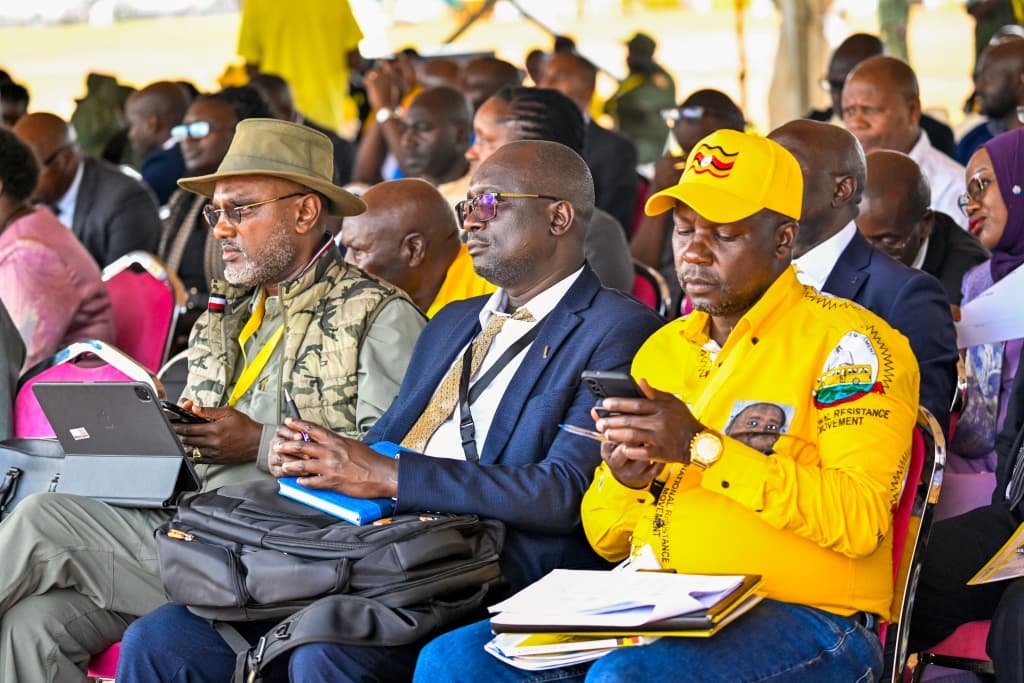
At the National Leadership Institute (NALI) in Kyakwanzi, Uganda’s economic direction was laid out with unusual clarity and urgency. Government planners, led by the National Planning Authority (NPA), presented the Fourth National Development Plan (NDPIV) to President Yoweri Museveni and both current and incoming NRM Members of Parliament during their retreat.
The presentation was not just a routine policy briefing. It was a call to action.
Officials emphasized that the Fourth National Development Plan (NDPIV) is the first implementation framework for Uganda’s broader 10-fold growth ambition, with socio-economic transformation placed at the center of the strategy. Members of Parliament were urged to champion this agenda with urgency, unity, and synergy, signaling that implementation, not design, is now the priority.
At the heart of the plan is the full monetization of the economy. The government wants to move millions of Ugandans from subsistence living into income-generating activities within the formal economy. This shift is seen as critical if Uganda is to expand production, increase household incomes, and sustain long-term growth.
To drive this transformation, the government has identified several priority areas.
These include value addition in agriculture, tourism, and minerals, ensuring that Uganda exports finished or semi-processed goods rather than raw materials. There is also a strong focus on building a knowledge-based economy, supported by investments in science, technology, and innovation.
Infrastructure development remains central to the plan. Strategic projects such as the Standard Gauge Railway, alongside improvements to the existing meter gauge railway, are expected to lower transport costs and improve trade efficiency. At the same time, government is prioritizing broader infrastructure maintenance to sustain growth over the long term.
Access to affordable finance is another key pillar. Through institutions like the Uganda Development Bank (UDB) and Uganda Development Corporation (UDC), efforts are underway to reduce the cost of credit and support private sector expansion.
Additional priorities include strengthening revenue generation, improving the cost-effective delivery of social services, and investing in emerging sectors such as the creative industry, sports, and tourism, particularly with opportunities linked to AFCON. The development of the Greater Kampala Metropolitan Area (GKMA) has also been highlighted as a critical driver of economic activity.
Together, these focus areas form a comprehensive blueprint for transformative prosperity under the Fourth National Development Plan (NDPIV).
However, while the roadmap is clear, the real challenge lies in execution.
This reality has been underscored by recent developments in Uganda’s governance landscape. Former State Minister Agnes Nandutu was recently sentenced to four years in prison over the Karamoja iron sheets scandal, where government resources meant for vulnerable communities were misused.
The timing of this development is significant.
For years, Uganda’s development efforts have often been slowed by issues such as delayed project implementation, weak oversight, and misuse of public funds. As a result, even well designed plans have not always delivered their full impact.
Now, with NDPIV aiming for large-scale transformation, the margin for error is much smaller.
The government’s call for urgency and unity among legislators reflects an understanding that execution must improve. Large infrastructure projects, financing programs, and industrial initiatives will require strong coordination and strict accountability. Without this, the risk of inefficiency or resource leakage remains.
At the same time, the sentencing of Agnes Nandutu sends an important signal. It suggests that accountability mechanisms may be strengthening, and that the cost of mismanaging public resources is rising.
For the business community, this creates a mixed but important signal. On one hand, NDPIV presents clear opportunities in sectors such as manufacturing, agro-processing, infrastructure, and services. On the other hand, investors will be watching closely to see whether governance and execution improve in practice.
For ordinary Ugandans, the success of this plan will ultimately be measured in tangible outcomes,higher incomes, more jobs, and improved living standards.
In the end, the Kyakwanzi retreat has produced a strong and detailed roadmap for Uganda’s economic future. The priorities are well defined, and the ambition is clear.
But achieving a 10-fold increase in economic output will depend on more than planning. It will depend on whether Uganda can deliver its strategy efficiently, consistently, and with discipline.The real test is now underway.
