
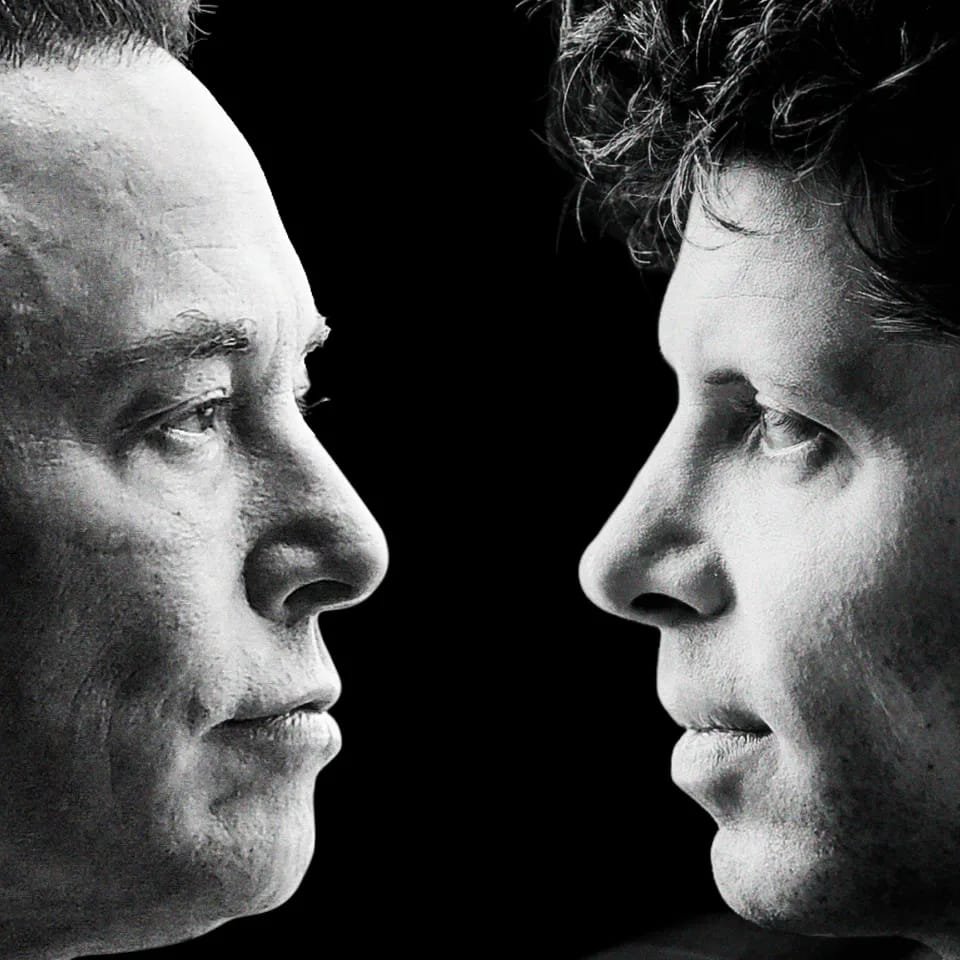
The battle over the future of artificial intelligence has moved from innovation labs to the courtroom. In Oakland, California, a high-stakes trial is underway that could reshape how some of the world’s most powerful tech companies are structured and governed.
At the center of the case is a dispute between Elon Musk and the leadership of OpenAI, including CEO Sam Altman, President Greg Brockman, and key partner Microsoft. What began as a shared vision in 2015 has now turned into a legal fight over money, control, and the original purpose of the organization.
Musk, who contributed roughly $38 million in OpenAI’s early days, argues that the company was founded as a nonprofit with a clear mission: to develop artificial intelligence safely and for the benefit of humanity. According to the lawsuit, that mission has since been abandoned in favor of building a highly valuable, closed, profit-driven enterprise.
OpenAI disputes these claims, maintaining that the transition to a “capped-profit” model was necessary to attract the massive funding required to develop advanced AI systems. They argue that the lawsuit is less about principle and more about competition, pointing to Musk’s own AI venture as a possible motivation.
At the heart of the case is a deeper corporate question that extends far beyond OpenAI.
What happens when a company starts as a nonprofit and later turns into a profit-driven business?
A nonprofit structure is built on purpose, not profit. It is designed to serve a public or social good, with strict limitations on how funds are used and distributed. Investors or donors typically support the mission, not the expectation of financial returns.
When such an organization transitions into a profit-oriented model, the entire foundation shifts. Capital becomes central. Investors expect returns. Decision-making begins to balance mission with commercial viability. This transition is not just financial, it is philosophical.
“Once profit enters the equation, the mission must compete with the market.”
This is where risk emerges. If early agreements, governance structures, and stakeholder expectations are not clearly defined, that transition can trigger disputes like the one now playing out in court. Early supporters may feel the mission has been compromised, while new investors may prioritize growth and returns.
The stakes in this case are enormous. Musk is seeking up to $134 billion in damages, with a proposal that the funds be redirected back into OpenAI’s original nonprofit structure. He is also pushing for leadership changes and a potential reversal of the company’s current corporate model.
If the court sides with Musk, the implications will be global. It could set a precedent for how nonprofit-to-profit transitions are handled, especially in industries that require massive capital investment. It may also force companies to rethink how they draft founding charters, structure partnerships, and communicate long-term intentions to stakeholders.
For businesses and executives, the lesson is clear.
Clarity at the beginning matters. A company’s founding structure is not just a legal formality, it is a long-term commitment that can shape its future, limit its flexibility, or expose it to risk years down the line.
In industries driven by innovation and capital, the tension between purpose and profit is inevitable. The challenge is not choosing one over the other, but defining how both can coexist without conflict.
Because as this case shows, when that balance is unclear, the cost is not just financial.
It can reshape the future of the company itself.
