
A new funding commitment of more than $1,1 billion by the European Investment Bank is set to accelerate renewable energy projects across Africa, but experts say it will only begin to address a deeper, systemic electricity deficit affecting millions across the continent.
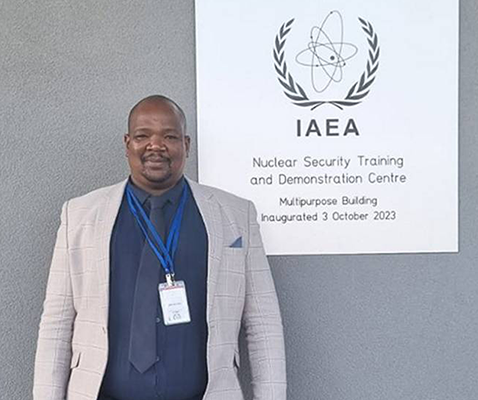
“This level of investment is important in catalysing renewable energy development, particularly in scalable projects, grid infrastructure and regional integration programmes. However, given the magnitude of Africa’s energy shortfall, it represents one component of a much broader solution,” says Dr Tebogo Kupi from the Centre for Applied Radiation Science and Technology at North-West University (NWU).
This broader solution should include international investment, policy reform, local innovation and a diverse energy mix. Institutions such as the NWU are expected to play a role through research, training and partnerships that support context-specific energy solutions across the continent.
Almost half of Africans still in the dark
More than 600 million people in Africa remain without access to electricity, a gap that continues to limit basic services and economic growth, Dr Kupi says. The consequences are far-reaching.
“In healthcare, unreliable or unavailable power restricts the operation of medical equipment, vaccine storage and emergency services,” he says. “In education, it limits access to digital learning tools and study hours, while economically it slows industrial expansion and reduces employment opportunities, particularly in rural areas.”
The European Investment Bank’s pledge forms part of a broader global effort to support Africa’s energy transition. Dr Kupi notes that while the scale of the funding is significant, it should be understood within a larger financing ecosystem required to meet demand.
Renewable solutions are only part of the energy mix
Africa’s transition to renewable energy is widely viewed as both necessary and achievable, supported by the continent’s natural resources. Solar, wind and hydropower projects are expanding, but challenges remain in infrastructure and coordination.
“The transition is feasible, but it will require sustained investment, modernised infrastructure, energy storage solutions and strong policy alignment,” Dr Kupi says. “Renewables will play a central role, but a balanced and context-specific energy mix will remain necessary in the short to medium term.”
Policy and governance frameworks will be critical in determining whether investments translate into long-term energy access. Regulatory certainty, transparent procurement processes and improved utility performance are among the priorities identified by energy experts.
“Strengthening institutional capacity and reducing bureaucratic barriers will be essential to ensure that funding delivers sustainable outcomes,” he adds.
Locally driven solutions are needed
Dr Kupi also emphasises the importance of locally driven solutions, particularly in underserved communities where centralised grid expansion may be slow or costly.
“Decentralised systems such as mini-grids and off-grid solar solutions can have a transformative impact at community level,” he says. “South Africa, with its relatively developed energy sector, is well positioned to support innovation, research and skills development in this space.”
As global funding commitments grow, the challenge for African countries will be to align investment with policy reform and local innovation to close one of the continent’s most persistent development gaps.
