

Stanley Johnson, a British author and environmental advocate, has praised Uganda’s economic trajectory and wildlife conservation record following a recent visit, describing the country as “a wonderful country, not just for the people, but for the wildlife as well.”
Johnson, who has travelled widely across Africa and is the father of former UK Prime Minister Boris Johnson, returned to Uganda after several years and is undertaking an Explore Uganda program that included wildlife excursions, tourism engagements, and attending official events.
Reflecting on earlier visits, he recalled travelling to Gomba Island and Kibale Forest to observe chimpanzees. He said Uganda’s natural heritage remains a defining feature, but noted that the broader national context has shifted. “There is a real sense of vigour and dynamism,” he said, adding that the country appears to be experiencing a period of economic growth.
During his visit, Johnson has already explored several cultural and historical landmarks in Kampala, including Lubaga Cathedral, the Muteesa I Catholic Memorial Museum, the Gaddafi National Mosque, from where he admired the city’s expanded hills and even recited Quran verse.
He is scheduled to continue his tour to key conservation areas, including Queen Elizabeth National Park, Kibale Forest, and Mgahinga Gorilla National Park, while also visiting industrial sites like Kapeeka Industries and other highlights in Jinja and beyond.

He said he was particularly interested in revisiting Uganda’s primate populations, including mountain gorillas and chimpanzees, noting that repeated encounters continue to hold scientific and personal significance.
The Uganda Tourism Board (UTB) has been a key player in making this high-profile visit happen, collaborating closely with the Uganda High Commission in the UK, Volcanoes Safaris, Jinja Sailing Club, the Mehta Group, Fairway Hotel, and Uganda Airlines to showcase the country’s premier wildlife experiences and sustainable tourism offerings.
Their involvement underscores UTB’s ongoing commitment to positioning Uganda as a world-class eco-tourism destination, turning endorsements like Johnson’s into powerful invitations for global travelers.
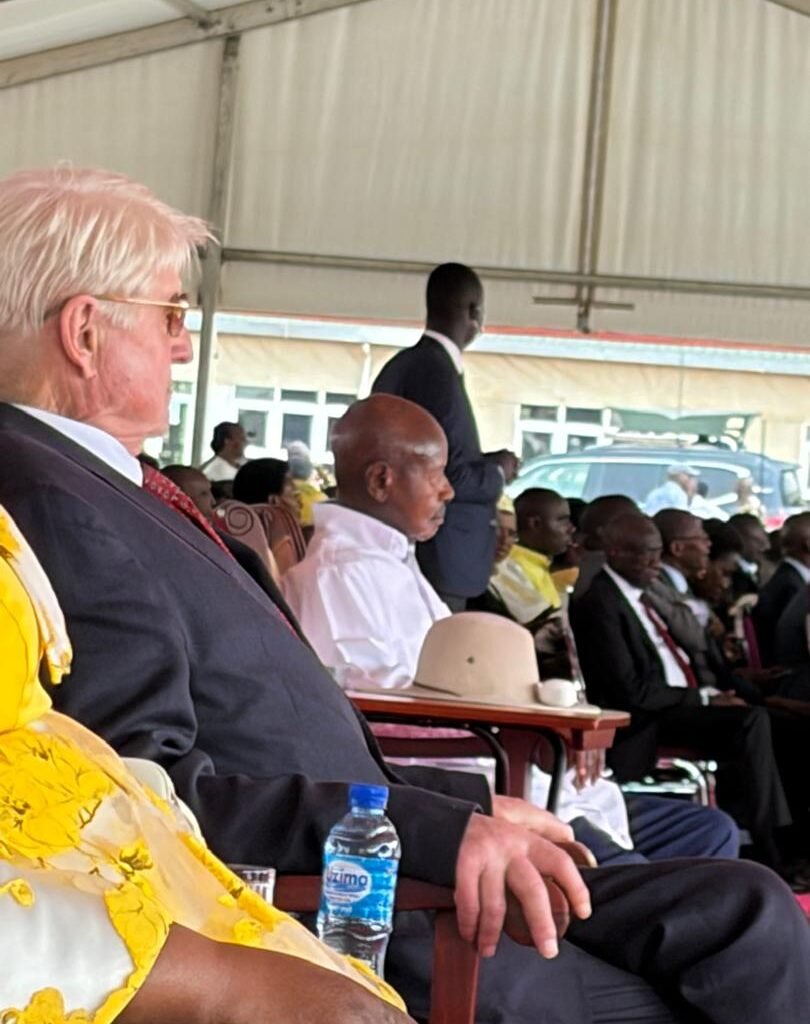
The visit coincided with Uganda’s NRM Liberation Day celebrations, which Johnson attended following an invitation from President Yoweri Museveni. He described the invitation as an honour and welcomed the opportunity to participate in the national event.
Accompanying Johnson for part of the tour was Uganda’s High Commissioner to the United Kingdom, H.E. Nimisha Madhvani, who highlighted Uganda’s efforts to position itself as a secure destination for tourism and investment while strengthening conservation outcomes.
Madhvani said Uganda’s conservation achievements, particularly in gorilla protection, have attracted global recognition and cited increased international media coverage of protected areas such as Bwindi Impenetrable National Park. She described the country as undergoing a period of renewal and openness.
“We’re preserving the environment. We’re growing the number of gorillas in the country. We’re world-renowned.” She said.
Uganda is home to more than half of the world’s remaining mountain gorillas, primarily located in Bwindi Impenetrable National Park and Mgahinga Gorilla National Park. Recent census estimates place the global mountain gorilla population at approximately 1,063 individuals, a significant recovery from critically endangered levels recorded in previous decades.

Conservation specialists attribute this increase to sustained investment in habitat protection, anti-poaching measures, community participation, and regulated tourism.
Johnson said his visit demonstrated that Uganda is attempting to balance economic development with environmental stewardship, describing the conservation framework as encouraging.
“Stanley Johnson’s visit and his heartfelt praise for our gorilla conservation successes and balanced development are incredibly valuable. They demonstrate to the world that Uganda is not only protecting its extraordinary biodiversity but doing so in a way that empowers local communities and supports sustainable economic growth.” Dr. Gessa, Head of public relations UTB
