
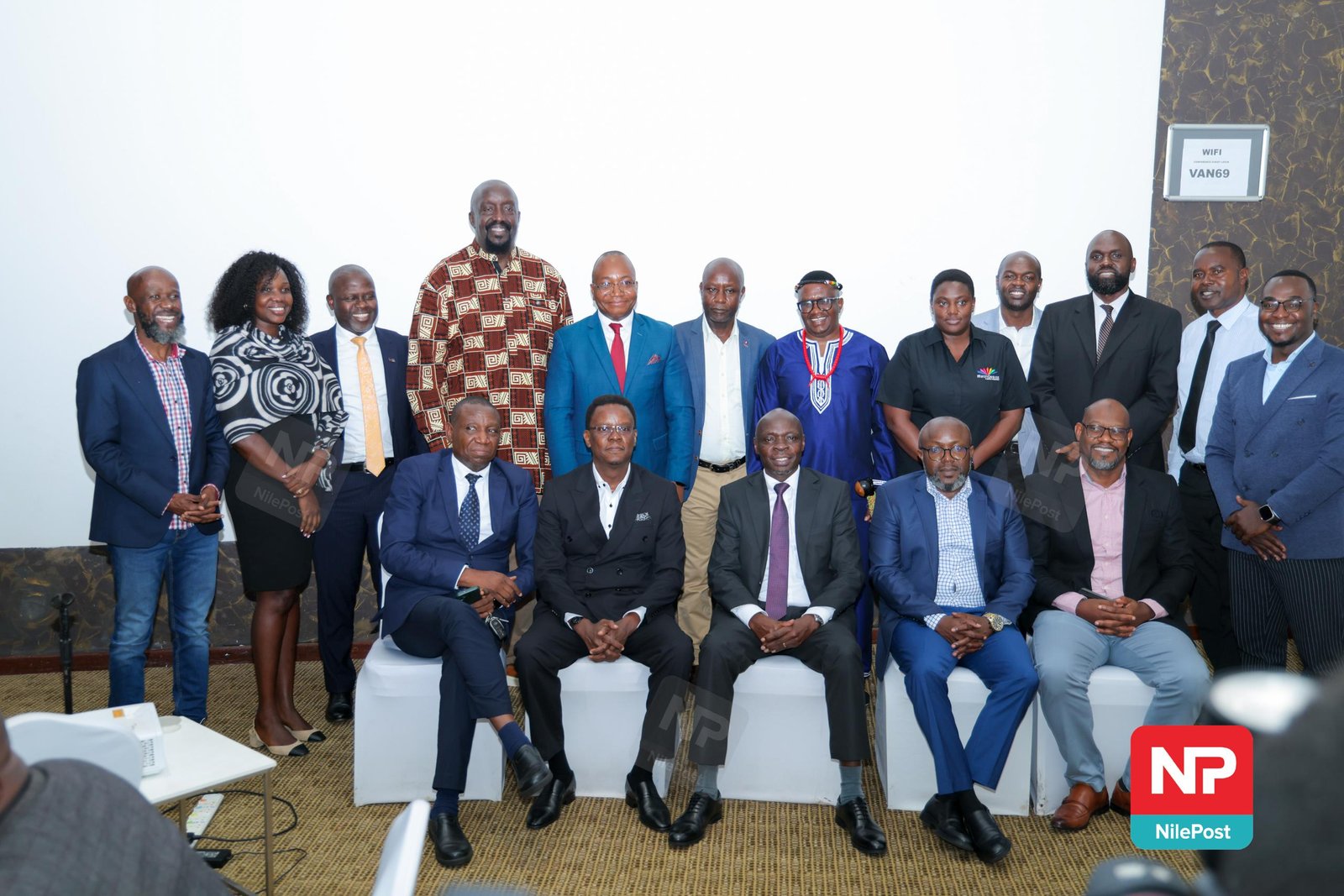
Government has begun reviewing policy proposals submitted by the National Association of Broadcasters (NAB), with the Minister of ICT and National Guidance, Hon. Justine Kasule Lumumba, promising to share its resolutions with the industry as broadcasters push for reforms in transmission costs, licensing fees, taxation and government communication.
Speaking as Guest of Honour at NAB’s 2026 Annual General Meeting at Protea Hotel Kampala Skyz in Naguru on Thursday, the Minister said she had initiated consultations with the Uganda Communications Commission (UCC), Uganda Broadcasting Corporation (UBC) and the Media Council of Uganda to examine the association’s proposals.
The proposals cover free-to-air distribution, regulatory fees, government communication, broadcasters’ obligations to UBC, the proposed media law, the Communications Tribunal and the tax environment.
“I am glad to report that we have made good progress and will soon invite you to share our resolutions,” Lumumba said.
She described broadcasters as strategic partners in national development, particularly in communicating government priorities such as the Parish Development Model, agriculture, healthcare and education.
“Broadcasters are strategic partners in taking this information closer to the people,” she said, adding that public education airtime provides government agencies with an important channel to explain their services.
The Minister acknowledged the challenges facing broadcasters, including shifting advertising markets, competition from global digital platforms and high operating costs. She said the industry needed a regulatory environment that supports growth while safeguarding freedom of expression and editorial independence.
“A predictable, transparent, and responsive regulatory framework is critical for industry growth,” she said.
She also urged broadcasters to uphold professional standards, invest in digital platforms, champion local content and promote national cohesion.
Transmission costs and regulatory fees top NAB’s outstanding demands
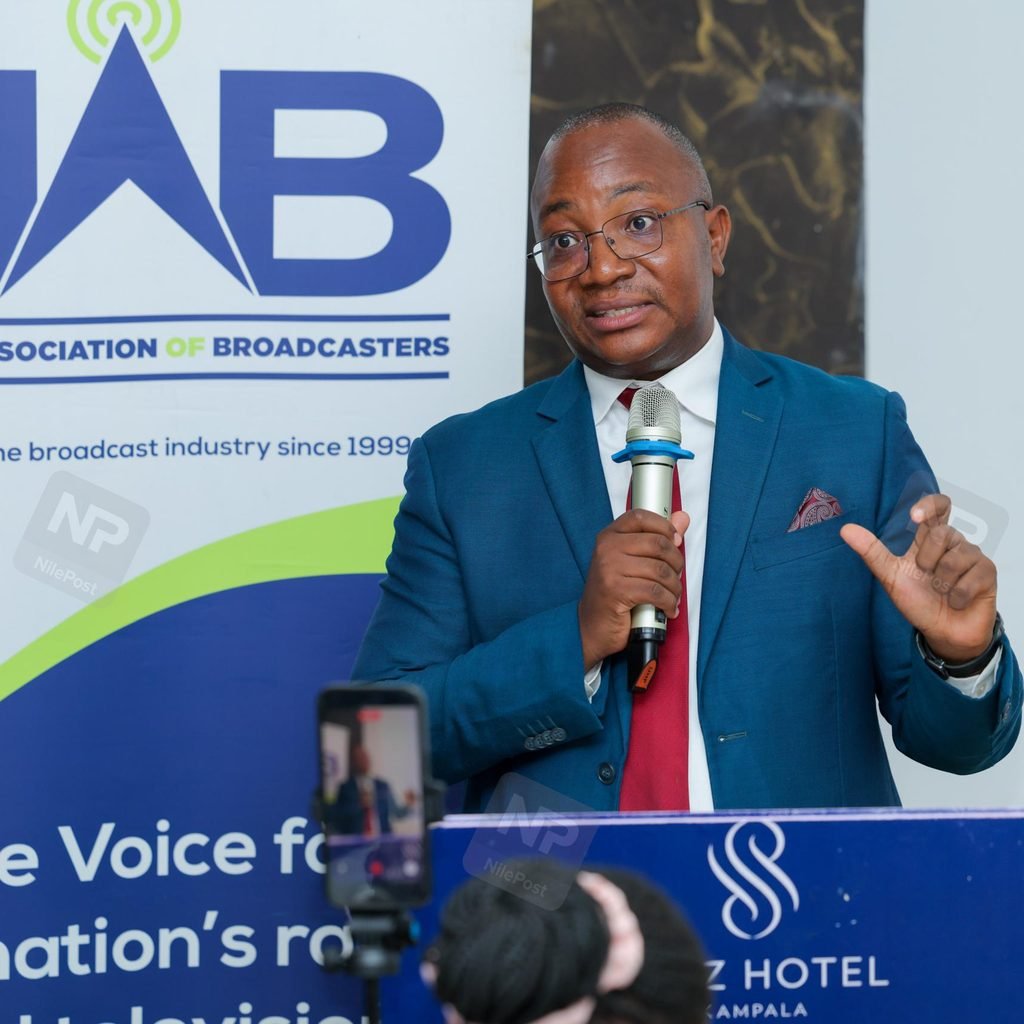
Despite the Government’s commitment to review the proposals, NAB Chairperson Dr. Innocent Nahabwe said some of the industry’s most consequential reforms remained unresolved.
Presenting his annual report, Nahabwe highlighted two achievements during the year: a memorandum of understanding with the Uganda Performing Rights Society (UPRS) covering music licensing for conventional broadcasts from August 2026 to August 2029, and the release of Wave 3 of the National Audience Measurement Survey in July.
The survey drew on 22,059 respondents across 146 districts and estimated Uganda’s media audience aged 15 and above at 22.3 million.
“The most consequential reforms on transmission, regulatory costs and Government communication still require decisions from the responsible institutions,” Nahabwe told members.
On the UPRS agreement, he said the arrangement had shifted the relationship between broadcasters and the rights management society from confrontation to cooperation.
“We now have UPRS as partners instead of adversaries,” he said.
The agreement establishes different tariffs based on geographical coverage and whether broadcasting is commercial or non-commercial. A national commercial radio station using up to 30 per cent music, for example, pays UGX 2.2 million, while a national commercial television station in the same category pays UGX 880,000.
NAB is also seeking a review of Signet and UBC transmission charges to establish whether they reflect the coverage and reliability broadcasters receive.
The association has proposed a debt-swap arrangement under which verified outstanding Signet obligations would be offset against government airtime. Nahabwe said the proposal appeared to have been accepted in principle, although members were still waiting for an implementation framework.
On licensing, he cited a UCC-commissioned study that found regulatory fees excessive. NAB wants licence fees denominated in Uganda shillings and free-to-air broadcasters exempted from paying for hybrid licences.
Broadcasters challenge VAT payment timelines
The association is also pushing the Uganda Revenue Authority (URA) to introduce cash-basis Value Added Tax (VAT) treatment for broadcasters, citing the mismatch between payment timelines and tax obligations.
According to NAB’s report, media houses typically receive payments at least 45 days after completing work, with some waiting more than 100 days. However, VAT becomes due once an invoice is issued through the Electronic Fiscal Receipting and Invoicing System (EFRIS).
The association argues that the arrangement places additional cash-flow pressure on media businesses that have not yet received payment for their services.
NAB plans to take the proposal to the Ministry of Finance and Parliament during the next budget cycle.
NAB raises concerns over media freedom and journalist safety
The annual report also highlighted incidents affecting media freedom and journalist safety during the year.
These included the 28 June shutdown of Nation Media Group Uganda outlets, among them NTV Uganda, Spark TV, KFM and Dembe FM. UCC subsequently cleared the stations to resume operations on 29 July.
“Our position is clear,” Nahabwe said regarding the shutdown. “Any action that interrupts a licensed broadcasting service should follow a transparent regulatory process.”
NAB also condemned the arrests of political analysts from broadcast studios, including the 13 November seizure of Ronald Leonard Egesa from the premises of Radio One and Akaboozi FM.
The association described the incident as a gross violation of the Constitution.
On legislation, NAB maintained its opposition to the Protection of Sovereignty Bill in its original form, warning that Clause 10 could expose routine reporting to penalties while Clause 13 risked treating legitimate scrutiny of public policy as economic sabotage.
Parliament passed an amended version of the Bill on 5 May.
“We didn’t have our way, but at least we made our stand clear,” Nahabwe said.
NAB sets 2027 reform priorities
Looking ahead, the association plans to seek written responses from responsible institutions on outstanding Signet balances, licence fees, tax payment timelines and ring-fenced government communication funding.
It also intends to pursue a renewed memorandum of understanding with security agencies to guide how matters involving the media are handled.
The AGM brought together broadcast owners, chief executives, regulators, representatives of UCC and UBC, and senior parliamentary leaders.
Members are expected to meet again on Friday, 20 November, at NAB’s inaugural Media Day at the Y.E.S. Centre Sports Arena in Nsambya.
