
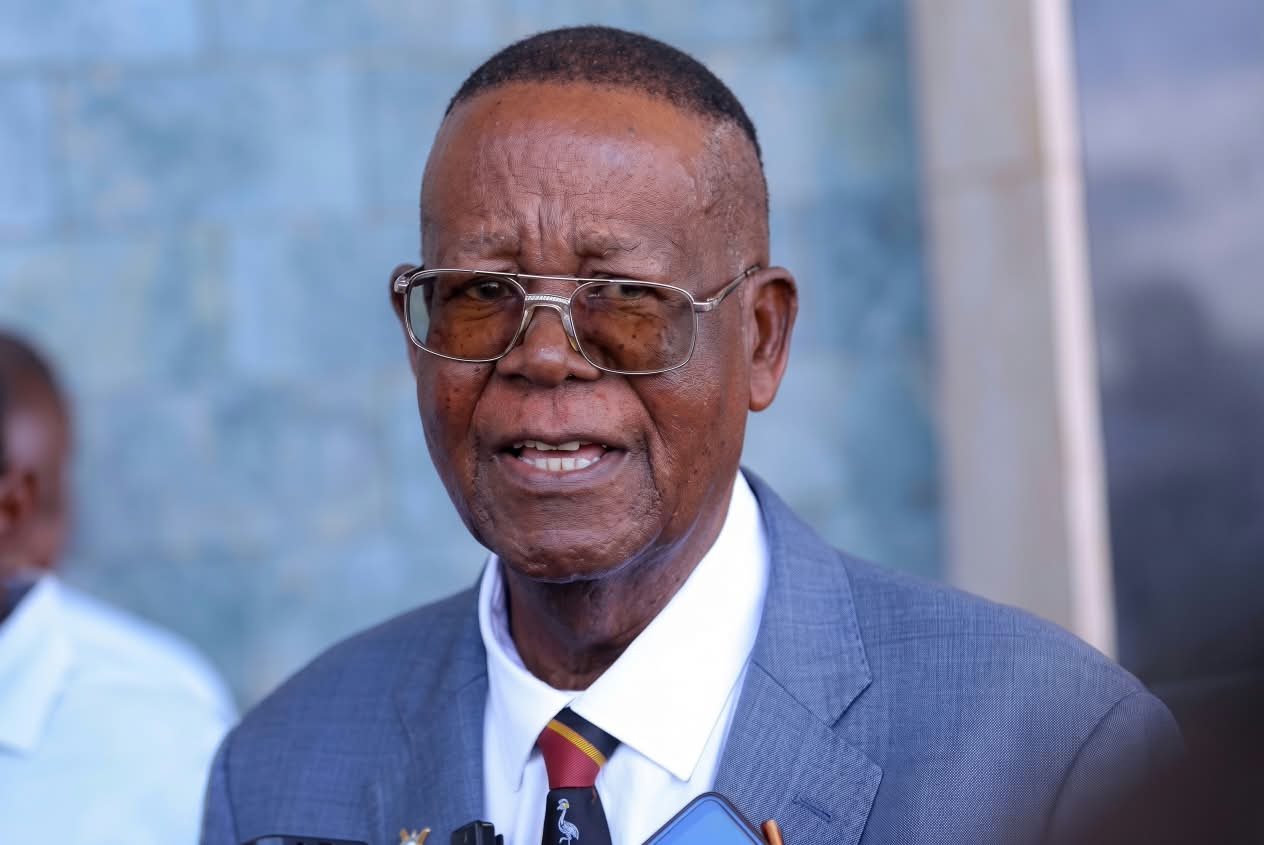
After nearly ten months of suspended operations, ten of Uganda’s prominent civil society organisations could soon resume work following a government directive to review their cases and lift restrictions on those that have addressed outstanding regulatory concerns.
The decision, announced by Internal Affairs Minister Prof. Ephraim Kamuntu on November 10, 2026, could restore employment, community development programmes and business relationships disrupted when the organisations were ordered to close in January, just days before Uganda’s general elections.
Speaking at a quarterly government-civil society dialogue in Kampala, Kamuntu directed the National Bureau for Non-Governmental Organisations (NGO Bureau) to conduct individual reviews and facilitate the reopening of eligible organisations within two weeks.
“I have reviewed it case by case. It is not a blanket decision.”
Kamuntu said some of the issues raised against the organisations were minor enough for the government to overlook and allow them to resume operations.
He directed the Bureau’s secretary, Dr Stephen Okello, to process the clearances, while cautioning the organisations to operate within the law.
The announcement signals a possible end to a prolonged standoff between government and sections of Uganda’s civil society sector. However, its significance extends beyond restoring the operating permits of ten organisations. Their suspension disrupted programmes, employment contracts, donor-funded activities and business arrangements involving local service providers.
The NGO Bureau has previously estimated that the sector contributes more than Shs4.5 trillion to Uganda’s economy over five years, supporting activities in healthcare, education, agriculture, governance and other development areas.
The planned reopening therefore presents an opportunity to restore some of the economic activity associated with the sector, although the extent of the recovery will depend on formal reinstatement, the availability of funding and the willingness of development partners to resume suspended programmes.
Ten organisations at the centre of the shutdown
The ten organisations affected by the January 9 suspension orders are Chapter Four Uganda, the African Centre for Media Excellence (ACME), Alliance for Campaign Finance Monitoring (ACFIM), Human Rights Network for Journalists-Uganda (HRNJ-U), Uganda National NGO Forum (UNNGOF), Centre for Constitutional Governance (CCG), National Coalition of Human Rights Defenders Uganda (NCHRD-U), African Centre for Treatment and Rehabilitation of Torture Victims (ACTV), Network of Public Interest Lawyers (NETPIL) and Agora Centre for Research.
Their work covers human rights protection, media development, electoral transparency, campaign finance monitoring, constitutional governance, public-interest litigation, rehabilitation of torture victims and coordination of civil society organisations.
The NGO Bureau issued the suspension letters six days before the January 15 general election, citing Section 42(d) of the NGO Act, which prohibits organisations from engaging in activities prejudicial to Uganda’s security and laws.
The organisations were ordered to cease operations immediately and indefinitely as investigations proceeded. The Bureau also directed the Inspector General of Police to enforce the orders and instructed commercial banks to freeze their accounts.
In the letters, Okello said the allegations were sensitive enough to warrant immediate intervention, promising investigations within a reasonable time and an opportunity for the affected organisations to be heard.
On January 23, he described the suspensions as precautionary and indicated that hearings would begin within one or two weeks.
However, no public record of those hearings or published findings has emerged in the months since.
The suspensions attracted criticism from local and international human rights organisations, particularly over their indefinite nature and the absence of publicly disclosed evidence supporting the allegations.
The African Commission on Human and Peoples’ Rights raised concerns about the restrictions, arguing that the suspensions affected freedom of expression, association, assembly and participation in public affairs.
Human Rights Watch, the International Federation for Human Rights, the International Commission of Jurists and other organisations also criticised the government’s action.
In February, the European Parliament adopted a resolution condemning the conduct of Uganda’s election and referencing the NGO suspensions. The resolution, passed on February 12 by 514 votes to three, with 56 abstentions, urged the European Union and its member states to review cooperation with Kampala and prioritise support for Ugandan civil society.
The economic cost of keeping NGOs closed
For organisations that depend on donor funding to implement development programmes, the suspensions created financial obligations without the ability to generate or deploy resources through their normal activities.
Margaret Sekajja, Executive Director of Human Rights Centre Uganda, said some organisations had struggled to meet basic operational expenses, including office rent and staff salaries.
“Some organisations cannot pay their office rent or salaries for their staff. They cannot carry out the activities for which they received funding, yet those activities are meant to benefit the public. Everything has come to a standstill.”
The consequences extend across several professional and commercial sectors.
NGOs employ programme managers, researchers, accountants, lawyers, communications specialists, monitoring and evaluation officers, administrators and field personnel. They also contract transport companies, hotels, consultants, printers, caterers, suppliers and other service providers.
When an organisation suspends operations, these relationships are disrupted. Employees face uncertainty over salaries and continued employment, while businesses that depend on NGO contracts lose potential revenue.
The impact is particularly important for organisations implementing donor-funded programmes, where funding agreements often support expenditure within Uganda through salaries, procurement, office operations, accommodation, transport and community activities.
The NGO sector is also an important channel through which international development financing reaches local communities.
Resources from international development agencies, foundations and diplomatic missions support programmes in healthcare, education, agriculture, humanitarian assistance, governance and community development.
The suspension of an organisation can therefore affect more than its direct employees. It can interrupt services to beneficiaries, delay project implementation and leave local suppliers without expected business.
Reopening the ten organisations could help restore some of these relationships, provided their funding agreements remain active and development partners are willing to resume disbursements.
The immediate economic benefits are likely to be seen in restored employment, local procurement, office rentals, consultancy contracts and the resumption of community programmes.
However, the decision should not automatically be interpreted as a significant boost to foreign-exchange inflows or an appreciation of the Ugandan shilling.
The impact on foreign-exchange supply will depend on the actual volume of donor funding entering the country, the timing of disbursements and the proportion converted into local currency. The reopening of ten organisations alone is unlikely to determine exchange-rate movements, which are influenced by broader factors including export earnings, imports, foreign investment and government borrowing.
The more direct economic gain will be the restoration of activity within the organisations and the businesses that depend on their operations.
Why the government suspended them
The government’s justification for the January shutdown has centred on national security, compliance with the NGO Act and concerns about foreign influence.
The Bureau said intelligence reports indicated that the organisations were involved in activities harmful to national security and contrary to Ugandan law.
Some organisations were accused of violating provisions of the NGO Act, while others faced allegations of engaging in activities prejudicial to national security. Financial transactions also featured in the government’s scrutiny, with concerns raised about cash movements and funding arrangements.
However, the government has not publicly released the intelligence reports or detailed evidence supporting the allegations.
At the November 10 dialogue, Kamuntu maintained that the suspensions followed intelligence assessments rather than a blanket government crackdown on civil society.
He also questioned the influence of external funders whose priorities might differ from Uganda’s development objectives.
State Minister for Internal Affairs Juma Witonze Kisekka reinforced the government’s position, urging NGOs to respect national sovereignty and ensure that their activities remain within their registered mandates.
Civil society representative Yona Wanjala observed that organisations working in oil and gas governance and election monitoring had faced accusations of advancing foreign interests or conducting biased civic education.
The exchange highlighted a continuing disagreement over the role of foreign funding in Uganda’s development sector and the extent to which government should regulate organisations involved in public accountability.
Legal challenges added pressure
The decision to review the suspensions also comes against the background of legal challenges questioning the Bureau’s authority and the procedures used to close the organisations.
In May 2022, High Court judge Musa Ssekaana ruled that indefinite NGO suspensions were irregular after the Bureau suspended Chapter Four Uganda and 53 other organisations over compliance failures in August 2021.
The court held that regulatory suspensions should have clear time limits to guard against abuse and directed the Bureau to give Chapter Four an opportunity to be heard. Twenty-two of the 54 organisations eventually had their suspensions lifted.
The January 2026 orders, which were also indefinite, therefore raised questions about whether the Bureau had complied with the earlier court decision.
In March, lawyer Michael Aboneka wrote to the Bureau challenging the legality of the suspensions and arguing that they violated the 2022 precedent and the constitutional right to a fair hearing.
On June 15, he filed a High Court case against Okello personally, arguing that no lawfully constituted Bureau existed when the suspension letters were issued.
A separate challenge emerged in August when a coalition of 31 civil society organisations petitioned Speaker of Parliament Jacob Oboth-Oboth to intervene.
The coalition argued that following the 2024 amendments to the NGO Act, which reorganised the Bureau into a department within the Ministry of Internal Affairs, its board had not been properly appointed or gazetted.
It further argued that the law vests suspension powers in the Bureau as a corporate body rather than an individual official.
Neither the court case nor the parliamentary petition had produced a formal ruling by the time Kamuntu announced the planned reopening.
The administrative review could reduce the immediate practical consequences of the dispute, but it does not necessarily settle the underlying questions about the Bureau’s authority, the legality of indefinite suspensions and the right of organisations to timely hearings.
A stricter regulatory environment
The planned reopening is taking place as government strengthens its regulatory framework for organisations receiving foreign funding.
The Protection of Sovereignty Act, 2026, tabled on April 15 by State Minister for Internal Affairs Gen. David Muhoozi, passed by Parliament on May 5 and assented to by President Yoweri Museveni on May 17, introduces additional requirements for individuals and entities acting as agents of foreigners.
The law also requires declarations of foreign funding exceeding Shs400 million annually.
The proposed legislation initially carried penalties of up to 20 years in prison and fines of up to Shs4 billion, although the enacted law provides for maximum fines of Shs2 billion.
Rights organisations, including the World Organisation Against Torture and the International Center for Not-for-Profit Law, have warned that broad definitions in the legislation could capture routine advocacy activities funded from abroad.
Some legal analysts have pointed to possible statutory exemptions for organisations registered under the NGO Act, although the interpretation of these provisions remains untested in court.
At the same time, the NGO Bureau is working towards automating registration, annual returns and fee payments to improve regulatory administration.
Under the existing framework, NGOs are required to submit annual returns, audited financial statements and activity reports, among other documentation.
An efficient electronic filing system could make compliance easier to monitor while providing organisations with clearer administrative procedures.
However, the sector is also facing declining international development funding following US aid freezes, European donor exits and changing Western development priorities.
In late October, government officials urged financially constrained NGOs to explore social enterprises and alternative revenue streams to reduce their dependence on external grants.
The combination of tighter regulation and declining donor budgets means that reopening the ten organisations will not necessarily restore the financial position they held before the suspensions.
Rebuilding confidence between government and civil society
Beyond the immediate administrative and economic implications, the reopening presents an opportunity to rebuild confidence between government and civil society organisations.
Kamuntu acknowledged that NGOs had filled strategic gaps in national development and reached communities where government interventions would otherwise take longer.
At the dialogue, he described trust as the new currency in managing relations between government and the sector.
Yona Wanjala, Executive Director of Civic Advisory Hub, welcomed the shift towards engagement and partnership, arguing that NGOs should be treated as development partners rather than approached with suspicion.
The quarterly government-civil society dialogue provides a platform for addressing disagreements and regulatory concerns before they escalate into operational restrictions.
For organisations working with international development partners, regulatory predictability is particularly important. Funding agreements, employment contracts and project commitments often operate within fixed timelines, making prolonged uncertainty over operating permits costly.
The government’s challenge will therefore be to maintain effective oversight without creating an environment in which organisations cannot reliably plan or implement their programmes.
Equally, NGOs must demonstrate accountability, comply with their registered mandates and maintain transparent financial and operational records.
The next two weeks will determine the outcome
Despite the minister’s announcement, the ten organisations have not yet been formally reinstated.
Kamuntu said the reviews would be conducted individually, meaning organisations with unresolved compliance concerns could remain restricted.
George William Lugalambi, Executive Director of ACME, has indicated that affected organisations are still waiting for formal written communication from the Bureau.
The distinction between an announcement of intended reopening and actual reinstatement is important. Until the Bureau issues written clearances and commercial banks unfreeze the affected accounts, the organisations cannot fully resume their normal operations or meet outstanding financial obligations.
The two-week period announced by Kamuntu runs until November 24.
The outcome will also determine how quickly employees return to work, development partners restore funding and programmes resume.
For communities that depend on NGO-supported healthcare, legal assistance, media development, human rights protection and other public-benefit services, the reopening could restore activities that have remained disrupted for months.
Ultimately, the value of the decision will be measured by more than the number of permits restored. It will depend on the jobs recovered, funding reinstated, businesses re-engaged and community programmes brought back into operation.
For government, it will also be a test of whether regulatory oversight can coexist with a predictable environment for civil society organisations that contribute to Uganda’s economic and social development.
