
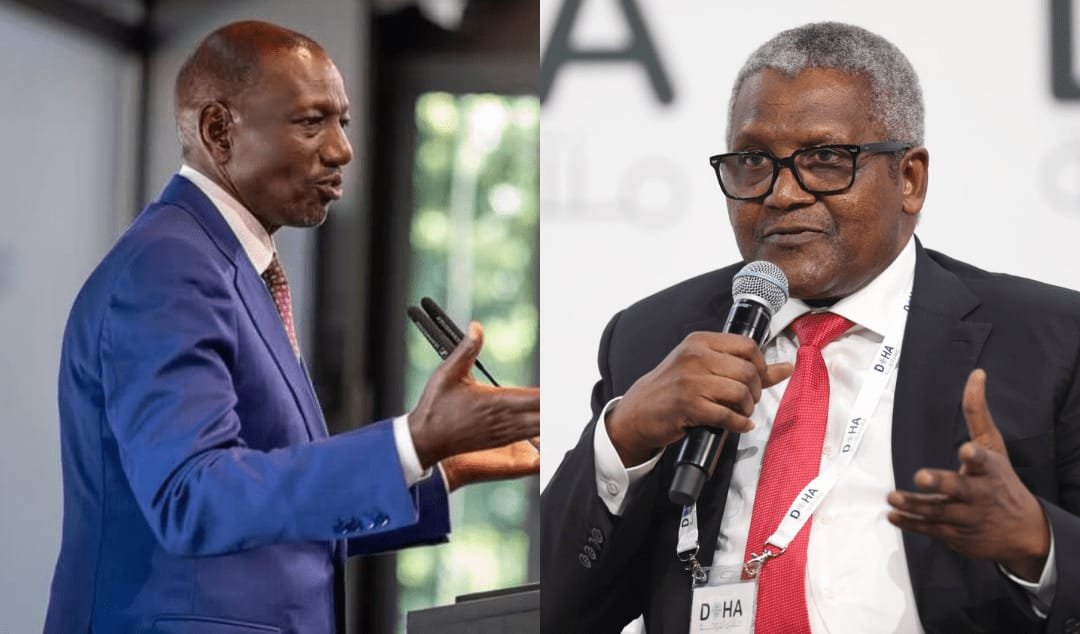
Africa’s richest man, Aliko Dangote, appears to be making a major strategic shift that could reshape East Africa’s energy future. After initially backing plans for a massive refinery project in Tanzania’s Tanga port, Dangote is now leaning toward Kenya’s coastal city of Mombasa as the preferred location for the proposed $17 billion investment.
The refinery project was originally unveiled during the Africa We Build Summit in Nairobi in April 2026, where regional leaders presented it as a transformational energy initiative for East Africa. The vision was ambitious: a large-scale refinery capable of processing crude oil from Uganda, Kenya, South Sudan, and the Democratic Republic of Congo, helping reduce the region’s dependence on imported refined fuel.
At the time, Tanzania’s Tanga port appeared to be the chosen destination. But within weeks, the conversation shifted.
Dangote later revealed that Mombasa was becoming the more attractive option because of infrastructure, efficiency, and market access.
“I’m leaning more towards Mombasa because Mombasa has a much larger, deeper port.”
That statement may sound simple, but in the oil industry, port depth is a major economic factor. A deeper port allows larger oil vessels to dock directly, reducing transportation costs and improving operational efficiency. For a refinery expected to handle massive volumes of crude oil daily, logistics can determine long-term profitability.
Beyond infrastructure, Kenya also offers a stronger consumer market for refined petroleum products. Kenya remains one of East Africa’s largest economies and among the region’s biggest fuel consumers. From a business perspective, it makes financial sense to position a refinery closer to a large and active market.
Dangote acknowledged this commercial reality directly.
“Kenyans consume more. It’s a bigger economy.”
The possible move represents a major opportunity for Kenya. If the project is finalized in Mombasa, it could become one of the largest industrial investments in the country’s history, strengthening Kenya’s position as a regional energy and logistics hub.
For Tanzania, however, the shift could be a significant setback. The country had hoped the refinery would accelerate industrialization, create jobs, and position Tanga as a major petroleum-processing center. Although Tanzania still remains central to the East African Crude Oil Pipeline project, losing the refinery would mean losing much of the downstream value addition linked to refining and petrochemicals.
The development also reflects a broader trend shaping investment decisions across Africa. Investors are increasingly prioritizing infrastructure quality, market size, and operational efficiency over political announcements and regional diplomacy. Large-scale projects now depend heavily on logistics, execution speed, and commercial viability.
The refinery could also transform East Africa’s wider energy landscape. Currently, the region imports a significant amount of refined petroleum products from overseas markets. A refinery of this scale could reduce import dependence, improve regional energy security, and create new industrial opportunities across multiple sectors.
Ultimately, Dangote’s decision highlights a simple but powerful reality about modern business and industrialization in Africa: capital follows efficiency. Countries that invest in stronger infrastructure, deeper markets, and business-friendly systems are increasingly becoming the preferred destinations for transformational investments.
