
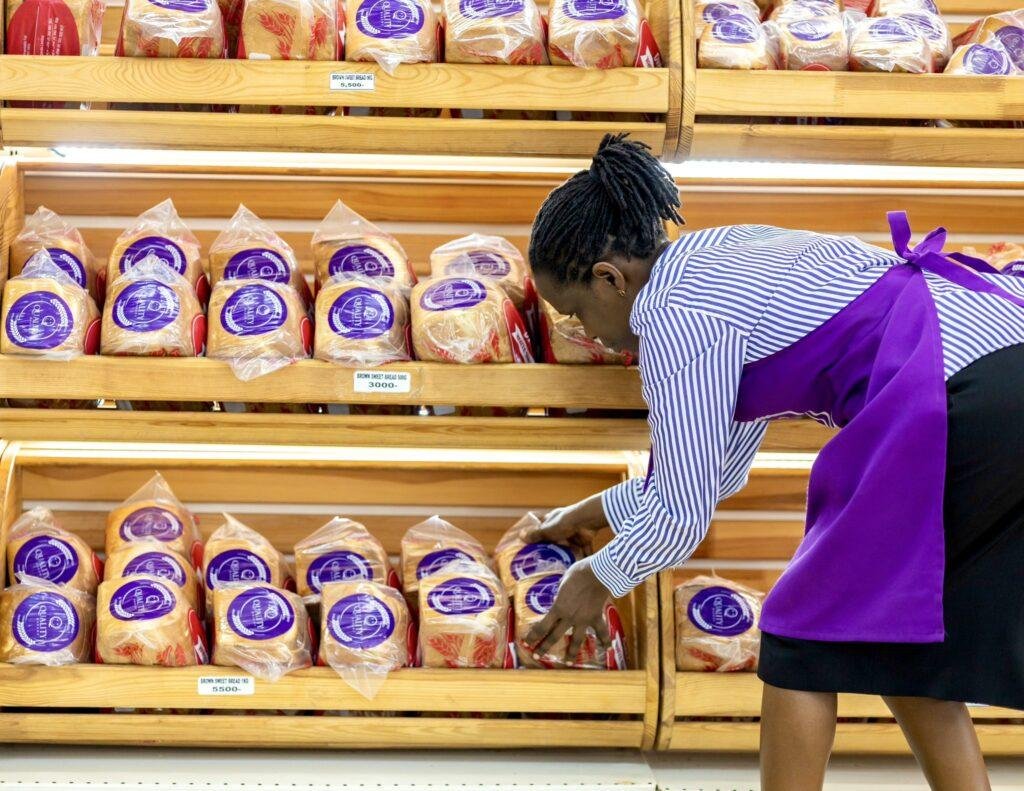
The price of bread has gone up. The bigger question for Ugandan households is what comes next.
The Uganda Bakers Association has announced higher bread prices, with a one-kilogram loaf rising to Shs5,500 at the factory from Shs5,000, while a half-kilogram loaf will increase from Shs2,500 to Shs3,000.
On the surface, it is a story about bread. But the forces pushing up the price of bread are not confined to bakeries. They include higher production costs, rising fuel and transportation expenses, exchange-rate pressures and, increasingly, the rising cost of borrowing. That raises a broader concern for consumers: if these pressures persist, bread may not be the only product that becomes more expensive.
Why bread has gone up
The Uganda Bakers Association chairperson, Canon Dr Guster Lule Ntake, said rising production and transportation costs had made it increasingly difficult for manufacturers to maintain existing prices.
Isaac Njoroge of Jonisa Bakers Limited said about 80 percent of materials used in bread production are imported. That detail is important because it exposes bread manufacturers to movements in the exchange rate. When the Ugandan shilling loses value against the dollar, businesses need more shillings to buy the same amount of goods priced in foreign currency. The cost can enter the production process through ingredients, packaging, machinery, spare parts and other imported inputs.
The bakery may be in Kampala. The bread may be baked in Uganda. But part of the cost of producing that loaf can still be determined by what happens in international markets. This is why the bread increase could be more than an isolated price adjustment.
Bread is a warning about what happens next
The immediate question for consumers is simple: what other prices are facing the same pressures? The answer depends on how widely these higher costs are distributed through the economy.
A manufacturer that pays more for imported inputs has to decide whether to absorb the increase or pass it on. A transporter facing higher fuel costs has to decide whether to charge more. A retailer buying more expensive goods from suppliers has to decide whether to raise the final selling price. And a business that relies on borrowed money may eventually have to account for higher interest payments as well. That means one increase can create pressure elsewhere.
Bread is therefore a useful example of a much larger economic process: when the cost of producing and moving goods rises, businesses eventually have to find someone to absorb that cost. If they cannot absorb it themselves, the consumer often becomes the final payer.
The fuel problem does not stop at the pump
Fuel is one of the most important links in this chain. When fuel becomes more expensive, the immediate impact is visible at filling stations. But the economic effect goes much further.
A truck needs fuel to transport flour. A distributor needs fuel to deliver bread. A farmer needs fuel to move produce. A shop needs transport to receive stock. Workers also need transport to get to work. As a result, higher fuel costs can increase the cost of moving goods and providing services across the economy.
This is why a rise in fuel prices can eventually show up in the price of products that have nothing to do with petroleum. A loaf of bread does not contain petrol. But petrol is involved in moving the ingredients, operating some of the machinery, distributing the finished product and getting it to the consumer.
And then there is the dollar
The exchange rate adds another layer of pressure. Njoroge’s estimate that around 80 percent of bakery materials are imported illustrates how exposed some local manufacturers are to foreign-currency costs. But the same principle applies beyond bakeries. A product does not have to be imported to be affected by a weaker shilling.
A Ugandan manufacturer may produce locally while importing raw materials. A farmer may produce locally while relying on imported fertiliser, pesticides, machinery or fuel. A transport company may operate entirely within Uganda but depend on imported vehicles and spare parts. A restaurant may serve locally prepared food while using imported equipment and ingredients.
When the shilling weakens, the cost of those imported components can rise, and the higher cost then moves through the production chain. That is why consumers can see prices rise even for goods that are made in Uganda.
The inflation numbers show the pressure is broadening
The latest inflation figures suggest that these pressures are not limited to one industry. Uganda’s annual headline inflation increased to 4.6 percent in September 2026 from 4.1 percent in August, according to the Uganda Bureau of Statistics. Core inflation also rose, from 3.5 percent to 3.7 percent. Food crops and related items inflation accelerated sharply, reaching 4.5 percent in September from 2.1 percent in August. At the same time, annual energy, fuel and utilities inflation increased to 14.5 percent from 14.3 percent.
These figures matter because they show pressure building in areas that directly affect household budgets. When food becomes more expensive, families have less money left after buying necessities. When transport costs rise, businesses face higher distribution costs. When energy costs increase, manufacturers and service providers face higher operating expenses. And when several of these pressures occur at the same time, businesses face a difficult decision: they can absorb the costs, or they can pass them on.
The cost of money is now rising too
There is another pressure that could make the situation more difficult: borrowing.
On October 14, the Bank of Uganda raised its Central Bank Rate from 9.75 percent to 12 percent. The central bank said the move was intended to contain inflationary pressures linked to exchange-rate depreciation, higher international oil prices and other external shocks. The objective is to prevent temporary price increases from becoming entrenched. But higher interest rates also increase the cost of credit.
Absa Bank Uganda has separately announced that its Uganda shilling prime lending rate will rise from 19.50 percent to 21.75 percent effective November 1. For borrowers whose loans are linked to the bank’s prime rate, the change could mean higher repayment costs, depending on the terms of their facilities. That creates another possible route through which prices can rise.
The business facing higher costs on every side
Consider a manufacturer already dealing with more expensive inputs. Its imported materials cost more because of exchange-rate movements. Its transport costs rise because of fuel prices. Its electricity and other operating expenses may also increase. Now the cost of financing its working capital or expansion becomes higher. The business is effectively being squeezed from several directions at once. At that point, raising prices may become less of a choice and more of a survival decision.
Dr Fred Muhumuza has warned that tighter monetary conditions could discourage private-sector investment, particularly among businesses that depend on bank financing. He has also questioned whether higher interest rates can address the deeper causes of the current pressures.
“So CBR is really trying to give a panadol to a symptom, and yet the underlying cause is deeply seated down there,” Muhumuza said.
His argument points to a critical question for the economy: what happens if businesses cannot absorb rising costs and consumers cannot afford the resulting price increases?
Small businesses may have the least room to absorb the shock
The pressure could be particularly severe for small and medium-sized businesses. Many SMEs operate with limited cash reserves and rely on short-term credit to purchase stock, pay suppliers and maintain day-to-day operations. When the cost of borrowing rises, they may have to reduce the amount they borrow. That can mean carrying less stock, postponing equipment purchases, delaying expansion or reducing other expenditure. Some may instead increase their prices.
That creates another potential cycle. Higher costs lead to higher prices. Higher prices reduce consumer purchasing power. Lower sales make it harder for businesses to maintain revenue. And more expensive credit makes it harder for businesses to finance their operations.
Households face the same squeeze from the other side
For households, the problem is even more immediate. An October 16 analysis published by Nile Post cited the 2023 FinScope Uganda survey, which found that seven in every ten adults were operating with a personal budget deficit. Among people who had borrowed and were still repaying their loans, 44 percent said their main reason for borrowing was to meet regular expenses.
That matters in an environment where both prices and borrowing costs are increasing. A household that borrows to expand a business may be able to postpone the investment. A household borrowing to meet ordinary expenses may not have that option. If bread, transport, food and other necessities become more expensive while loan repayments also rise, households can find themselves trapped between two pressures. They need more money to maintain the same standard of living. But borrowing that money becomes more expensive.
So, what comes after bread?
That is the question now facing consumers. There is no guarantee that every product will become more expensive. Businesses can absorb some costs, find cheaper suppliers, improve efficiency or accept lower profit margins. But the risk of broader price increases grows when several cost pressures occur simultaneously.
The bread increase is therefore important not simply because bread is more expensive, but because it provides a window into what is happening behind the prices of many other goods. A weaker shilling can raise the cost of imported inputs. Higher fuel prices can raise transport costs. Higher transport costs can raise distribution expenses. Higher inflation can increase pressure on businesses to adjust prices. And higher interest rates can increase the cost of financing the businesses that produce and distribute those goods. The result is a chain that can eventually reach the consumer.
The bigger question
The Bank of Uganda’s tighter monetary policy is designed to prevent inflation from becoming persistent. But monetary policy cannot directly lower international oil prices, strengthen global supply chains or immediately increase domestic production. It can influence borrowing, spending and inflation expectations. The deeper challenge is therefore whether the economy can absorb the current shocks without allowing them to become a broad-based cycle of rising costs and prices.
For households, that could determine how far their incomes will stretch in the coming months. For businesses, it could determine whether they raise prices, cut costs, postpone investment or reduce operations. And for consumers watching the price of bread rise today, the question is no longer simply how much more will bread cost? It is what else will cost more tomorrow?
The answer will depend on whether the pressures now moving through Uganda’s economy begin to ease, or whether higher input costs, fuel prices, exchange-rate pressures and borrowing costs continue to feed into the prices of goods and services.
Bread may be today’s price increase. The bigger story is what comes next.
