

A vehicle imported into Uganda can become the subject of a costly dispute between its owner and the Uganda Revenue Authority (URA). Unpaid import duties, penalties, storage charges and other costs can accumulate while the vehicle remains in a bonded warehouse or under Customs control. For some owners, the amount required to secure its release may become financially prohibitive.
Yet when such vehicles eventually appear at public auction, some are sold for amounts that seem significantly lower than their original purchase prices or the sums demanded for their release.
This creates an obvious economic question: why should an owner pay millions of shillings to clear a vehicle when it could later be auctioned for considerably less? Would it not make financial sense to wait, participate in the auction and attempt to buy it back?
The apparent contradiction reveals an important distinction between Customs enforcement, tax recovery and the market value of an asset. It also raises legitimate questions about how auction prices are determined and whether the process delivers an appropriate return on goods disposed of by the State.
The financial incentive to wait
Consider a vehicle whose market value is Shs80 million, but whose accumulated taxes and other clearance charges have risen to Shs30 million. If the vehicle is subsequently auctioned for Shs15 million, the original owner may reasonably question the logic of paying the clearance bill.
In purely financial terms, the auction route may appear attractive. However, it is a high-risk strategy because the owner cannot assume that the vehicle will be sold at that price or that they will be the successful bidder.
Once the statutory disposal process has been completed, the vehicle is offered to the market. The former owner has no automatic right to reclaim it at the reserve price. Other bidders can participate, competition can push the price upwards, and the owner could lose the vehicle entirely.
There is also a legal distinction between paying to secure the release of one’s goods and purchasing goods through a Customs auction. The first involves meeting the obligations required for clearance. The second is a purchase under a statutory disposal process, with its own conditions and risks.
The possibility that an owner might benefit financially by waiting is therefore not evidence that the auction is designed to offer a cheaper route to ownership. It does, however, raise a question worth examining: whether the financial consequences of the clearance and auction systems create incentives that owners may consider when deciding whether to settle their obligations.
Why URA auctions the vehicles
Customs auctions are primarily a mechanism for disposing of goods that have remained uncleared, been abandoned or become liable for disposal under the law. They are not conventional commercial sales in which the seller can hold an asset indefinitely while waiting for the highest possible market offer.
Under the East African Community Customs Management Act, Customs has powers to dispose of goods that remain uncleared after the applicable statutory process. URA’s published procedures provide for notice to owners, an opportunity to clear the goods and, where they remain uncleared, disposal through public auction.
The process serves both a revenue and an administrative purpose. Goods occupying bonded warehouses and other Customs-controlled facilities consume space and can continue attracting storage and related charges. Leaving them indefinitely would constrain warehouse capacity, increase costs and complicate the management of goods under Customs control.
Auctioning them allows the authority to dispose of the goods and apply the proceeds towards outstanding obligations.
This is an important distinction: URA is not necessarily seeking to maximise the resale value of every vehicle in the way a private vehicle dealer would. It is exercising statutory powers to dispose of goods and recover amounts due.
Why the auction price may be substantially lower
The amount originally paid for a vehicle is not necessarily its value at the time of auction. Nor is its outstanding tax liability an indication of what a buyer is willing to pay for it.
These are separate financial measures.
A vehicle may have spent months in storage, exposed to weather and without regular maintenance. Its mechanical condition may have deteriorated, its battery may be damaged, tyres may require replacement, and other repairs may be necessary before it can be driven.
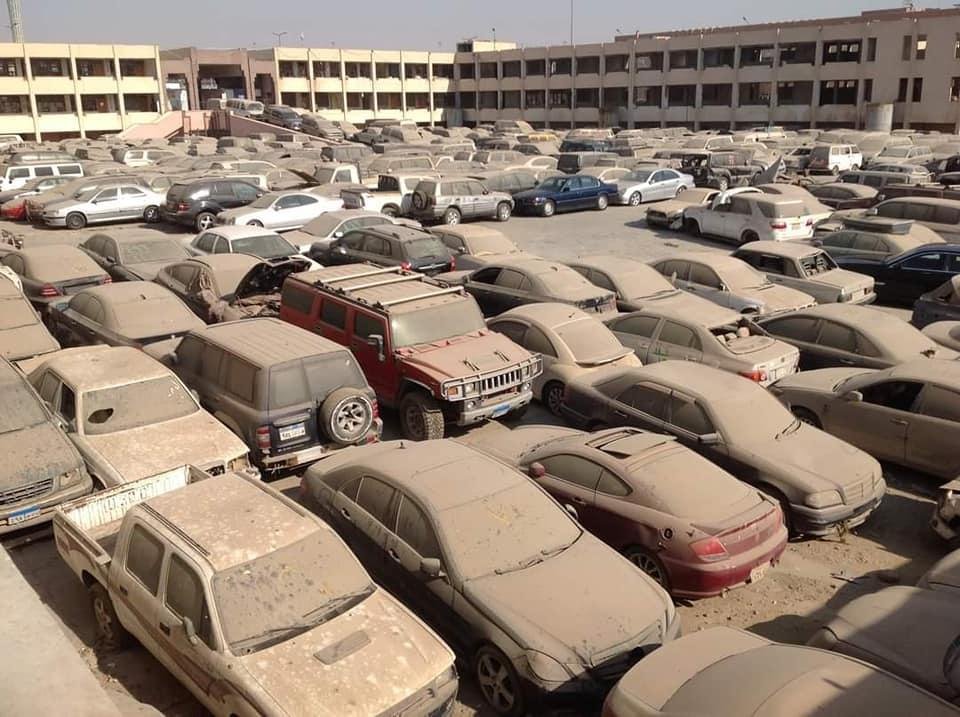
The auction buyer must also account for the costs and risks associated with acquiring a vehicle whose condition may not be fully known.
URA sells auctioned goods on an “as is, where is” basis. Its conditions place responsibility on bidders to inspect the goods, with no general warranty on their quality or condition. The winning bid therefore reflects not only the vehicle’s perceived value but also the risks and additional costs the buyer is prepared to assume.
Consequently, comparing an auction price with a vehicle’s original showroom price can be misleading. The relevant comparison is the vehicle’s condition-adjusted market value at the time of sale, not necessarily what it cost when it first entered Uganda.
How the reserve price is determined
The reserve price is central to the auction because it establishes the minimum threshold for a sale.
URA’s auction guidance describes it as the minimum value needed to recover taxes. The East African Community Customs Management Regulations give the Commissioner authority to determine the reserve price for goods offered for sale.
The reserve price should not, however, be confused with the vehicle’s original market value or automatically assumed to be identical to the full amount demanded from its former owner. The winning bid is also not necessarily the reserve price. It is determined by the offers received from participating bidders.
This is where transparency becomes particularly important. Where vehicles are sold at prices substantially below their apparent market value, the public interest lies in understanding how the reserve was established, what valuation was used and whether the vehicle’s condition was taken into account.
A credible auction process must be able to demonstrate that the reserve price was properly determined and that the sale was conducted fairly.
What happens to the money raised?
The auction proceeds are subject to a statutory order of application under Section 42 of the East African Community Customs Management Act.
They are applied first to outstanding duties, followed by the expenses of removing and selling the goods, Customs rent and other charges, port charges, and freight and related costs.
Where a balance remains after these obligations have been met, the law provides for it to be paid to the owner upon application within one year of the sale, subject to the applicable statutory provisions.
URA reiterated this position in a public notice issued in March 2026, reminding owners of auctioned goods of the procedure for claiming surplus proceeds.
The arrangement is significant because the auction price is not simply a figure that URA collects as unrestricted revenue. It is used to settle specified liabilities and expenses, with any qualifying surplus payable to the former owner.
However, the system also raises an important question where the sale proceeds are insufficient to cover all outstanding obligations. The applicable law provides for the disposal of goods that cannot be sold for enough to meet the relevant charges. The treatment of any remaining shortfall must be assessed against the circumstances and legal provisions governing the particular case.
The real test is whether the valuation is defensible
The debate over URA’s vehicle auctions should not be reduced to the difference between what a vehicle originally cost and what it eventually fetched. That comparison alone does not establish whether a sale was fair or whether the authority recovered an appropriate amount.
The more important questions concern the valuation process, the reserve price, the condition of the vehicle, the competitiveness of the auction and the accounting for proceeds.
URA has a legitimate responsibility to enforce Customs law, recover outstanding duties and manage goods held under its control. But the exercise of that responsibility should also be accompanied by transparency, particularly where public auctions involve high-value assets.
For an owner, the decision to pay the clearance bill or risk losing the vehicle through auction can be a difficult financial calculation. For the public, the concern is whether the State is disposing of those assets through a process that protects the revenue due while ensuring that goods are not sold below a reasonably defensible value.
Ultimately, the question is not simply why an Shs80 million vehicle can be sold for Shs15 million. It is whether the valuation, reserve price and final sale can be justified, and whether the statutory process balances the recovery of public revenue with the proper disposal of private property
