

For Irene Nakasiita, giving birth was a battle for survival. The President of the Public Relations Association of Uganda still remembers the harrowing moment when she needed five units of blood during labour. Her experience has become part of the emotional force behind the 4th edition of the Corporate Run, an initiative bringing Uganda’s corporate community together around one urgent cause of protecting mothers and their babies.

The Corporate Run officially launched ahead of race day on Sunday, October 11, 2026, at Bugolobi’s NEC Grounds, with this year’s edition focused on raising funds to provide 5,000 mama kits to health centres where essential supplies for safe childbirth remain in short supply.
The need is enormous. Uganda records nearly two million births every year, yet only about 900,000 mama kits are distributed, leaving a significant gap for mothers who arrive at health facilities without the basic items required for childbirth.
Dr. Richard Mugahi, Commissioner for Reproductive, Maternal, and Child Health at the Ministry of Health, stressed that addressing maternal health cannot be left to health workers alone. He reminded stakeholders that:

“safeguarding mothers… is the responsibility of the whole community”.
That call has found a powerful response in Uganda’s private sector, with businesses, professional associations and civil society joining forces behind the Corporate Run. At the heart of the campaign is a simple but profound belief: no mother should lose her life because the basic resources needed to give birth safely were unavailable.
For Corporate Run Chairman Ian Rumanyika, the mission is also deeply personal. He recalled a colleague who walked out of the office seven years ago to give birth and never returned. The memory has stayed with him and shaped the purpose behind the initiative.

“Behind every number is a mother, a family and a life that matters,”
Rumanyika stated.
His words capture what is sometimes lost when maternal mortality is reduced to statistics. Every mother who dies leaves behind children, partners, parents, colleagues and communities. Every preventable death represents a life interrupted and a future denied.
Stephen Asiimwe, CEO of the Private Sector Foundation Uganda, pointed to the broader cost of losing mothers and newborns.

“Every mother or newborn we lose could be a future Newton,”
he warned, highlighting the generations of talent and potential that can be lost when families are devastated by preventable deaths.
The Corporate Run has therefore grown into more than a sporting event. It is becoming a platform through which Uganda’s business community can translate corporate responsibility into tangible action.
The Capital Markets Authority is among those lending its voice to the campaign. Communications Manager Lyn Tukei placed maternal health within the wider conversation about national development and economic prosperity.

“There is no capital without the people… investing in people, starting with the safety of mothers, is the truest form of capital”.
The HR Managers’ Association of Uganda has similarly emphasized the connection between maternal health, families and the workplace. Its President, Paul Rumanda Rugambwa, noted that:

“protecting mothers means protecting the workforce and the families behind it”.
That perspective is particularly important in a country where the consequences of maternal health challenges extend far beyond the delivery room. When a mother is lost, families can lose an income earner, a caregiver and a central pillar of their household. The effects can ripple through workplaces, communities and the wider economy.
Kampala City Traders Association (KACITA) has brought another important perspective to the campaign, drawing attention to the realities faced by women at community level. Representatives noted that boda boda riders are often an expectant mother’s first point of contact when an emergency occurs, making the wider community an important part of the maternal health response.

On Sunday, October 11, at 6:00 a.m., business leaders, professionals, families and members of the wider public will leave their boardrooms, offices and homes and take to the streets, not simply to run, but to stand in solidarity with mothers whose journeys into childbirth can become a fight for survival.
The goal is clear, 5,000 mama kits for health centres that need them most. And behind that number are 5,000 opportunities to make childbirth a little safer, a little more dignified and, ultimately, a little less like the war Irene Nakasiita remembers.
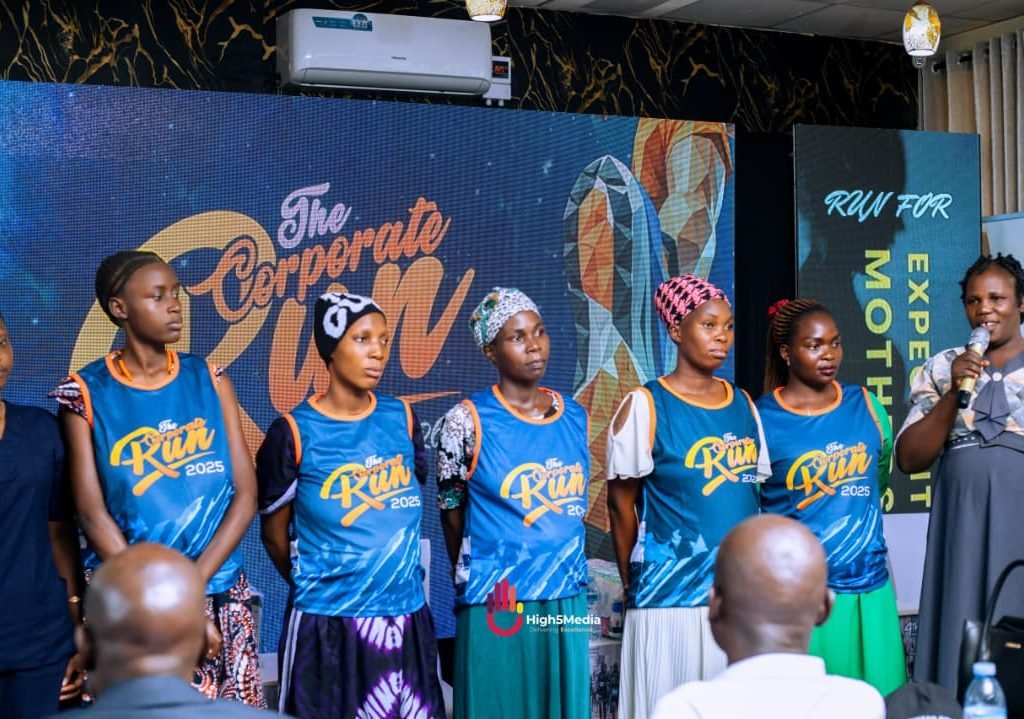
Because no mother should have to fight that war alone.
