

Buying an office building, shopping centre, apartment block or other income-generating property requires substantial capital, putting such investments beyond the reach of many individual investors. Real Estate Investment Trusts (REITs) offer an alternative by allowing several investors to pool their money to own and earn income from property without having to purchase an entire building themselves.
Under this arrangement, investors buy units in a trust that owns or invests in real estate. The trust generates income from activities such as renting out commercial buildings, residential properties and other assets, which is then distributed to investors in accordance with the structure’s terms.
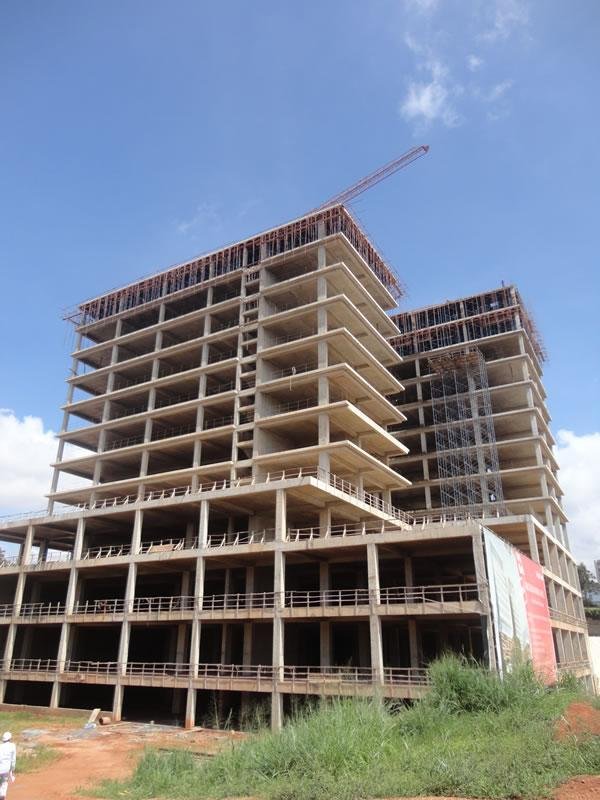
For property developers, REITs provide an alternative way of raising capital beyond relying on personal funds, business partners or commercial bank loans. They can also allow property owners to unlock the value of existing buildings by bringing them into an investment structure supported by multiple investors.
The model emerged in the United States in 1960, when Congress established the legal framework for REITs to give ordinary investors access to large-scale, income-generating real estate. Since then, the investment structure has spread to several markets, including the United Kingdom, South Africa and Kenya, providing property businesses with another route to raise capital and investors with an opportunity to participate in the real estate market.

Uganda introduced its own REIT framework through the Collective Investment Schemes Act and regulations issued in 2017. The framework was intended to create a regulated structure through which property developers could mobilise funds from the public and investors could participate in property investments without directly owning the underlying assets.
However, nearly 10 years after the regulations were introduced, Uganda is yet to register its first REIT transaction.
The Capital Markets Authority (CMA) says no property developer has applied to place an asset under a REIT, leaving the investment structure unused despite demand for housing, commercial buildings and other property developments.
The absence of a first transaction raises questions about why a model already operating in other markets has struggled to gain traction in Uganda. According to the CMA, taxation, governance concerns, limited public awareness and the lack of a successful local example are among the factors holding back adoption.
Dickson Ssembuya, CMA’s Director for Research and Market Development, told The Independent that the tax treatment of property transfers is one of the major obstacles. He pointed to stamp duty and Capital Gains Tax concerns, which the regulator and other government agencies need to resolve to make the arrangement commercially attractive.
The challenge is particularly significant because transferring property into a REIT can trigger tax obligations before the trust begins generating income. A property owner contributing a building to a trust receives investment units in exchange rather than immediate cash from a conventional sale. This means the owner could face transfer-related tax costs without having the cash proceeds of a sale readily available to meet them.
Ssembuya also pointed to the absence of a local REIT as an obstacle to market development. Without an established example, property owners and prospective investors have limited local experience to guide their decisions or demonstrate how the investment structure performs.
He argued that resolving these challenges is becoming increasingly important as commercial bank credit becomes more expensive and difficult to access, potentially limiting the financing options available to property developers.
The concerns extend beyond REIT-specific regulations to the wider tax burden facing Uganda’s property sector.
Shirley Konga of the Association of Real Estate Agents of Uganda said property businesses encounter multiple taxes and charges throughout the development process, from land acquisition and planning to construction, rental operations and eventual disposal.
She cited stamp duty on land purchases, Capital Gains Tax, VAT on construction materials, approval fees, rental income tax and property taxes among the costs affecting developers.
Konga also argued that interest paid on development financing is not an allowable tax deduction, further increasing the financial pressure on property projects.
These costs matter because REITs are intended to make property investment and financing more accessible by allowing developers to bring multiple investors into a project. However, if transferring an existing property into the structure attracts substantial upfront tax obligations, the financial incentive to use the arrangement could be weakened.
For Uganda, therefore, the challenge is not simply having regulations that permit REITs. It is creating tax, governance and investment conditions that make the structure commercially attractive to property owners and investors.
Until these concerns are addressed, the country risks leaving an alternative source of long-term property financing largely untapped, even as developers contend with rising project costs and increasingly expensive borrowing.
