
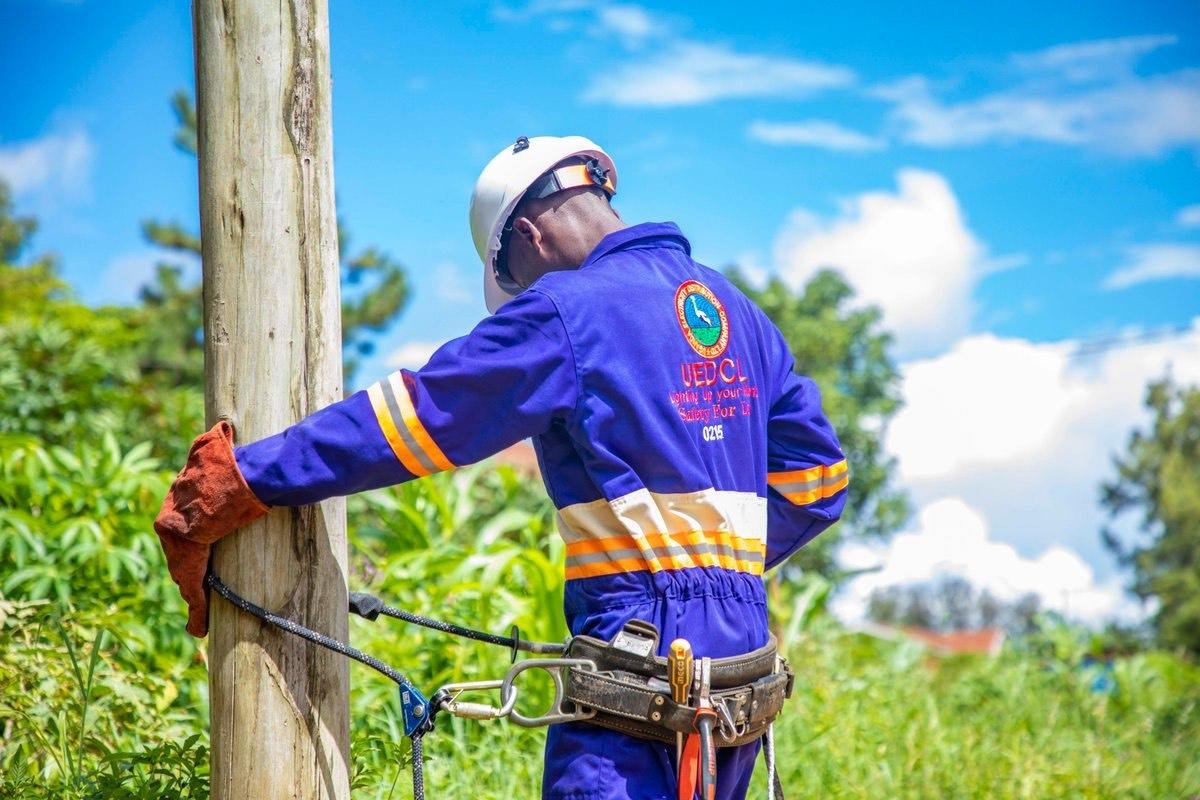
When Kampala went dark over the weekend, the familiar ritual began almost immediately.
Frustrated consumers took to social media to condemn the Uganda Electricity Distribution Company Limited (UEDCL). Some invoked a name that has become shorthand for a more dependable electricity supply: Umeme, the private company whose distribution concession expired in March 2025.
The verdict appeared settled before the technical explanation had fully entered the public conversation. UEDCL was failing. Umeme had been better.
But the electricity distributor offered a different account.
In statements published on X, UEDCL attributed the partial power outage to transmission constraints involving the Uganda Electricity Transmission Company Limited (UETCL). A subsequent alert identified a fault at the UETCL Kampala North Substation, affecting Ntinda, Kisaasi, Kulambiro, Kiwatule and surrounding neighbourhoods.
The distinction matters. If the fault lies in the high-voltage infrastructure supplying a neighbourhood, the distributor cannot simply switch on the lights by repairing a local transformer. The upstream problem must first be resolved.
That does not automatically absolve UEDCL of responsibility for every aspect of an outage or the speed of restoration. It does, however, expose a fundamental misunderstanding about who controls Uganda’s electricity supply.
The company that delivers electricity to your home is not necessarily the company responsible for the failure that leaves you in darkness.
And in a country where electricity reliability affects household incomes, business productivity, industrial investment and public confidence in government services, that misunderstanding is more than a public relations problem. It is an accountability problem.
The electricity system most consumers never see
Uganda’s electricity sector was restructured in 2001, when the former Uganda Electricity Board (UEB) was unbundled into separate entities responsible for different stages of the electricity supply chain.
The logic was straightforward: generation, transmission and distribution require different infrastructure, operational expertise and investment decisions.
The resulting system divides responsibility among three principal state-owned companies: the Uganda Electricity Generation Company Limited (UEGCL), which operates generation assets; UETCL, which manages the high-voltage transmission network and key system operations; and UEDCL, which operates the distribution network delivering electricity to customers.
The Electricity Regulatory Authority (ERA) regulates the sector, while the Ministry of Energy and Mineral Development provides policy direction.
In theory, this division makes accountability clearer. Each institution has a defined mandate, and a failure at one stage can be traced to the part of the system where it originated.
In practice, the structure is less obvious to the public.
Consumers see power lines, meters, bills and customer-service contacts. They rarely see the generation facilities, transmission substations and control systems that must work together before electricity reaches a socket.
When the lights go out, the company closest to the customer becomes the natural target.
To understand why that instinct can be misleading, it helps to follow electricity from the point where it is produced to the moment it enters a home.
First, the power must be generated
The journey begins with electricity generation.
UEGCL operates government-owned generation facilities, including the Karuma, Isimba, Nalubaale and Kiira hydropower stations. Karuma has an installed capacity of 600 megawatts, making it Uganda’s largest hydropower station by capacity, while Isimba contributes another 183 megawatts.
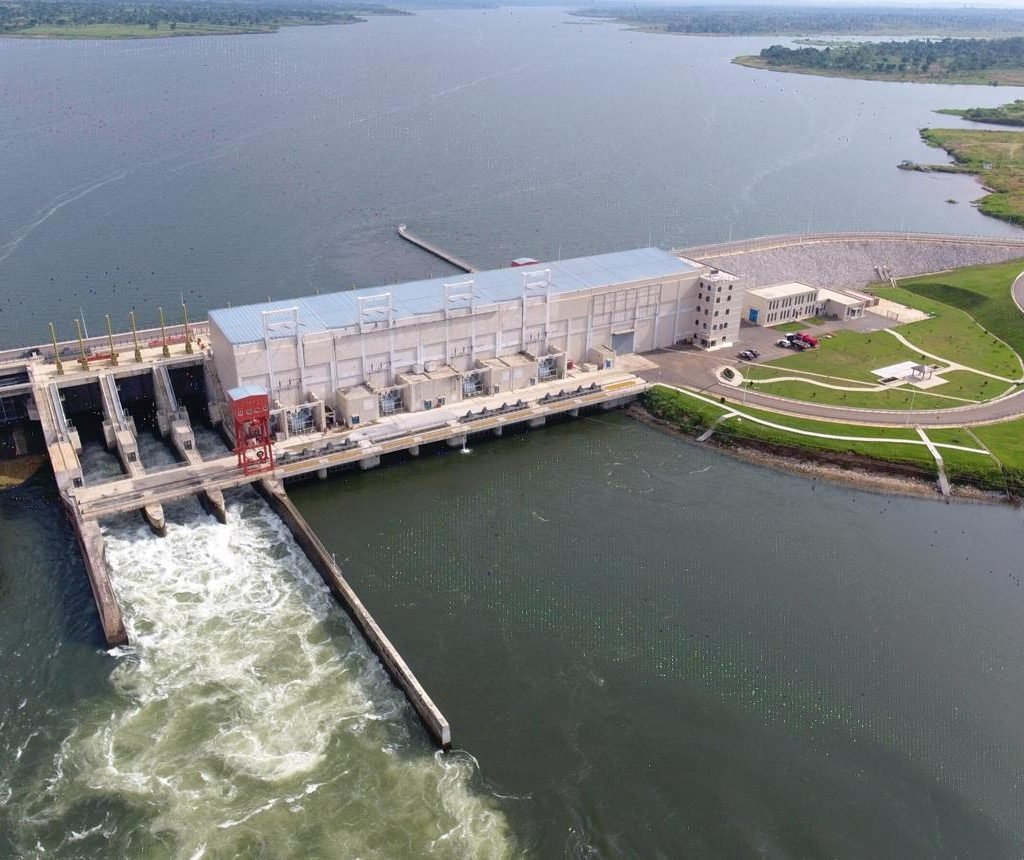
Other generators, including independent power producers, also supply electricity to the national system.
Generation is the first potential point of failure. A major turbine breakdown, a prolonged reduction in water availability, or the simultaneous loss of several generating units can reduce the amount of electricity available to meet demand.
When available generation cannot meet consumption, the country may face supply shortages, load shedding or other measures to balance the system.
In that situation, the problem begins before electricity reaches the transmission network.
Yet Uganda’s substantial generation additions, particularly Karuma and Isimba, have changed the national supply picture. The existence of significant installed generating capacity means that a blackout should not automatically be interpreted as evidence that the country has run out of electricity.
Installed capacity is not the same as electricity available at every moment, and generation problems remain possible. But a country can have electricity available at its power stations and still struggle to deliver it reliably to consumers.
That is where the next institution becomes critical.
UETCL: The highway between power stations and cities
If generation is the source, transmission is the highway.
UETCL transports bulk electricity over high-voltage lines and through major substations towards the distribution networks serving towns, cities, industries and other consumers.
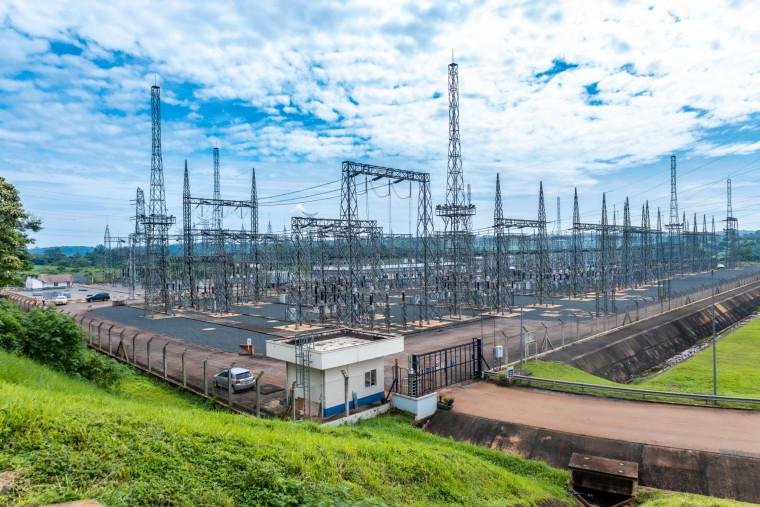
Its infrastructure includes transmission lines operating at different voltage levels, including 66 kilovolts, 132 kilovolts, 220 kilovolts and 400 kilovolts.
These are not the smaller lines running along residential streets. They are the backbone of the national electricity system, designed to carry large amounts of power over long distances.
UETCL also performs important system-operator functions, coordinating the balance between electricity supply and demand and managing the operation of the interconnected grid.
When a major transmission line trips or a critical substation develops a fault, the consequences can extend far beyond the immediate location of the damaged equipment.
A failure at a key transmission point can interrupt supply to multiple distribution feeders, affecting several neighbourhoods or larger areas simultaneously. The precise impact depends on the network configuration, available alternative routes and the extent of the fault.
This is the distinction at the centre of the recent Kampala blackout.
UEDCL’s public explanation pointed to transmission constraints and a fault at the UETCL Kampala North Substation. If the upstream transmission problem prevents electricity from reaching the relevant distribution supply points, UEDCL cannot independently restore the missing bulk supply.
The two companies must coordinate the restoration process.
The distinction is comparable to a water-distribution system: a utility responsible for delivering water to homes may be unable to supply a neighbourhood if a major upstream pipeline is disrupted. The local utility may still have responsibilities, but it cannot repair infrastructure belonging to another operator simply by responding more quickly to customer complaints.
That is why blaming UEDCL alone for an outage originating at a UETCL facility risks directing public anger at the wrong part of the system.
But identifying the transmission company as the source of a particular fault is only the beginning of accountability, not the end of it.
UEDCL: The last mile, and the first target of public anger
Once electricity reaches the appropriate substations, it must still travel through the distribution network before it reaches consumers.
That is UEDCL’s responsibility.
The company operates the local infrastructure that takes electricity from transmission supply points and delivers it through distribution substations, transformers, medium- and low-voltage lines, service connections and meters.
It is also the institution consumers typically associate with connections, billing, prepaid metering, network maintenance and customer service.
UEDCL returned to the frontline operation of Uganda’s principal electricity distribution business on 1 April 2025, following the expiry of Umeme’s 20-year distribution concession.
That transition changed the company consumers deal with, but it did not eliminate the technical dependencies built into the electricity system.
UEDCL still depends on electricity being generated and transmitted to the points where its distribution network receives supply. It must also maintain the local infrastructure under its control.
When a neighbourhood transformer fails, a distribution line is damaged, a feeder develops a fault or a local protective device trips, UEDCL may indeed be responsible for diagnosing and resolving the problem.
The same applies when an outage persists in one area after the upstream supply has been restored, provided the remaining fault lies within UEDCL’s network.
In such circumstances, consumers are justified in demanding rapid fault response, accurate restoration estimates and clear communication.
The fact that transmission failures can cause blackouts does not give the distributor a blanket defence against criticism.
It simply means that the responsibility for each incident must be established rather than assumed.
A simple test: Is your neighbourhood dark, or is the wider network affected?
The geographical pattern of an outage can offer useful clues about where the problem lies, although it cannot conclusively identify the fault.
If one street loses power while neighbouring streets remain supplied, the problem may involve a local distribution line, transformer, feeder or protective device.
If several neighbourhoods connected to the same supply point lose electricity simultaneously, the cause may lie further upstream, including at a major substation or transmission connection.
If a large area experiences a supply interruption, transmission constraints or a wider system disturbance become possibilities worth investigating.
And if the country experiences a shortage of available generation, the problem may originate at the production stage.
These are diagnostic clues, not definitive rules. Distribution faults can affect large areas, transmission faults can have limited effects, and different failures can occur at the same time.
Consumers therefore need more than speculation based on how many streets are dark. They need timely technical information from the companies responsible for the affected infrastructure.
That is where the electricity sector’s public communication becomes as important as its engineering.
Why Umeme keeps entering the conversation
The comparisons with Umeme are understandable.
For two decades, the private operator was the most visible institution responsible for much of Uganda’s electricity distribution. Consumers became accustomed to associating the company with repairs, customer service, network investment and the everyday experience of receiving electricity.
When UEDCL took over the distribution business in April 2025, responsibility for that customer-facing network shifted.
The transition inevitably created a period in which consumers would judge the new operator against their previous experience, whether that experience was positive, negative or mixed.
But comparisons between the two companies can become misleading when they ignore the origin of a particular outage.
Umeme operated the distribution network under a concession. It did not independently generate all the electricity consumed in Uganda, nor did it control the entire high-voltage transmission system.
Had Umeme still been operating the distribution network during a transmission failure at UETCL’s Kampala North Substation, consumers downstream of the affected supply point could still have lost electricity.
The identity of the distribution operator does not, by itself, determine whether upstream electricity is available.
That does not settle the broader debate about whether UEDCL can match Umeme’s performance in areas such as fault response, customer service, distribution losses, investment and reliability. Those questions require evidence over time, including comparable outage data and service-performance measures.
A single transmission-related blackout cannot establish that UEDCL is performing well. Equally, it cannot fairly establish that UEDCL is responsible for a failure originating outside its network.
The real test is whether the new operating arrangement delivers measurable improvements in the services for which UEDCL is actually responsible.
The accountability gap is bigger than a blackout
Uganda’s electricity structure presents a difficult problem of public accountability.
The system is divided among specialised institutions, but the consumer experiences the result as a single service: electricity is either available or it is not.
When a failure occurs, each company must explain what happened within its area of responsibility. The public, meanwhile, needs to understand the cause, the expected duration of the outage and the steps being taken to restore supply.
Without that information, the distinction between generation, transmission and distribution remains largely invisible.
This creates room for misplaced blame, but it also creates a risk that genuine failures go unexamined.
If UEDCL is blamed for every blackout, transmission and generation problems may receive insufficient public scrutiny. If UETCL is blamed for every widespread outage, distribution failures may escape attention. And if every interruption is attributed to a generic technical fault, the public may never learn whether the underlying problem was ageing infrastructure, insufficient capacity, equipment failure, inadequate maintenance or an avoidable operational mistake.
Accountability requires more than naming the company whose equipment failed. It requires explaining why the failure occurred, whether it could have been prevented, how long the response took and what will change to reduce the likelihood of a repeat.
That is the difference between an outage announcement and a meaningful account of public-service performance.
The real test is not who gets blamed
Uganda’s electricity supply chain works only when its different parts work together.
Generating plants must produce electricity. Transmission lines and substations must carry it reliably. Distribution networks must deliver it safely and consistently to consumers.
A failure at any stage can leave a household in darkness, regardless of which company’s name appears on the bill.
The recent Kampala outage illustrates why the distinction matters. UEDCL’s explanation pointed to a transmission-side problem involving UETCL, including a fault at Kampala North Substation. That account provides a reason to examine the transmission network, rather than simply treating the interruption as proof that the distributor has failed.
But the explanation must also be tested against the technical findings and the restoration record. Public statements are a starting point for accountability, not a substitute for it.
The larger lesson is that Uganda needs an electricity sector in which responsibility is not only divided clearly on paper but communicated clearly when things go wrong.
Because the public should not have to become electrical engineers to understand why the lights have gone out.
And a country cannot reliably fix a problem it cannot accurately identify.
The next time Kampala goes dark, the most important question will not be which company Ugandans can blame most easily. It will be which part of the system failed, who was responsible for preventing that failure, and whether the institution accountable for it can demonstrate that it has learned enough to stop it happening again.
Until those questions become the centre of the conversation, Uganda risks repeating the same cycle: a blackout, a wave of anger, a round of competing explanations and a power system whose underlying weaknesses remain in the dark.
