
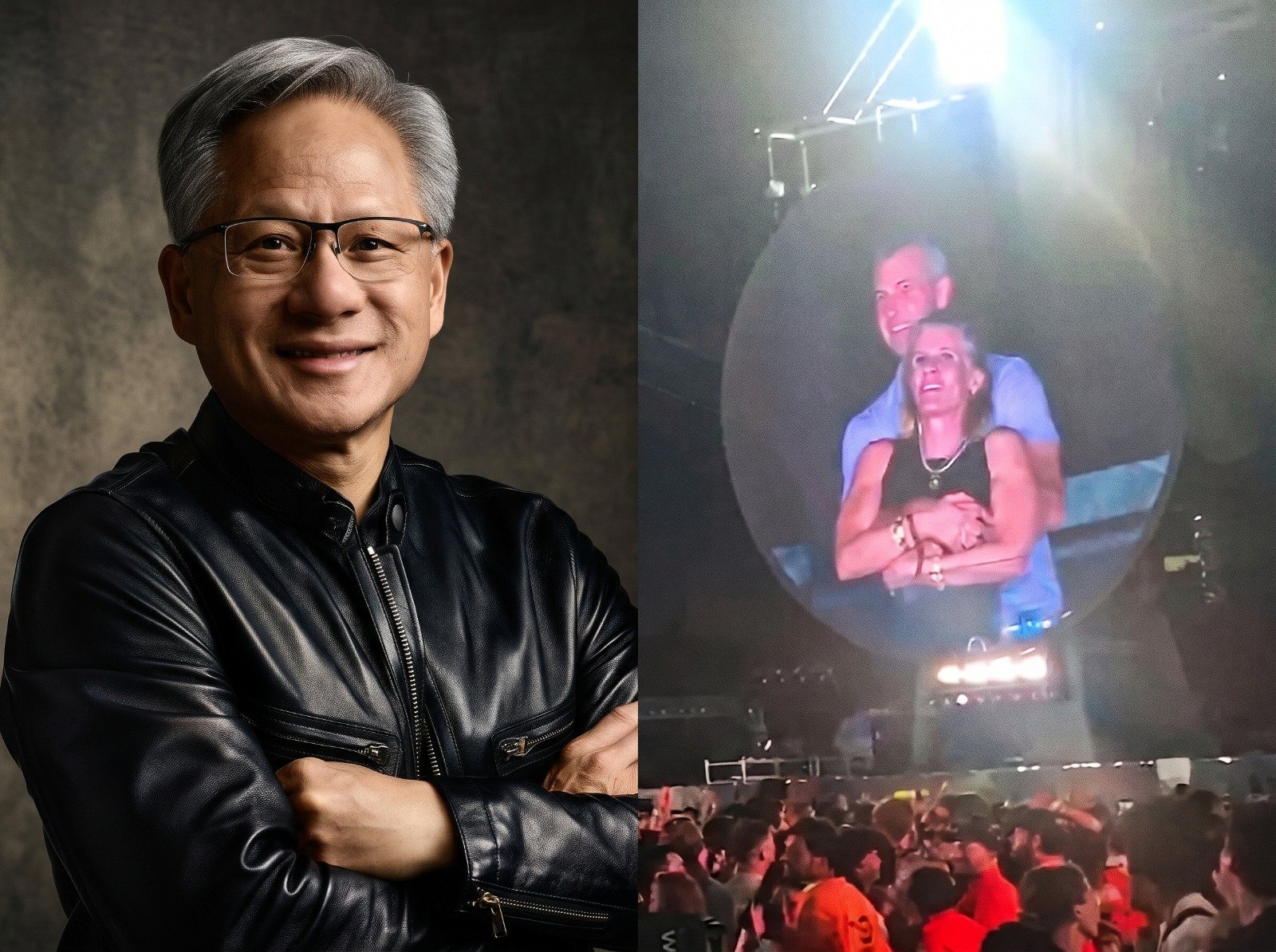
In July 2025, a stadium camera turned a technology company’s chief executive into an international internet sensation. Andy Byron, then CEO of enterprise software company Astronomer, was caught embracing the company’s Chief People Officer, Kristin Cabot, during a Coldplay concert in Massachusetts. As the pair attempted to move out of view, frontman Chris Martin joked that they were either having an affair or were simply very shy.
Within days, Byron was out of the company.
Sixteen months later, another technology executive faced a scandal involving alleged extramarital relationships, questions about workplace conduct and a potentially damaging national security investigation. But Jensen Huang’s departure from Nvidia lasted just 11 days. On November 23, 2026, the company’s board unanimously reinstated its co-founder as president and chief executive, reversing its earlier position that it did not intend to bring him back.
The contrast raises a fundamental question about corporate governance: Why does one executive lose his job permanently while another returns before investigations into his conduct have been concluded?
The answer appears to lie beyond the personal scandals themselves. Huang’s position at the centre of the global artificial intelligence industry, Nvidia’s strategic importance to the United States, the financial consequences of his departure and political intervention created circumstances that Astronomer’s board never faced.
The two cases offer a revealing examination of how corporate boards balance executive accountability against the commercial consequences of removing powerful leaders.
The difference between being a founder and being replaceable
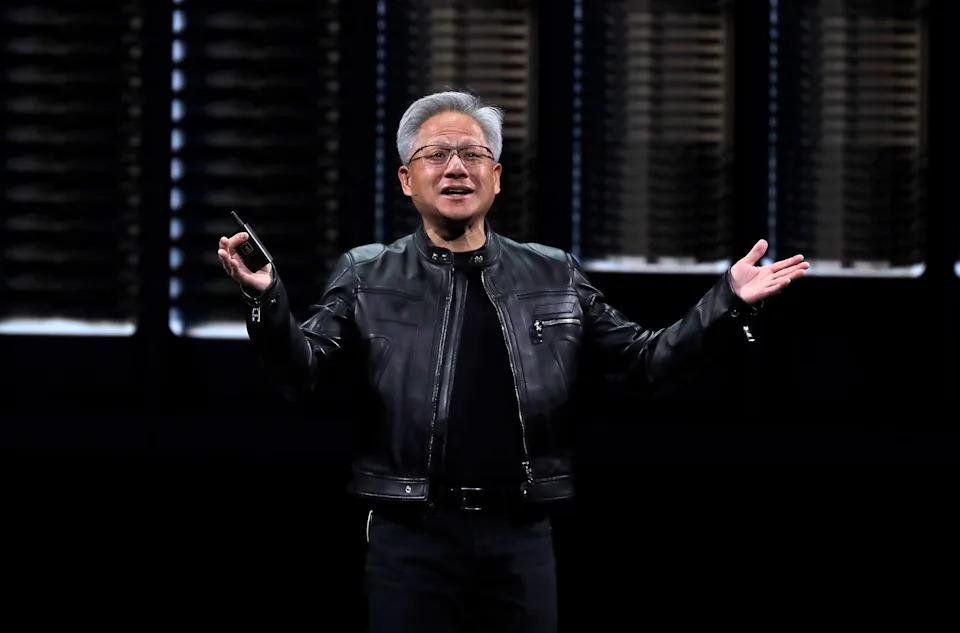
Huang’s relationship with Nvidia is fundamentally different from Byron’s relationship with Astronomer.
Huang co-founded Nvidia in 1993 and spent more than three decades building it into one of the world’s most influential technology companies. Its graphics processing units have become essential infrastructure for artificial intelligence development, making the company central to the commercial ambitions of technology firms and the strategic interests of governments.
He is not simply the person occupying Nvidia’s corner office. He is its principal public face, a central figure in its technological direction and an important part of its relationships with customers, investors and industry partners.
His departure therefore created uncertainty extending well beyond the question of who would occupy the chief executive’s office.
Byron, meanwhile, was a hired executive who became Astronomer’s CEO in 2023. Although he led a company with a substantial position in the enterprise software market, he did not have the same founder relationship, strategic influence or global economic significance as Huang.
Astronomer had a succession option in co-founder and Chief Product Officer Pete DeJoy, who assumed interim leadership following Byron’s departure.
For its board, accepting Byron’s resignation offered a relatively straightforward way to address a leadership crisis. For Nvidia, removing Huang presented a much more complicated calculation involving succession, investor confidence, business relationships and the company’s position in the global AI industry.
This distinction does not establish that Huang deserved different treatment. It does, however, illustrate how founder influence can complicate the application of corporate accountability.
When the market becomes part of the boardroom
The financial consequences of losing a chief executive can significantly influence a board’s decisions, particularly when the executive is closely associated with the company’s valuation and future prospects.
Nvidia’s reaction to Huang’s departure demonstrated the extent of this exposure.
Following his November 12 resignation, the company’s shares came under pressure as investors assessed the implications of losing the executive who had led its transformation into an AI industry powerhouse. The uncertainty extended to the company’s leadership, strategic direction and ability to sustain investor confidence.
The subsequent announcement of Huang’s reinstatement on November 23 produced an extraordinary market response. Nvidia shares surged by approximately 30% in the immediate trading reaction, adding hundreds of billions of dollars to the company’s market value. Reuters reported that the rally was worth nearly $1 trillion in additional market capitalisation. live+1
The market reaction offered a clear indication of how investors valued Huang’s leadership.
His return was interpreted not simply as the resolution of a personnel dispute but as a restoration of confidence in the company’s direction.
Astronomer faced a different commercial calculation. Byron’s departure did not threaten a globally dominant technology supply chain or create comparable uncertainty in international financial markets. The company could communicate its leadership transition and continue operating under interim management.
The distinction exposes a difficult governance dilemma: when a company’s fortunes become heavily associated with one executive, does the board retain sufficient independence to hold that person accountable?
A board’s responsibility is to protect the long-term interests of the company and its shareholders. But when the departure of a chief executive triggers a substantial market reaction, commercial pressure can make the enforcement of accountability considerably more difficult.
National security gave Nvidia’s crisis another dimension
Unlike the Astronomer controversy, Huang’s situation developed into an issue extending beyond workplace conduct and corporate reputation.
Reports linked him to Alice Huang, an unrelated Chinese businesswoman associated with Singapore-based technology company Megaspeed. US intelligence agencies reportedly suspected that she had connections to Chinese intelligence, prompting questions about whether Huang had been targeted in a foreign intelligence operation.
There were also reports alleging relationships between Huang and Nvidia employees, including a direct report.
Huang acknowledged being unfaithful to his wife and apologised, saying he had failed to meet the standards expected at Nvidia. However, the allegations concerning foreign intelligence activity remain distinct from his admission of infidelity. They should not be treated as proof that he knowingly participated in espionage or that any national security breach occurred.
The distinction became central to Nvidia’s reinstatement decision.
In announcing Huang’s return, the board said it had received input from senior levels of the US government and was confident that his reinstatement posed no national security risk. It also confirmed that an independent investigation into whether Huang had been targeted by a foreign intelligence operation would continue.
The company additionally established a National Security and Export Control Committee and began the process of recruiting a chief compliance officer. NVIDIA Newsroom+1
This was an important development because Nvidia is not an ordinary technology supplier. Its advanced chips are central to the US-China competition over artificial intelligence, computing power and technological leadership.
The company’s leadership therefore carries implications beyond its shareholders.
However, government assurances about national security do not automatically resolve questions about workplace conduct, executive judgement or the independence of corporate oversight. Those are separate governance issues requiring their own scrutiny.
The White House entered a corporate governance decision
Perhaps the most controversial element of Huang’s return was the involvement of President Donald Trump’s administration.
Trump publicly supported Huang’s reinstatement and said he had spoken to Nvidia’s board about bringing the executive back. Reports also described engagement between senior administration officials and the company during the period leading to the reversal.
The board subsequently acknowledged receiving input from senior US government officials as part of its decision.
That involvement raises questions about the boundary between national economic interests and the independence of a publicly traded company’s board.
The United States has a substantial interest in maintaining Nvidia’s competitiveness, particularly as Washington seeks to preserve its advantage in advanced semiconductors and artificial intelligence. But Nvidia’s directors also have responsibilities that cannot simply be transferred to government officials.
Their decisions must be guided by the company’s interests, the rights of shareholders and the need for effective oversight.
Reuters reported that the reversal attracted governance concerns, particularly because the board had previously indicated that it would not reinstate Huang and the independent investigation had not been completed. live+1
The concern is not necessarily that the board made the wrong decision by bringing Huang back. It is whether it followed a sufficiently independent and transparent process to justify that decision.
If political pressure, market movements or employee campaigns can substantially influence the treatment of a chief executive, the authority of the board risks becoming conditional on the executive’s economic and political importance.
Two scandals, different standards of accountability

The comparison with Byron is particularly revealing because Astronomer’s board made its position clear from the beginning.
Following the viral video in July 2025, the company placed Byron on leave and launched a formal investigation. It subsequently announced that he had tendered his resignation and that the board had accepted it.
Its statement was direct: leaders were expected to set standards in both conduct and accountability, and those standards had not been met. Variety Australia+1
There was little room for ambiguity about the company’s expectations.
However, the scandal also exposed a potential workplace governance problem. Cabot was Astronomer’s Chief People Officer, a position associated with responsibility for human resources and workplace culture. The alleged relationship therefore raised questions about conflicts of interest, reporting structures and the credibility of internal conduct policies.
The circumstances were different at Nvidia, where allegations involving employees raised similar questions about the relationship between executive authority and workplace standards.
Yet the outcomes diverged.
Byron did not return to Astronomer. Huang returned to Nvidia even as the independent investigation continued.
Importantly, Byron’s departure did not end his professional career. Subsequent reporting placed him in a fractional chief revenue officer role at software company Materialize. The distinction is that he never regained his former position at Astronomer.
The comparison is therefore not between a successful career and a destroyed one. It is between two boards making different decisions about whether the executives involved could continue leading their respective companies.
What the two cases reveal about corporate governance
The contrasting outcomes expose three important weaknesses that can emerge when companies become heavily dependent on individual executives.
First, founder dependence can weaken accountability.
When a founder becomes synonymous with a company’s identity, investors, employees and business partners may begin to regard the individual as indispensable. This can create an environment in which removing the executive appears more damaging than addressing the underlying governance concerns.
The problem is that no company should become so dependent on one individual that its board cannot exercise independent judgement.
Second, financial performance can overshadow institutional standards.
Nvidia’s market reaction demonstrated the commercial value investors attach to Huang’s leadership. But share-price movements cannot be the only measure of whether a chief executive should remain in office.
Corporate governance also concerns risk management, workplace culture, succession planning and the protection of shareholders over the long term.
A decision that produces an immediate market rally does not necessarily establish that the board has made the best governance decision.
Third, political influence can complicate board independence.
Nvidia’s strategic importance to the US economy provides a legitimate reason for government interest in its operations. However, the involvement of political leaders in a company’s executive succession decision creates difficult questions about where national interest ends and corporate independence begins.
These questions become even more important when investigations into the circumstances surrounding an executive’s departure remain unresolved.
The bigger lesson for corporate leadership
The stories of Huang and Byron are not simply cautionary tales about executives whose private lives became public controversies. They reveal how differently corporate accountability can operate depending on the power an individual holds within an organisation.
Astronomer’s board could afford to demonstrate that its leadership standards applied even when doing so meant losing its chief executive.
Nvidia’s board faced a more complicated situation. It had to weigh the consequences of losing a founder whose leadership had become deeply intertwined with the company’s commercial success and strategic importance.
There may be a compelling commercial argument for Huang’s reinstatement. His experience, relationships and understanding of Nvidia’s business are difficult to replace. But commercial indispensability should not become immunity from accountability.
The real test of Nvidia’s governance will be whether its independent investigation proceeds without interference, whether the board addresses any substantiated workplace or compliance failures and whether it can demonstrate that its decision was made in the company’s long-term interests.
Ultimately, the lesson extends beyond Silicon Valley. Businesses that build their fortunes around exceptional founders must also build institutions capable of holding those founders accountable.
A company may need its chief executive to remain competitive. But if the board cannot discipline that executive without worrying about the share price, political pressure or the reaction of influential shareholders, the company has a governance problem that no market rally can resolve.
The question is not whether Nvidia can afford to lose Jensen Huang. It is whether Nvidia can afford to become a company in which nobody can hold Jensen Huang accountable.
