
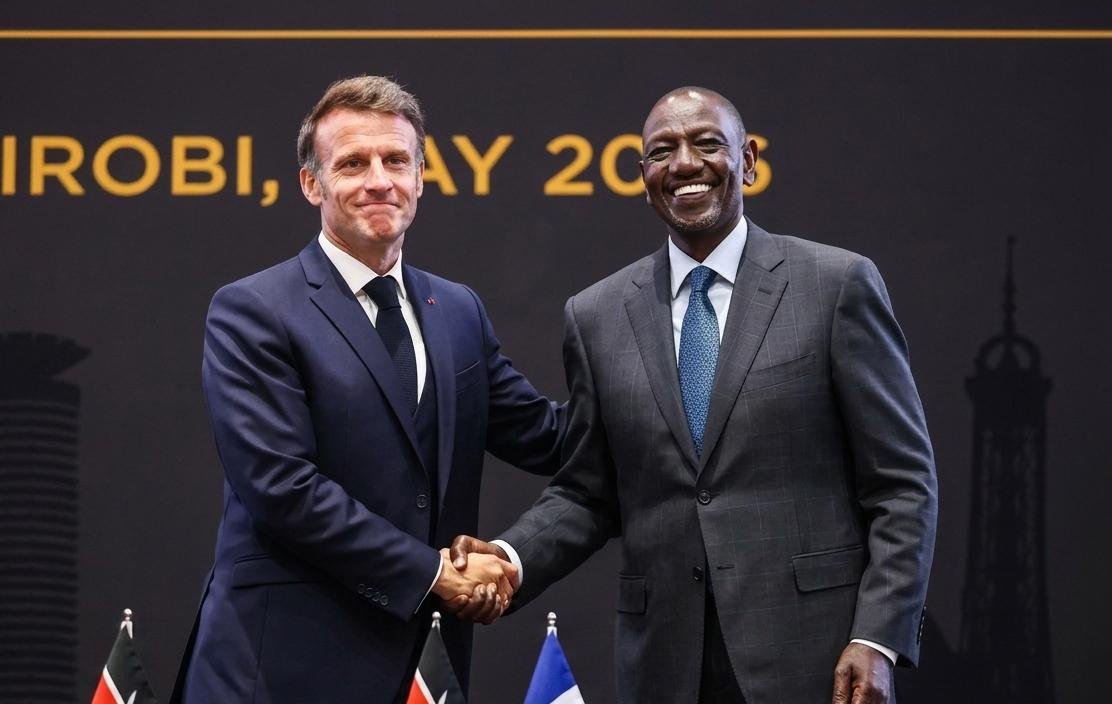
The inaugural Africa Forward Summit in Nairobi marked a major shift in how African partnerships are being structured. Rather than focusing on aid and diplomatic symbolism, the summit centered on investment, infrastructure, technology, and long-term economic positioning.
Co-hosted by Kenyan President William Ruto and French President Emmanuel Macron, the summit signaled a new era of Africa-Europe relations built around business, trade, and strategic cooperation.
At the center of the discussions was a proposed €23 billion investment framework covering infrastructure, energy, logistics, transportation, digital transformation, and industrial development projects across Kenya and the wider East African region.
For France, the summit represented a strategic pivot toward East Africa as it seeks stronger economic partnerships beyond its traditional influence in West Africa. For Kenya, it reinforced Nairobi’s growing role as East Africa’s financial and logistics gateway.
One of the biggest announcements focused on the modernization of the Port of Mombasa through partnerships involving French shipping giant CMA CGM. Improving port efficiency is expected to reduce cargo delays, lower transportation costs, and strengthen regional trade across the East African Community.
Urban transport was another major priority. Plans to rehabilitate sections of the Nairobi commuter rail system are aimed at reducing congestion in one of Africa’s fastest-growing cities. Faster transport networks could improve productivity, reduce delivery delays, and lower operational costs for businesses.
Energy security also featured heavily in the discussions. Proposed investments in renewable energy and future civil nuclear cooperation reflect Kenya’s ambition to stabilize electricity supply and reduce industrial energy costs. Reliable and affordable power remains critical for manufacturing growth and competitiveness.
The summit additionally placed strong emphasis on digital transformation and youth skills development. French telecom company Orange announced plans focused on training African youth in artificial intelligence, cybersecurity, and digital entrepreneurship by 2030. The initiative aligns with Kenya’s growing reputation as Africa’s “Silicon Savannah.”
Agriculture and trade were equally part of the broader strategy. Kenya’s specialty exports, including purple tea, are expected to gain expanded access to European retail markets through new trade agreements designed to support value addition and improve export earnings.
However, the summit also generated debate. Discussions surrounding defense cooperation agreements and increased French military engagement in the region sparked concerns among critics questioning issues of sovereignty and geopolitical influence. While governments emphasized security and strategic cooperation, some analysts warned that long-term partnerships must remain transparent and balanced.
Still, the broader economic message from the summit was unmistakable: global powers are increasingly viewing Africa not as an aid destination, but as a strategic investment frontier.
For Kenya, the success of the Africa Forward Summit will ultimately depend on implementation. The real test will not be the announcements themselves, but whether the projects translate into faster logistics, stronger industries, better infrastructure, more jobs, and sustainable economic growth.
The summit may eventually be remembered as a defining moment in Kenya’s economic evolution one where the country positioned itself not simply as a participant in Africa’s growth story, but as one of the continent’s central economic gateways.
