
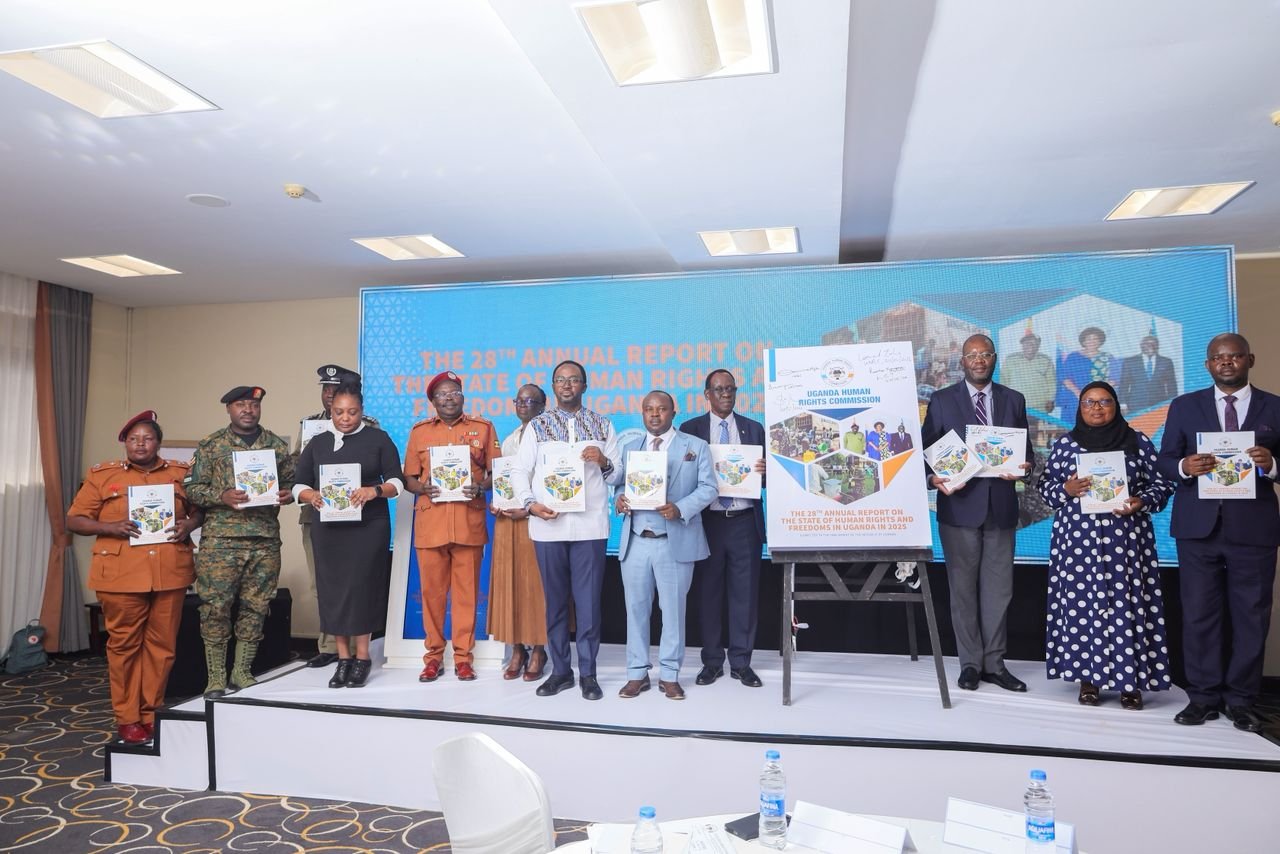
The launch of the 28th Annual Report on the State of Human Rights and Freedoms in the Country for the year 2025 at Protea Hotel marked a distinct departure from standard bureaucratic compliance.
Beyond the statistical data and legal frameworks presented to policymakers, the proceedings focused heavily on the lived experiences of ordinary citizens behind the numbers. The report stands as a comprehensive audit of civil liberties, economic stability, and institutional accountability for the year 2025 by the Uganda Human Rights Commission (UHRC).
While the document details notable administrative strides and systemic challenges, the core narrative of the launch emerged from the testimonies of community advocates and institutional leaders who emphasized that human rights documentation must translate into tangible legislative reforms.
For many observers, human rights reports can feel detached from the public due to dense legal terminology. Yesterday’s presentation, however, intentionally bridged the gap between institutional assessment and public reality.
UHRC Chairperson Hon. Mariam Wangadya, represented in absentia by Hon. Lamex Apitta Omara, a member of the Commission, emphasized the importance of standing up for human rights.
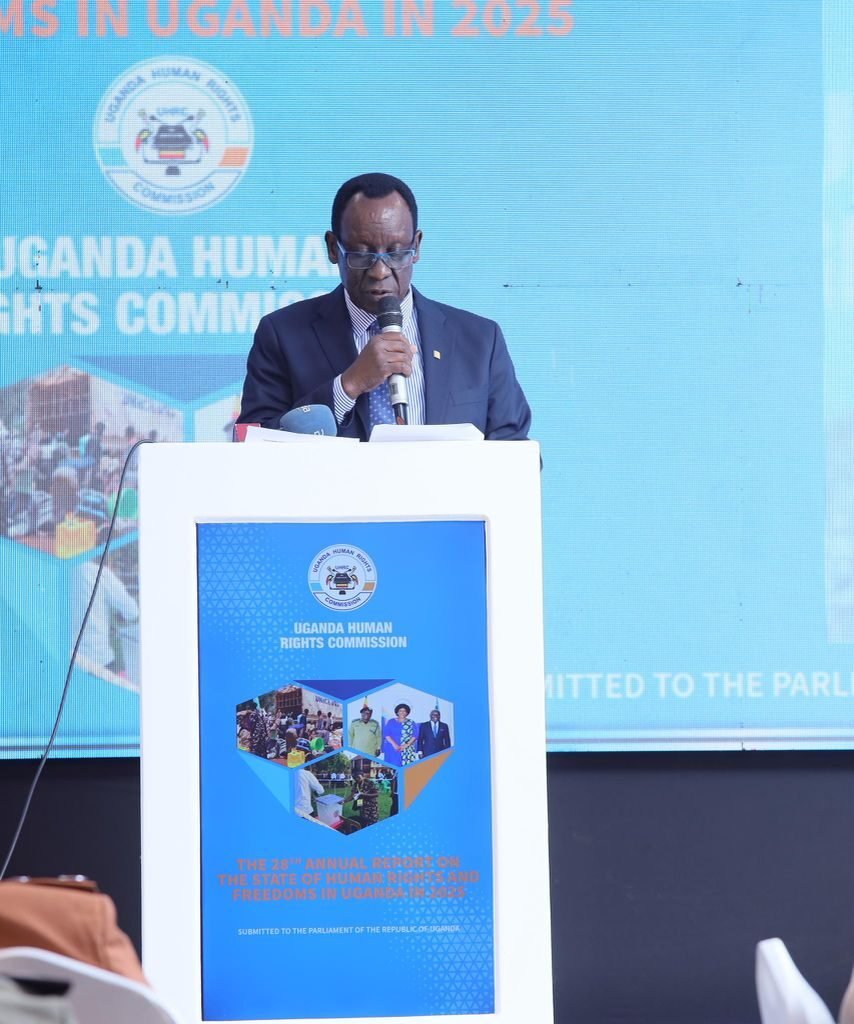
“Let us all in our respective capacities continue to stand up for human rights, for the good of our country and for the good of our future generation,” he said.
The 28th Annual Report spans a wide array of crucial human rights chapters, each deeply relevant to Uganda’s current landscape, as comprehensively detailed within the volumes distributed to distinguished guests at the launch.
A cornerstone of the report is its deep dive into cancer and its human rights implications. Uganda, like many countries around the world, continues to face the growing burden of cancer, a disease that begins when abnormal cells grow uncontrollably, invade surrounding tissues, and spread to other parts of the body.
Ms. Hope Bagota, presenting the report on behalf of the Director of Monitoring and Inspections at the UHRC, emphasized that women account for 55% of reported cancer cases in Uganda, compared to 45% among men.
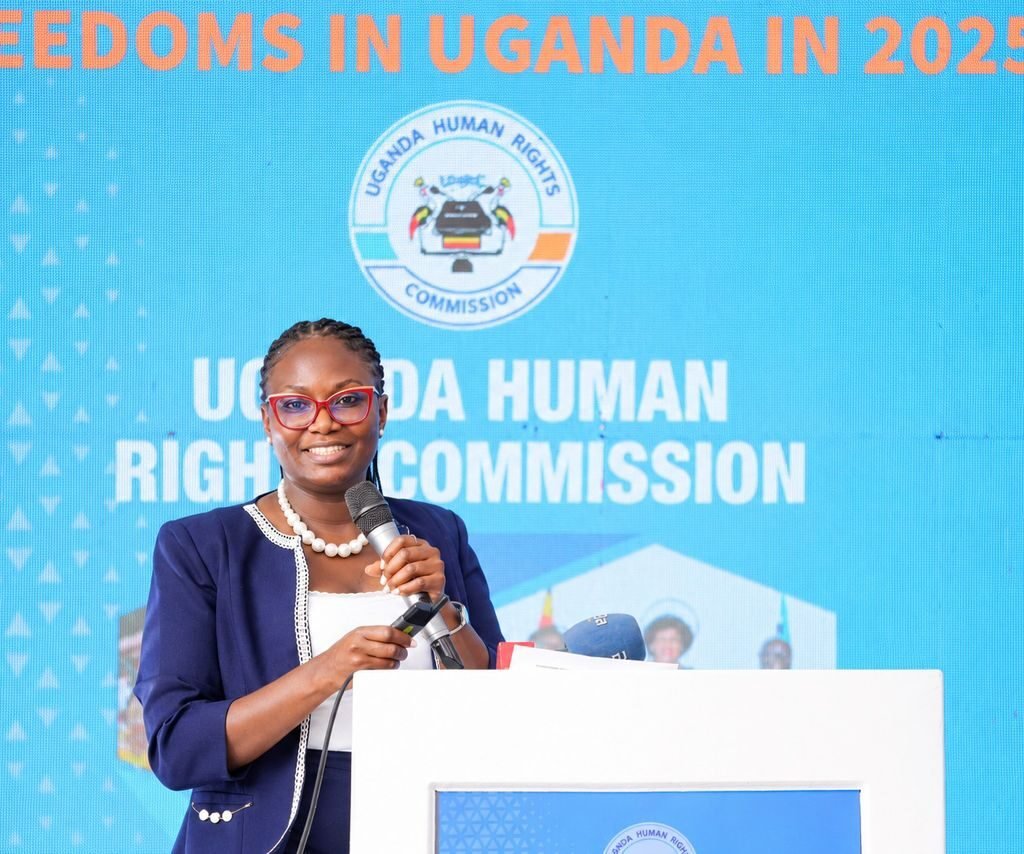
In her remarks, Ms. Bagota stated:
“Liver cancer, strongly linked to chronic Hepatitis B, is increasingly affecting adults and is also on the rise.”
The report highlights that cancer places a significant social and economic burden on families and communities, deepening poverty, reducing productivity, and straining household resources.
The UHRC also raised concerns about the limited number of specialists in the country, noting that Uganda currently has only twenty oncologists. However, the Uganda Cancer Institute continues to train specialists, although the process takes approximately five years for each doctor.
Equally compelling was the report’s pioneering analysis of the human rights implications of the 2025/2026 general elections in Uganda. This follows the country’s seventh general elections held during the 2025/2026 electoral cycle.
The UHRC expressed strong concerns over incidents of monetization of elections, media restrictions, and internet shutdowns that limited freedom of expression, access to information, and media reporting, among other rights.
Ms. Bagota stated:
“There were incidents of voter bribery and excessive campaign spending. This undermined free choice as well as closing out prospective candidates.”
As the colourful function marking the launch of the 28th Annual Report concluded with the formal handover of the document to various government stakeholders, the overarching sentiment remained one of cautious optimism.
The 2025 report successfully expanded the conversation around human rights monitoring in Uganda, but the benchmark of its ultimate success rests entirely on legislative implementation.
Reflecting on the day’s deliberations, legal stakeholders emphasized the importance of the annual report in providing evidence-based documentation on the state of human rights, promoting accountability, informing policy, and strengthening democratic rights.
Dr. Daniel Ronald Ruhweza, in his remarks, stated:
“The report is indeed commendable for its great constitutional anchoring and its efforts to integrate emerging human rights issues, such as artificial intelligence, into Uganda’s human rights discourse.”
For advocates, legal experts, and families impacted by these evolving challenges, the report serves as a vital tool for policy reform. Moving forward into an increasingly digital and socio-economically complex era will require active and sustained institutional change.
