
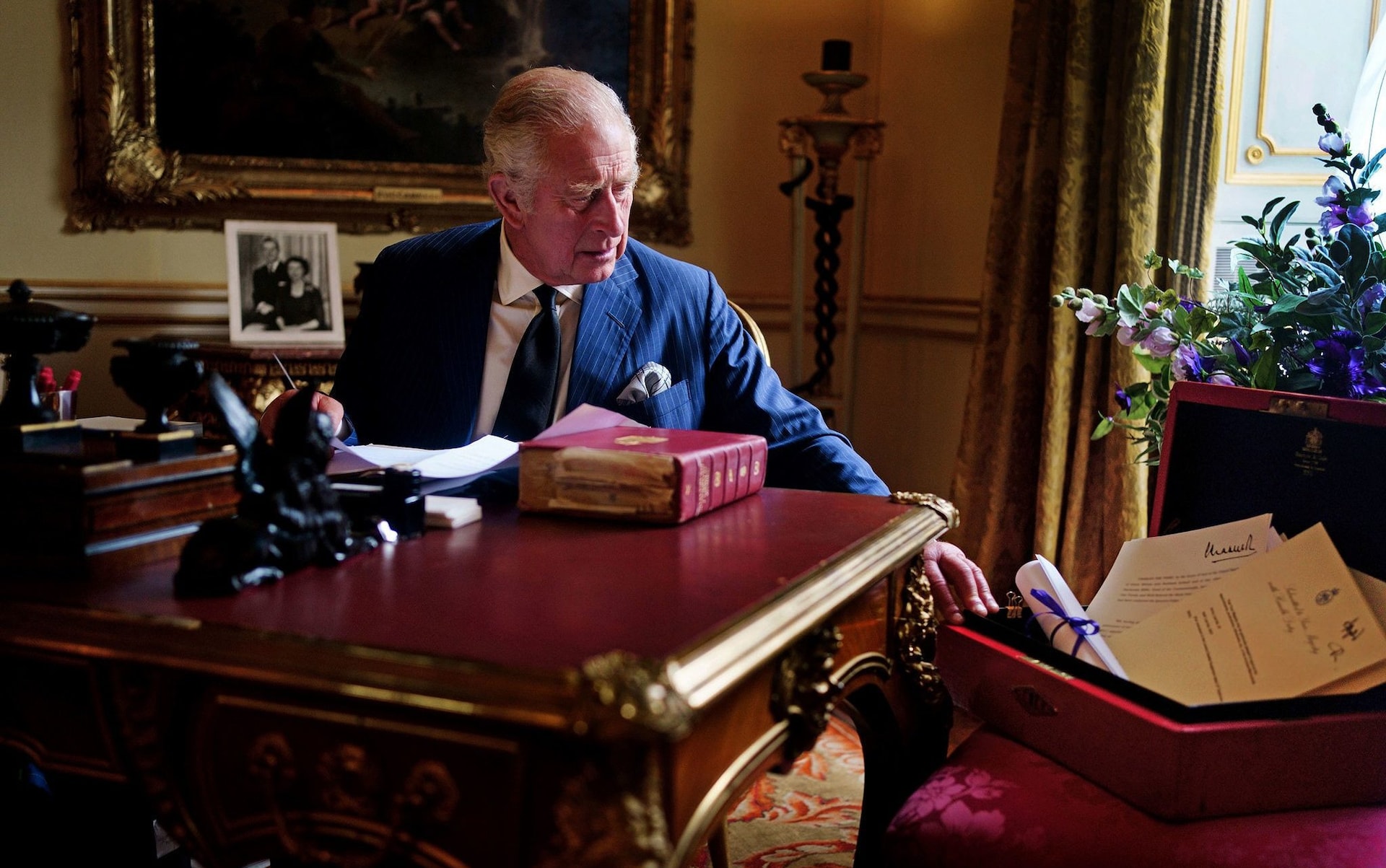
King Charles III’s voluntary disclosure of a £12.9 million tax bill for 2024–25, alongside combined lifetime contributions exceeding £30 million, has triggered a rare public window into how the British monarchy generates, manages and distributes wealth across its private and institutional structures.
Rather than a standalone financial announcement, the disclosure exposes a hybrid economic system where royal estates function as commercial investment portfolios, while public funding continues to support official state functions.
Buckingham Palace confirmed that the King personally authorised the release of his tax figures, framing it as part of a broader push toward institutional transparency.
“All of this, remember, on a voluntary basis,” said James Chalmers, Keeper of the Privy Purse. “If annual media league tables are to be believed on such matters, that places His Majesty among the top 100 taxpayers in the country for that year.”
At the core of royal finances are two major entities that operate like sovereign wealth structures. The Duchy of Lancaster, which funds the King, generated £25.2 million in annual income (2025–26) from commercial property, land holdings and investments. The King also earns additional income from Balmoral, Sandringham and financial investments.
On the other side, the Duchy of Cornwall, which funds the Prince of Wales, holds net assets of approximately £1.2 billion, primarily in investment property portfolios.
Together, these estates resemble diversified asset managers, blending real estate income, long-term investment strategy and inherited land governance under a constitutional framework.
A notable example of internal financial flows includes King Charles paying £503,711 in rent to Prince William’s Duchy for Highgrove House, illustrating how intra-family estate transactions now mirror corporate lease arrangements.
Prince William’s tax disclosure shows a payment of £7.76 million on £22.9 million income, reflecting an effective tax rate of 33.9 percent.
The difference between his rate and the King’s effective burden is largely structural rather than discretionary. The Prince of Wales is permitted to deduct operational expenses linked to official duties, estimated at £5.7 million, before tax is applied.
This creates a hybrid fiscal model where private income is partially offset by public duty costs, blurring the line between personal earnings and institutional expenditure.
Alongside private taxation disclosures, the Royal Trustees confirmed a significant adjustment to public funding. The Sovereign Grant will fall from £137.9 million to £99.9 million in 2027–28, remaining fixed for five years without inflation adjustments.
While this appears to be a reduction in state support, the adjustment is largely driven by the completion of the £369 million Buckingham Palace refurbishment programme, which previously inflated funding requirements.
Under the revised structure, core funding stabilises at roughly £99.6 million. £11.7 million is allocated to clean energy transition, while remaining funds support operational costs, cybersecurity and property maintenance.
Royal expenditure patterns highlight ongoing tensions between tradition, efficiency and modern operational demands, including £130,000 for Prince William’s official trip to Saudi Arabia, £733,063 spent on 177 helicopter journeys, and over £3.3 million in total annual travel expenditure. The Royal Train will also be retired due to its high per-journey cost of approximately £20,000.
The financial disclosure also provides insight into internal governance challenges. Ethnic minority representation within the Royal Household stands at 12 percent, below internal targets, prompting a shift from annual quotas to a longer-term target of 18 percent aligned with UK census benchmarks.
However, digital transformation has emerged as a strong performance area, with the monarchy’s communications strategy delivering over 2 billion social media impressions, more than 430 million video views, and a 33 percent year-on-year increase in engagement.
Taken together, the disclosures reveal a monarchy operating within three overlapping financial layers: private estate income, public funding via the Sovereign Grant, and voluntary taxation on private income.
This structure creates a hybrid model that blends commercial asset management with state-backed funding and voluntary fiscal contribution, effectively positioning the monarchy as a corporate-style conglomerate with sovereign privileges.
Faced with rising scrutiny over public spending, property arrangements and potential future taxation reforms, the monarchy appears to be using transparency as a stabilising mechanism for long-term legitimacy.
Whether this marks a lasting transformation or a reputational adjustment remains the central analytical question shaping the next phase of royal finance.
