
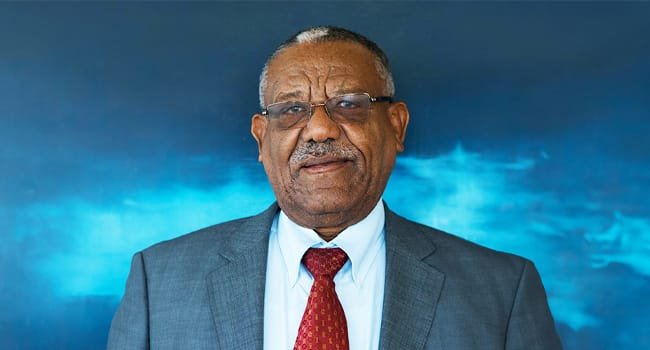
Uganda Airlines is entering a new phase under Acting Chief Executive Officer Ato Girma Wake, whose appointment by President Yoweri Museveni followed a period of leadership changes and mounting operational challenges. Speaking during NBS Television’s The Future of Uganda Airlines, the veteran aviation executive outlined a strategy focused on restoring operational efficiency, strengthening aviation infrastructure, diversifying revenue, and positioning the national carrier for long-term commercial sustainability.
Wake, widely credited with transforming Ethiopian Airlines into one of Africa’s leading carriers, assumed office in February 2026 at a time when Uganda Airlines was grappling with significant operational constraints. Nearly 90 percent of the airline’s carrying capacity had been taken offline after three of its six aircraft were grounded, including a Bombardier CRJ 900 that had been out of service since November and one of the airline’s two Airbus A330-800neo aircraft grounded in January.
According to Wake, the crisis was not rooted in the aircraft themselves but in the absence of a domestic maintenance ecosystem capable of supporting modern airline operations. Uganda lacked the technical infrastructure required to service its wide-body fleet, forcing the airline to rely on expensive overseas support. Pilots were sent to Germany for simulator training, while spare parts were sourced from suppliers in Paris and Germany. Wake said restoring operational stability requires building local maintenance capacity, strengthening technical partnerships, and creating systems that reduce dependence on foreign support.
His assessment extended beyond fleet recovery to the economics of commercial aviation. Challenging the common perception that airlines generate sustainable profits through passenger ticket sales alone, Wake argued that successful airlines depend on multiple revenue streams.
“I don’t know of an airline that makes money solely from carrying passengers.”
Ato Girma Wake
He explained that Uganda Airlines’ long-term sustainability will depend on expanding cargo operations, strengthening ground handling services, and developing airport-related commercial activities. Wake observed that across much of Africa, nearly every business operating around an airport, including service providers, ground handlers, and governments, generates revenue while many national airlines continue to struggle financially.
Wake also emphasized that building an airline involves far more than purchasing aircraft.
“Most people and governments believe that once they buy an aircraft, the job is done. You have to build the infrastructure to make that airline operate properly.”
Ato Girma Wake
This infrastructure-first approach reflects a broader shift in strategy. Rather than focusing solely on fleet acquisition, Uganda Airlines is prioritizing investments in maintenance capability, technical training, operational systems, and commercial support services. These improvements are expected to lower operating costs, improve aircraft availability, and strengthen the airline’s competitiveness over time.
On regional connectivity, Wake acknowledged public concerns over the cost of air travel within East Africa. He attributed high fares to fragmented regional markets, limited economies of scale, and high operating costs rather than excessive airline pricing. Instead of encouraging price competition, he called for stronger collaboration among East African carriers to improve connectivity, increase passenger volumes, and strengthen the region’s aviation industry.
Wake noted that operational performance is beginning to improve as recovery measures take effect. Regional services to destinations such as Juba, Mogadishu, Mombasa, and Nairobi are recording stronger passenger demand, while the airline continues to improve schedule reliability. Although updated passenger load factor statistics have not yet been released publicly, the operational indicators presented during the interview point to gradual recovery.
With stabilization efforts progressing, Uganda Airlines is also preparing for expansion. Following the introduction of daily flights to Kigali, the airline plans to acquire eight additional aircraft to increase cargo capacity, strengthen regional operations, and support future long-haul services. The planned expansion forms part of a broader strategy to position the carrier for sustained commercial growth while improving its contribution to Uganda’s tourism, trade, and investment objectives.
Wake’s vision represents a shift from short-term crisis management toward building the institutional foundations of a competitive national airline. His strategy places equal emphasis on maintenance infrastructure, technical expertise, commercial diversification, and regional cooperation. Rather than measuring success by fleet size alone, Uganda Airlines is seeking to build the operational systems required to keep aircraft flying efficiently, generate sustainable revenue, and compete effectively within Africa’s increasingly competitive aviation market.
