
Uganda’s ambition to become a regional agricultural powerhouse extends far beyond increasing production.
The country’s long-term competitiveness depends on its ability to reduce post-harvest losses, strengthen food processing, improve logistics, connect farmers to reliable markets and build resilient agricultural businesses capable of competing across East Africa.
For nearly four decades, Aponye (U) Limited has been one of the companies at the centre of that transformation.
What began as a grain trading enterprise has evolved into one of Uganda’s largest agricultural value chain businesses, integrating grain aggregation, storage, processing, transport and distribution. Along the way, the company has created markets for thousands of smallholder farmers while supplying government institutions, humanitarian organisations and regional export markets.
Today, however, Aponye finds itself writing a new chapter.
Following the death of founder Apollo Nyegamehe and the brief uncertainty about the future of the company that followed, Aponye is implementing a comprehensive recovery strategy centred on governance, operational excellence, market diversification and renewed stakeholder confidence.
The transformation is being driven jointly by the Board of Directors, chaired by Mr. Silajji Baguma Kanyesigye, and a management team headed by Managing Director Annet Twebaze, who believe the company’s future will depend on creating a stronger, more resilient corporate firm.
A company with a national role
Uganda’s agricultural sector employs the majority of the country’s workforce, yet many farmers continue to face limited access to markets, inadequate storage infrastructure and significant post-harvest losses.
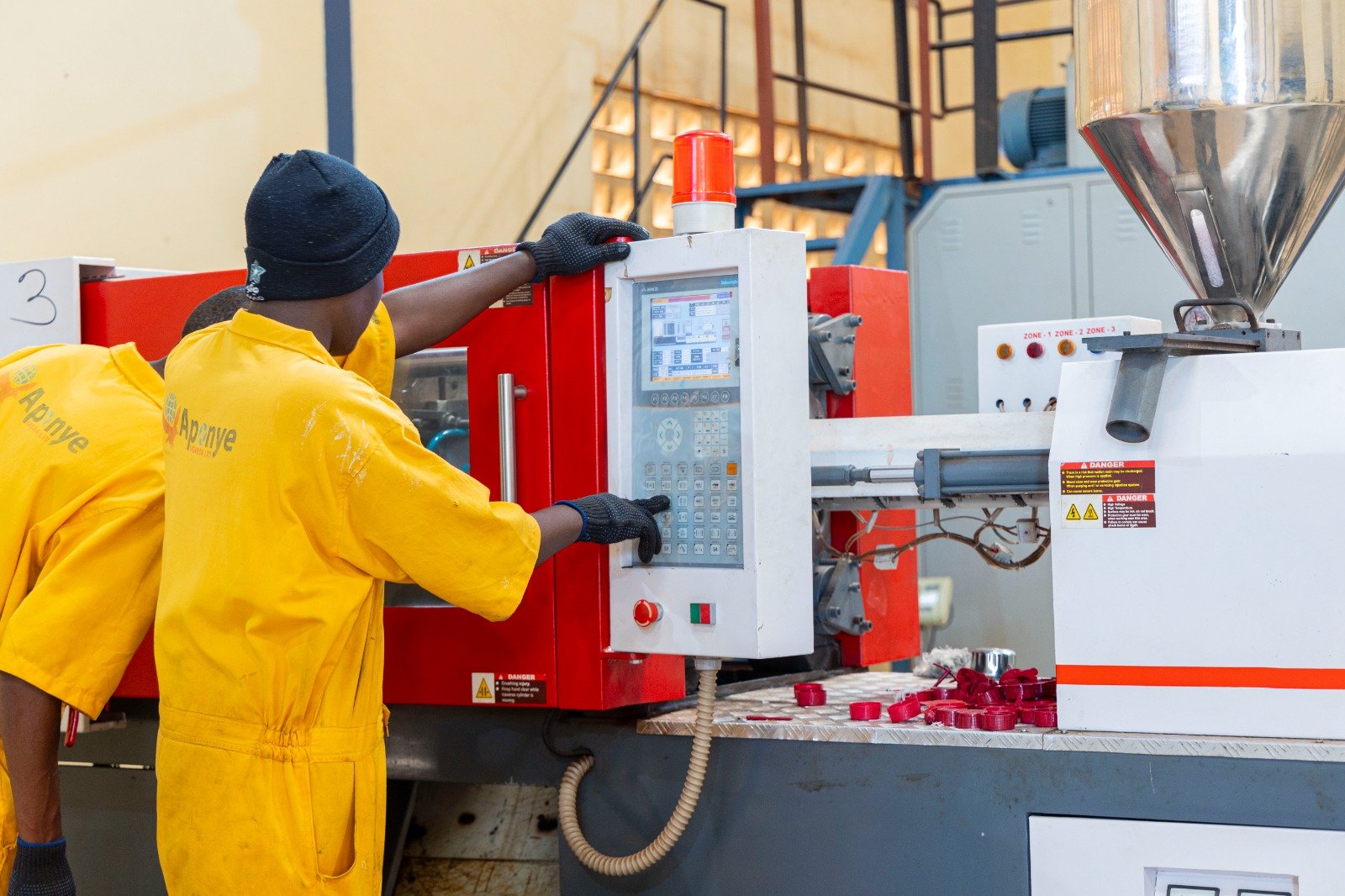
For years, Aponye has served as an important link between production and consumption by purchasing produce directly from farmers, transporting it to processing facilities, drying and cleaning grain, storing it safely and delivering it to major institutional buyers.
Baguma says this integrated model remains one of the company’s greatest strengths.
“We are the only entity in Uganda that has infrastructure for picking grain from the farmer, bringing it to the processing plant, processing it, storing it and delivering it to the big consumers,” he says.
That infrastructure has enabled the company to supply grains and legumes to government and UN organizations, especially for their food relief operations, as well as private beverage manufacturers for their raw ingredients. The company has similarly, through its transport and logistics unit, provided cross-border transportation services to some of the country’s biggest exporters.
Baguma believes this position gives Aponye a responsibility that extends beyond commercial success.
“As long as people are alive, they must eat. The farmer cannot reach the consumer on their own. It is our duty to collect the produce, process it, preserve it and deliver it where it is needed.”
Governance as the foundation of recovery
When Baguma accepted the role of Board Chairman, Aponye was facing one of the most difficult periods in its history. Financial pressures had eroded stakeholder confidence, creditors were pursuing the company and its future appeared uncertain.
Drawing on more than three decades of experience in governance, finance and institutional leadership, Baguma says the board’s first responsibility has been to restore confidence by strengthening governance rather than interfering with day-to-day management.
“Our duty is to set policies and guide management so that they do the right thing. One of the things we are trying to do is rebuild the trust of Aponye with its clients so that when you promise A, you deliver A. When you promise B, you deliver B,” he says.
For Baguma, trust is not simply a corporate value; it is a business strategy.
“My biggest trade is trust. That is the trust I am trying to build in Aponye so that people out there trust the products, trust what we promise and know we can deliver.”
He says rebuilding that confidence has already yielded results, with improved engagement with financiers, suppliers and development partners, alongside new commercial opportunities and strengthened government support.
A strategy built on stability
While the board provides strategic oversight, Managing Director Annet Twebaze is leading the operational transformation.
Having spent 14 years at Aponye, Twebaze brings institutional knowledge that few external executives could match.
“I have lived through the company’s best years and its most difficult ones. The challenges the company has faced have developed my skills. I have developed my resilience.”
Rather than pursuing aggressive expansion immediately, Twebaze says the company is prioritising stability.
“Our vision for the next three to five years is stability first, then restored brand awareness and stakeholder relationships rebuilt on a firmer footing.”
That philosophy reflects a deliberate shift towards sustainable growth.
Instead of depending heavily on a handful of institutional buyers, Aponye is expanding into commercial markets while maintaining its traditional customer base.
“We also need to compete in the same space,” Twebaze says, referring to opportunities in broader commercial markets.
Diversifying revenue streams, she believes, will make the business more resilient to changing procurement cycles.
Strengthening governance and accountability
One of the most significant changes underway is the strengthening of internal systems.
Twebaze says Aponye’s experience demonstrated the risks of relying on informal business relationships.
“APONYE’s old way of trading ran on loyalty and personal trust rather than formal systems. Going forward, APONYE will trade with formal systems and formal stakeholder management,” she said.
The new approach is expected to improve transparency, accountability and risk management while enhancing relationships with financiers, customers and suppliers.
Together with the board’s governance agenda, these reforms represent a broader institutional transformation.
Investing in Uganda’s food value chain
Beyond rebuilding the company, Aponye is positioning itself as a long-term partner in Uganda’s agro-industrialisation and government programmes aimed at transforming peasant farmers into commercial farmers.
Baguma believes the country’s greatest agricultural challenge is no longer production but what happens after harvest.
“Our biggest challenge has been managing post-harvest losses, taking the product to market and preserving what has been produced. You can’t have food security if you don’t have proper post-harvest management and food preservation.”
Through grain aggregation, storage, processing and logistics, the company intends to continue reducing losses while improving quality throughout the agricultural value chain.
Baguma also believes supporting farmers with modern agricultural practices will improve productivity and competitiveness.
“We are trying to teach them modern methods of agriculture. We have been working with organisations such as the Private Sector Foundation Uganda and others to train farmers and improve the quality of the products they supply.”
Financing remains a strategic priority
Despite Uganda’s enormous agricultural potential, Baguma argues that access to affordable financing remains one of the industry’s biggest constraints.
Commercial lending models, he says, are poorly suited to agriculture because they fail to account for seasonal production cycles, weather-related risks and delayed payments from institutional buyers.
“The financing given to agriculture is the same financing given to traders, and that financing is too costly. That’s what has been killing people who go into this business.”
He believes emerging partnerships with institutions such as the National Agricultural Marketing Company (NAMCO) offer opportunities to strengthen agricultural financing while opening new export markets for Ugandan produce.
Building a culture of performance
Internally, both leaders see organisational culture as central to the company’s long-term success.
Baguma says the board is focused on empowering management, strengthening leadership capacity and ensuring the company has the right people to execute its strategy.
Twebaze believes leadership begins with personal example.
“The title does not matter, but what you put in is what motivates your workers. If you’re telling your worker to be at work at 8am, are you yourself at work at 8am?”
She acknowledges that recent operational challenges affected staff morale, making employee welfare, communication and renewed corporate social responsibility key elements of the company’s recovery strategy.
Rebuilding the brand
Although Aponye experienced business setbacks, Twebaze believes the company’s reputation remains one of its strongest assets.
“I found a company shaken but not broken. Its brand value is still a place I will rely on.”
She says the company is investing in stronger communications, technology and stakeholder engagement to demonstrate that Aponye remains active, competitive and committed to serving Uganda’s agricultural sector.
Looking to the future
For both Baguma and Twebaze, Aponye’s recovery is about more than restoring profitability.
It is about preserving a strategic institution that supports thousands of farmers, contributes to food security and strengthens Uganda’s agricultural economy.
Baguma sees the company as an enduring national asset whose role extends well beyond the family that founded it.
“It is for the whole country and the region. We want to change the narrative that the death of Apollo Nyegamehe does not mean the death of Aponye.”
Twebaze believes the next chapter will be defined by disciplined execution, stronger governance, better systems and renewed confidence among customers, employees and partners.
Aponye: Sustained by Partnership, Growing for Generations
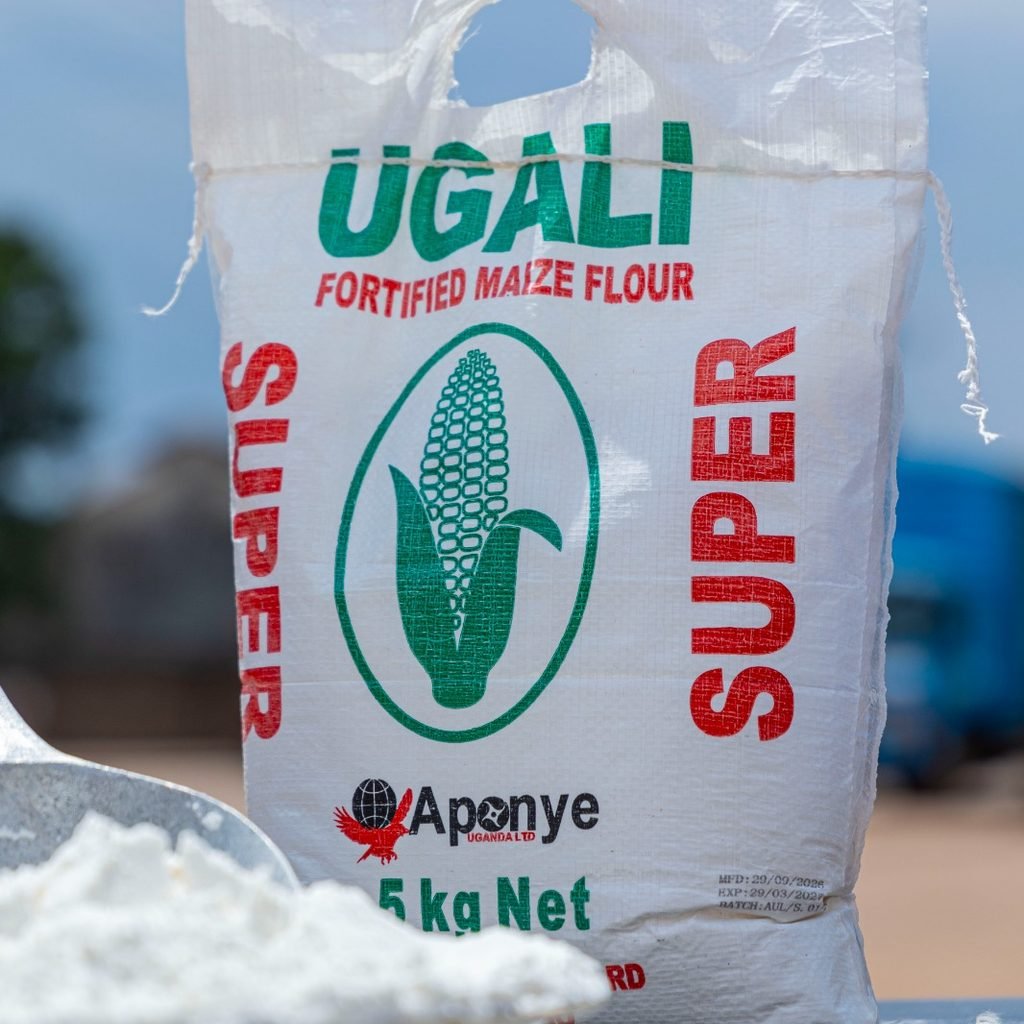
The Aponye brand stands today as a proud symbol of resilience and shared vision. We extend our deepest appreciation to the Government of Uganda and all stakeholders whose patience, guidance, and systemic support have kept Aponye alive and thriving to this day.
From the farmers who provide the raw materials, to our dedicated employees who drive daily operations, to the financiers who have stood with us, and to our shareholders who continue to believe in our mission, each has played a vital role in sustaining the Aponye story.
We particularly acknowledge the Government’s enabling environment and initiatives such as the Parish Development Model (PDM), which empower communities at the grassroots level. By aligning our growth with PDM principles, we ensure that the benefits of enterprise reach households, farmers, and local communities, reinforcing Uganda’s national development goals.
Looking ahead, we pledge to grow sustainably for generations to come. Our vision is anchored in responsible business practices, innovation, and inclusivity, ensuring that every stakeholder continues to benefit from the journey. With continued collaboration, we are confident that the Aponye brand will remain a beacon of Ugandan enterprise, built on trust, sustainability, and shared prosperity.
Together, we sustain. Together, we grow. Together, we build for the future, hand in hand with our stakeholders and the Parish Development Model.
