
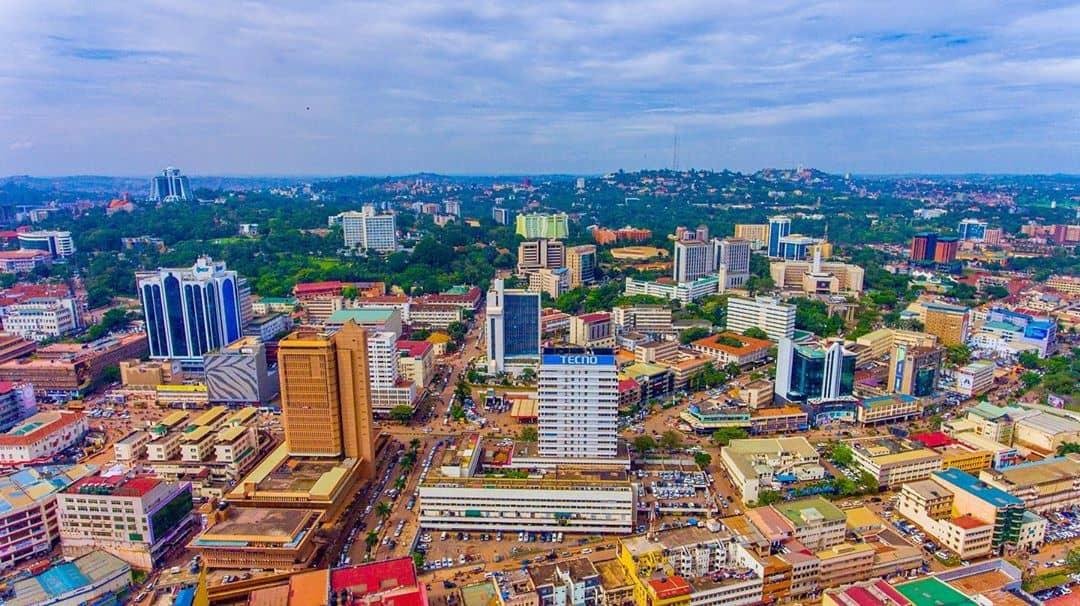
KACITA acting chairperson Issa Ssekitto says Kampala’s wealthy businessmen can mobilise Shs2 billion when a member needs Shs1.5 billion. Founded in 2002, Kwagalana Group is known for mutual support, but its membership requirements and financial arrangements remain largely private.
Kwagalana Group, a private network of some of Uganda’s wealthiest businessmen, is back in the spotlight after a prominent traders’ leader revealed the reported cost of joining the exclusive circle: Shs100 million.
Mr Issa Ssekitto, the acting chairperson and spokesperson of the Kampala City Traders Association (KACITA), made the remarks in an interview with media personality Leilah Ndagire, popularly known as Omumbejja Ndagire, while discussing the importance of organised saving and collective financial support.
“Joining that group, you have to cough up Shs100 million as membership,” he said. “But let me tell you, when they have any form of function or any problem, when you release a budget of Shs1.5billion, you will get Shs2 billion.”
The claim has drawn attention to how some of Uganda’s most successful entrepreneurs organise financial and social support beyond conventional banking and formal business arrangements.
However, Kwagalana Group has not publicly confirmed the reported membership fee. Its admission criteria, contribution requirements and procedures for distributing financial assistance are not publicly documented, and Mr Ssekitto’s account has not been independently verified.
Founded in 2002, the group has maintained a low public profile while bringing together prominent business figures whose interests span real estate, trading, hospitality and manufacturing.
Founded on mutual support
Kwagalana takes its name from the Luganda word kwagalana, meaning loving one another or mutual affection.
The group was established by a small circle of wealthy Kampala businessmen seeking a network through which they could support one another financially and socially.
Rather than operating as a conventional investment company, it developed as a members-only network centred on personal relationships, reciprocity and the ability to mobilise resources when members faced significant obligations.
Its activities have included supporting weddings, traditional introduction ceremonies known as kwanjula, funerals and other major family events. Members have also relied on the network for assistance during difficult personal or business circumstances.
Mr Godfrey Kirumira, a businessman with interests in real estate, fuel and trading, has chaired the group since its formation, according to accounts of its history.
The group’s longevity under his leadership has made it a notable example of sustained private-sector solidarity among Uganda’s established entrepreneurs.
In 2009, the group’s collective wealth was publicly estimated at more than Shs1 trillion, equivalent to approximately $272 million at the exchange rates of the time. That figure is a historical estimate, not a current valuation of members’ assets.
Who belongs to Kwagalana Group?
Kwagalana Group has been associated with several prominent business figures, including Mr Sudhir Ruparelia of the Ruparelia Group, Mr Hamis Kiggundu of Ham Enterprises, Mr Joseph Magandaazi Yiga of Steel & Tube Industries and Mr Ben Kavuya of Legacy Group.
Its wider network has also included downtown landlords, traders and industrialists, reflecting the importance of commercial property and trading in Kampala’s business landscape.
The business interests associated with its members cover commercial buildings and arcades, hotels, manufacturing, fuel distribution, logistics and other sectors.
The group is not publicly structured like a conventional company with an openly accessible membership register, public office or detailed published governance framework. Consequently, its full current membership and internal decision-making arrangements are difficult to establish from public information.
Its public activities nevertheless offer glimpses into the relationships that sustain the network.
In May 2025, members publicly supported the Ruparelia family following the death of Rajiv Ruparelia, demonstrating the continuing social dimension of the group.
Beyond private functions
Kwagalana Group’s activities have also extended beyond the personal affairs of its members.
During the Covid-19 pandemic in 2020, the group donated a new double-cabin pickup truck to Uganda’s national task force. Individual members made additional contributions, including vehicles, cash and food, to support the national response.
Members have also been approached for financial support for political causes, including appeals associated with President Yoweri Museveni’s election campaigns. Such accounts, however, do not establish the terms of individual contributions or whether they resulted in particular policy decisions or political influence.
The distinction is important because wealthy businesspeople can participate in public life through philanthropy, political donations and engagement with government without those activities necessarily demonstrating preferential treatment.
Determining whether private business networks influence public policy requires specific evidence about their interactions with public officials and the outcomes of those engagements.
Kwagalana Group’s relatively low public profile means that much of its internal activity remains outside public scrutiny.
What does the reported Shs100 million fee buy?
Mr Ssekitto’s account has raised questions about the value attached to membership in a network of wealthy entrepreneurs.
For a small trader, Shs100 million could represent substantial working capital, an expansion of inventory or an investment in commercial property. For an established businessperson, membership in a trusted network may offer access to relationships and potential sources of assistance that are difficult to replicate independently.
However, available information does not establish that paying the reported fee guarantees a financial return, access to investment opportunities or emergency funding.
Kwagalana Group has not publicly confirmed whether members are required to make additional contributions when another member needs assistance, whether support is voluntary or how the amounts provided are determined.
Nor is there sufficient public evidence to conclude that members routinely pool money to purchase businesses, jointly finance major developments or make collective investment decisions.
The reported fee should therefore not be confused with a verified investment or a guaranteed entitlement to financial assistance.
What Mr Ssekitto’s remarks illustrate is the potential value of belonging to a network in which members have both the resources and the relationships to support one another.
When financial assistance is available, a trusted network can provide an additional source of support during emergencies. But the effectiveness of such arrangements depends on the rules members follow, their willingness to contribute and the confidence they have in one another.
The wider lesson for Uganda’s savers
Mr Ssekitto used Kwagalana Group as an example of the benefits of organised saving and collective financial support, encouraging ordinary Ugandans to develop similar arrangements within their means.
Across Uganda, savings and credit cooperative organisations (Saccos), village savings and loan associations and informal bibiina groups allow members to pool contributions for school fees, business capital, emergencies and other needs.
These groups operate on different scales, but the underlying principle is similar: members combine resources to address financial needs that may be difficult to meet individually.
The main difference lies in the size of the contributions, the financial capacity of members and the rules governing access to pooled funds.
For a group of small traders, regular contributions may provide a modest emergency fund or working capital. For a network of wealthy entrepreneurs, the resources potentially available can be considerably larger.
Collective saving, however, does not eliminate financial risk. Groups need clear records, transparent contribution and withdrawal rules, accountable leadership and agreed procedures for resolving disputes.
Members also need to understand their obligations before committing money, particularly where substantial contributions are involved.
The lesson is not that every savings group should replicate Kwagalana Group’s reported entry fee. Rather, it is that organised financial cooperation can provide a measure of resilience when individuals face unexpected expenses or business difficulties.
The question of access
Kwagalana Group’s exclusivity also raises questions about who benefits from private financial networks.
If the reported membership fee reflects the actual cost of entry, it would place the group beyond the reach of most ordinary traders and many small-business owners.
That creates a distinction between the financial cooperation available to people with substantial wealth and the arrangements accessible to those who must build their savings gradually.
For wealthy entrepreneurs, a trusted network may offer the possibility of mobilising significant resources among people with established businesses. For smaller traders, savings groups can provide important support, but their members may have far less money available when a major crisis occurs.
The existence of such differences does not, on its own, demonstrate wrongdoing or unfair conduct by Kwagalana Group. Private associations can set membership criteria and organise support around their members’ circumstances.
Nevertheless, the concentration of resources and relationships within exclusive networks raises a broader economic question about how businesses of different sizes gain access to capital, information and opportunities.
Kwagalana Group’s internal arrangements remain largely private, making it difficult to assess precisely how membership works or how the network’s activities affect the wider economy.
What is clearer is that the group has sustained a model of mutual support among prominent businesspeople for more than two decades.
Its story offers a glimpse into a side of business that financial statements alone cannot capture: the role of relationships in helping people manage obligations, maintain social ties and potentially access assistance when they need it most.
For Uganda’s entrepreneurs, the principle of collective support is not exclusive to the wealthy. The more difficult question is how to build reliable networks, with clear rules and accountable leadership, at every level of the economy.
