
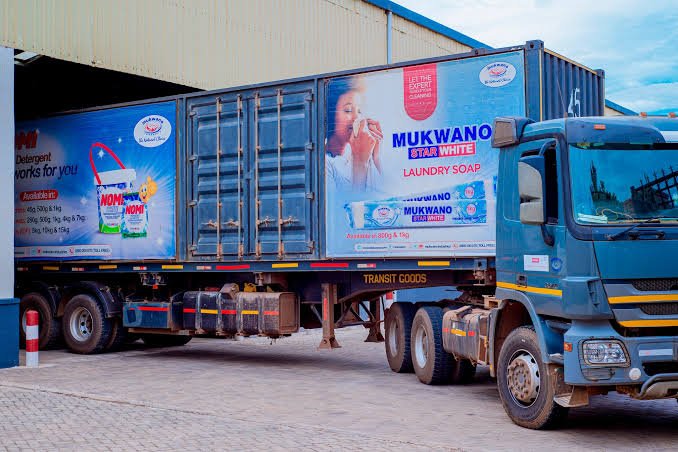
In the early 1900s, long before Uganda had modern highways, industrial parks or export processing zones, a lone merchant drove a second-hand truck through the dusty roads of western Uganda.
The truck rarely travelled empty.
On one leg of the journey it carried coffee, cotton, hides and other agricultural produce purchased directly from rural farmers. On the return trip it delivered salt, sugar, textiles and household essentials back to communities that had little access to manufactured goods.
That simple but efficient trading model became the foundation of what would eventually grow into Mukwano Group, one of East Africa’s largest indigenous manufacturing conglomerates.
More than a century later, Mukwano produces everything from edible oils and soaps to plastics, packaging materials and industrial products, employs thousands of Ugandans, supports tens of thousands of farmers and exports across East and Central Africa.
Its transformation did not happen through a single breakthrough or lucky opportunity. It was the result of successive generations making bold strategic decisions that fundamentally changed the business model whenever economic conditions demanded it.
In many respects, Mukwano’s story mirrors Uganda’s own economic evolution, moving from trade to manufacturing, from importing finished goods to local production, and from commodity trading to integrated industrial value chains.
The Entrepreneur Who Saw Opportunity Where Others Saw Distance
Mukwano’s journey began in 1910 when Alimohamed Karmali arrived in East Africa during a period when Asian merchants were establishing commercial networks across the region.
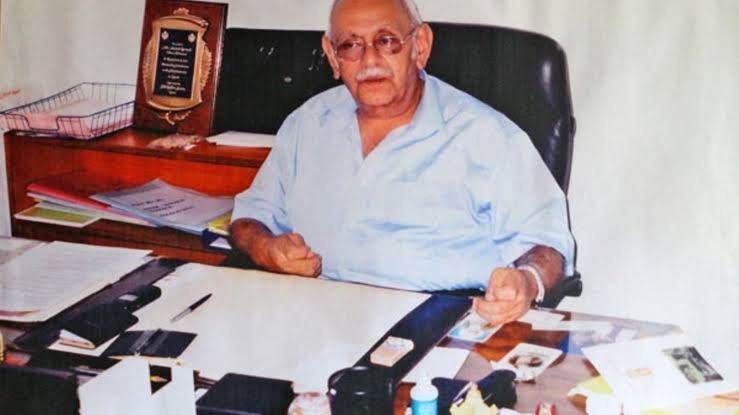
Rather than settling in one of Uganda’s established commercial centres, Karmali chose Fort Portal, then a relatively remote but agriculturally productive region with enormous untapped commercial potential.
Western Uganda produced coffee, cotton, hides and other commodities, yet farmers struggled to reach profitable urban markets. At the same time, rural communities had limited access to manufactured goods that were readily available in Kampala.
Karmali recognised that the opportunity was not simply trading products. It was connecting two markets that needed each other.
Using a single second-hand truck, he bought produce directly from farmers before transporting it to Kampala, where prices were significantly higher. Instead of allowing the truck to return empty, he filled it with consumer goods for rural communities.
Every journey generated revenue in both directions.
The model required little capital but demanded discipline, efficiency and a deep understanding of local markets.
Long before logistics became a competitive advantage, Karmali had already built one.
Building Trust Before Building a Brand
The business expanded steadily, not because it possessed vast financial resources, but because it earned something equally valuable.
Trust.
Farmers knew Karmali honoured his commitments. Rural communities knew he would return with essential goods when promised.
His reputation became so strong that local people began referring to him as “Mukwano,” the Swahili word for “friend.”
The nickname eventually replaced the family name as the company’s identity.
Decades before branding became a recognised business discipline, Mukwano had already built one of the most powerful brands in Uganda through consistency, honesty and reliability.
Surviving Uganda’s Most Difficult Years
The business continued expanding throughout the colonial era, gradually increasing its transport fleet while extending trading operations across Uganda and into eastern Democratic Republic of Congo.
Independence created new opportunities, but the following decade brought unprecedented uncertainty.
The political and economic turmoil of the 1970s disrupted businesses across Uganda. The 1972 expulsion of Asians forced thousands of entrepreneurs to abandon enterprises they had spent generations building.
Mukwano’s operations were severely affected during this period.
Like many family-owned businesses, its future appeared uncertain.
Yet unlike many companies that disappeared permanently, the Karmali family returned during Uganda’s economic recovery, determined to rebuild.
That decision would redefine the company’s future.
The Second Generation That Changed Everything
While Alimohamed Karmali built a successful trading enterprise, it was his son, Amirali Karmali, who transformed Mukwano into an industrial powerhouse.
By the mid-1980s, Uganda’s economy was beginning to recover after years of instability.
Factories had closed, manufacturing capacity had deteriorated and imported consumer goods dominated the market.
Many businesses responded by increasing imports.
Amirali chose a different path.
He believed Uganda should manufacture the products it consumed instead of relying on foreign producers.
It was an ambitious strategy.
Manufacturing required enormous investments in factories, machinery, technical expertise, skilled labour and industrial infrastructure.
Few private companies were willing to assume that level of risk at a time when Uganda’s economy remained fragile.
Mukwano did.
The Manufacturing Bet That Changed the Company
Following Uganda’s economic liberalisation after 1986, Mukwano Industries Limited formally entered manufacturing with the production of laundry soap.
The decision fundamentally altered the company’s trajectory.
Rather than earning margins as a trader, Mukwano now controlled production itself.
Soap manufacturing soon expanded into edible oils, detergents, fats, plastics and an increasingly diversified portfolio of fast-moving consumer goods.
The company invested heavily in modern production facilities, enabling it to compete with imported products while positioning itself against multinational manufacturers entering Uganda.
By the 1990s, Mukwano had become one of the country’s fastest-growing industrial companies.
But rapid expansion exposed another vulnerability.
Solving the Supply Chain Before It Became a Crisis
Although Mukwano was manufacturing locally, many of its production inputs still came from overseas.
Crude palm oil, industrial chemicals and other raw materials were imported, exposing the business to volatile exchange rates, shipping disruptions and rising logistics costs.
Management recognised that manufacturing alone was not enough.
If the company remained dependent on imported raw materials, its competitiveness would always be vulnerable to external shocks.
Rather than accepting that reality, Mukwano chose to integrate even further.
It invested upstream.
Building Uganda’s Largest Oilseed Network
Mukwano began developing one of Uganda’s largest contract farming programmes for sunflower and soybean production.
Instead of purchasing oilseeds from unpredictable commodity markets, the company partnered directly with farmers.
It supplied improved seed varieties, agronomic training, extension support and guaranteed markets for harvested crops.
Thousands of farmers joined the programme.
Over time, that network expanded into tens of thousands of smallholder farmers across northern and eastern Uganda.
The company reinforced the initiative by constructing large-scale oilseed processing facilities in Lira, allowing crops to be processed closer to production areas before being transported to Kampala for refining.
The strategy reduced transport costs, improved efficiency, strengthened supply security and significantly reduced dependence on imported edible oils.
What began as an agricultural support programme evolved into one of Mukwano’s greatest competitive advantages.
Integration Became the Competitive Advantage
Mukwano did not stop at manufacturing.
Over successive decades, it invested across the entire value chain.
The company expanded its transport fleet instead of relying entirely on third-party logistics.
It invested in packaging manufacturing to secure another critical production input.
It strengthened warehousing and storage infrastructure.
It developed regional logistics networks extending to the Port of Mombasa.
Each investment reduced operational risk while increasing control over production costs.
Instead of managing isolated businesses, Mukwano gradually built an integrated industrial ecosystem.
Looking Beyond Uganda
As production capacity expanded, Mukwano shifted its attention to regional markets.
East African economic integration opened new opportunities for locally manufactured products.
Today, Mukwano exports across East and Central Africa, supported by one of Uganda’s largest privately owned logistics operations.
Its products have become household names in multiple regional markets, transforming what began as a rural trading business into one of East Africa’s most recognised indigenous manufacturing brands.
More Than a Manufacturer
Today, Mukwano Group operates across manufacturing, agro-processing, packaging, logistics, sugar production, financial services and real estate.
Its businesses employ thousands of Ugandans directly while supporting extensive networks of farmers, transporters, suppliers, distributors and retailers.
The company has also invested in biomass energy, recyclable packaging and more resource-efficient production systems as sustainability becomes increasingly important for industrial competitiveness.
Its continued diversification reflects the same strategic thinking that has characterised the business for more than a century.
The Legacy of Strategic Reinvention
Mukwano’s success cannot be explained by a single product, factory or executive decision.
It is the cumulative result of generations of leaders identifying the next strategic challenge before it became a crisis.
The first generation connected rural farmers to urban markets.
The second transformed a trading company into a manufacturing business.
The third strengthened the supply chain through agriculture, logistics and vertical integration.
Each generation expanded the business by moving further up the value chain.
That evolution offers an important lesson for Uganda’s wider private sector.
Sustainable industrial growth rarely comes from chasing short-term opportunities. It comes from investing patiently in production capacity, controlling critical supply chains and continuously adapting to changing economic conditions.
More than 100 years after Alimohamed Karmali loaded agricultural produce onto a single truck in Fort Portal, Mukwano stands as one of East Africa’s largest indigenous manufacturing groups.
Its journey is not simply the story of one company.
It is the story of how long-term vision, disciplined execution and strategic reinvention can transform a small family trading business into an industrial institution that has helped shape Uganda’s modern economy.
