

The Personal Data Protection Office (PDPO) has launched the Data Protection and Privacy Audit and Inspection Manual, a framework designed to strengthen the Office’s oversight of how organisations collect, use, store and share personal data in Uganda.
The launch, officiated by the Minister of ICT and National Guidance, Rt. Hon. Justine Kasule Lumumba, was held at Arirang Hotel in Kampala and brought together over 80 stakeholders from Government, the private sector, civil society, development partners and other sectors.
Developed with support from the World Bank through the Uganda Digital Acceleration Project (UDAP-GovNet), in collaboration with Sentinel Africa Consulting, the Manual provides a standardised approach to planning, conducting, documenting and reporting data protection and privacy audits and inspections. Its development responds to the need for a more structured and consistent approach to regulatory supervision as organisations increasingly rely on digital systems to process personal data.
The launch also featured the presentation of a Consolidated Data Protection and Privacy Audit Report, which presents findings from pilot audits conducted across 15 Ministries, Departments and Agencies (MDAs) between November 2025 and April 2026.
The audits assessed institutional compliance across 11 statutory domains and established an overall average compliance rating of 63.71 per cent, classified as unsatisfactory. Of the 15 institutions assessed, two were compliant, five were partially compliant, while eight were non-compliant.
The findings identified gaps in several areas, including breach and complaints management, the handling of data subject rights, cross-border data transfers, and risk management and Data Protection Impact Assessments among others.
The audits also documented other improvements in some institutions, including the appointment of Data Protection Officers, development of privacy policies, establishment of data governance structures and improved procedures for handling requests from individuals. The findings provide a basis for targeted corrective action and continued regulatory engagement.

Speaking at the launch, the Minister of ICT and National Guidance, Rt. Hon. Justine Kasule Lumumba, emphasised that protecting personal data is fundamental to building public trust in digital services. She noted that when parents enroll children in schools or farmers apply for government support, they share personal information with institutions and have a right to expect that it will be properly protected.
The Minister further highlighted the importance of public confidence in the country’s digital transformation agenda, noting that people should be able to register businesses, seek employment and access public services with confidence that their personal information is in safe hands. She reaffirmed the Ministry’s continued support to PDPO in carrying out its mandate and called on the Office to follow up with the 15 audited institutions and share lessons that could benefit other institutions across the country.
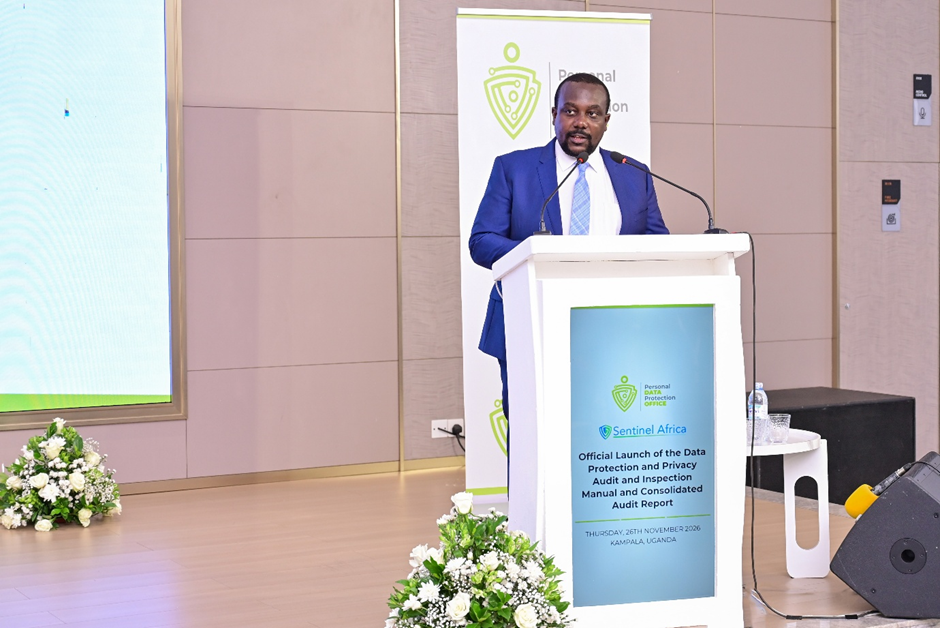
The National Personal Data Protection Director, Mr. Baker Birikujja, noted that the Manual provides clear guidance to the Office’s audit and inspection teams on what to examine, whom to engage and what evidence is required to support their findings. He explained that it also gives organisations an opportunity to clarify facts before audit findings are finalised, promoting consistency, fairness and accountability in the regulatory proce
Speaking at the launch, Ms. Caroline Akello Mugisha, Director, Legal and Regulatory Services at the National Information Technology Authority (NITA-U), welcomed the pilot audits, noting that the participation of 15 entities had provided practical evidence of the state of data protection compliance. She reaffirmed NITA-U’s commitment to working with the PDPO and the audited Ministries, Departments and Agencies (MDAs) to address identified gaps, particularly in standards, security controls and technical capacity.
She also encouraged Data Protection Officers and IT teams to consider NITA-U a partner in strengthening compliance, emphasising the importance of integrating data protection into systems from the outset rather than treating it as an afterthought.
On his part, Dr. Christopher Makanga, Ag. Director Forensics and IT Audits, Office of the Auditor General, pledged continued institutional support to the PDPO in strengthening its capacity to conduct audits and promote compliance with the Data Protection and Privacy Act, Cap. 97.
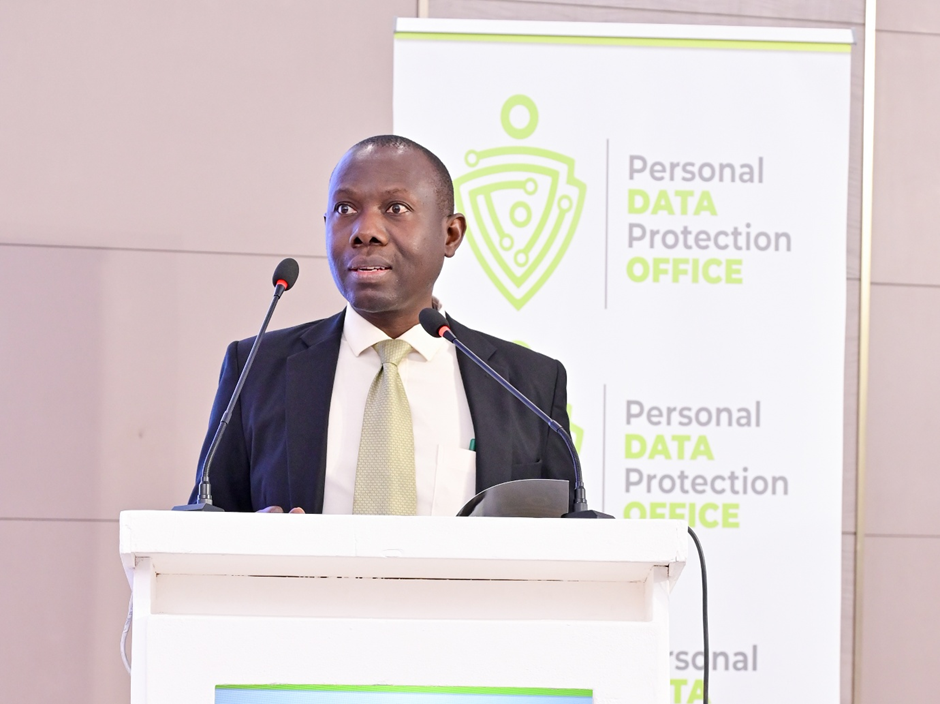
Through the Manual, PDPO aims to promote more consistent regulatory supervision, strengthen institutional accountability and support organisations to improve their data protection practices. Ultimately, effective protection of personal data is essential to building public confidence in digital services and supporting Uganda’s growing digital economy.
