
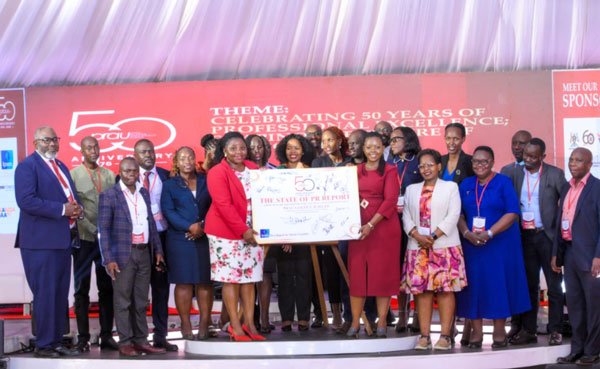
The Public Relations Association of Uganda (PRAU) is marking 50 years of professional practice at a time when communication is becoming increasingly important to business performance, public trust and national development. As the association celebrates its Golden Jubilee, the milestone offers an opportunity to reflect on how far the profession has come, recognise the people who have shaped it and consider what the next chapter demands.
The four-day celebrations, running from October 20 to 23, 2026, under the theme “Celebrating 50 Years of Professional Excellence; Shaping the Future of Public Relations,” have brought together practitioners and industry leaders to examine the profession’s history, its present challenges and its future direction. The programme will culminate in the 10th PRAU Excellence Awards on October 23, recognising achievements in public relations and strategic communication.
At the opening ceremony held at the Source of the Nile Hotel in Jinja City on October 21, discussions centred on the changing expectations of communication professionals, the role of public relations in organisational decision-making, the challenges of misinformation and the opportunities presented by emerging technologies.
A profession moving beyond publicity
One of the central issues emerging from the celebrations is the need for public relations to move beyond publicity and become more deeply involved in organisational strategy.

Presenting the State of the PR Profession in Uganda report, Ipsos Uganda Country Manager Ruth Ruigu explained that the study was structured around three themes: Foundation, Friction and the Future. These examine the profession’s progress, the challenges practitioners face and the opportunities available to strengthen its contribution.
“Foundation gives us pride. Friction gives us learning. Future gives us possibility,” she said.
The report draws on desk research, Ipsos research and conversations with seven Ugandan public relations practitioners. Although it is not nationally representative, its findings offer insights into the profession’s development and the issues affecting practitioners.
Among the concerns highlighted is the need for stronger professional capabilities, better measurement of communication outcomes and greater recognition of public relations within organisational decision-making.
Traditionally, communication teams have often demonstrated their work through media coverage, press mentions and digital engagement. While these measures help establish the reach of communication activities, they do not necessarily show whether public confidence has improved, stakeholder relationships have strengthened or organisational objectives have been achieved.
The growing expectation is for practitioners to demonstrate how their work contributes to institutional performance and to provide management with advice on reputation, stakeholder concerns and potential risks.
This shift was reinforced by Professor Michele Mekeme of the African Public Relations Association (APRA), who delivered a virtual keynote challenging practitioners to move beyond publicising decisions after they have been made and take a more active role in shaping them.
Her remarks placed public relations within the broader management function, where communication professionals can help organisations understand their stakeholders, anticipate concerns and make better-informed decisions.
Technology is changing the profession
The Golden Jubilee discussions also examined how technology is reshaping public relations and the skills practitioners will need in the years ahead.
According to the Ipsos report, 74.1% of respondents believed artificial intelligence enhances rather than replaces human professionals. The finding suggests a positive view of AI among those surveyed, while highlighting the need for practitioners to understand how the technology can support their work.
AI tools can assist with content development and information analysis, but their use also places greater responsibility on professionals to assess accuracy, context and suitability before information is published.
For Uganda’s PR practitioners, the challenge is to adopt useful technologies while maintaining the professional judgement, credibility and human understanding required to build relationships.
The report also examined media consumption using the Ipsos 2026 Wave 3 NAMS Quarterly Tracker. Radio recorded the highest reach among active media users at 82%, followed by television at 44%, the internet at 33% and newspapers at 9%.
The figures underline the continued importance of traditional media, particularly radio, alongside digital platforms. They also demonstrate why communication strategies must be informed by the audiences organisations intend to reach rather than assumptions about which channels are most effective.
Public relations and the business of building trust
Beyond technology and measurement, the anniversary has highlighted the relationship between public relations, reputation and stakeholder confidence.
In his congratulatory message to PRAU, President Yoweri Kaguta Museveni emphasised the contribution of professional communication to national development. The message was delivered on his behalf by Minister of State for ICT and National Guidance Hon. Joyce Juliet Nabbosa Ssebugwawo.
The President highlighted practitioners’ responsibility to explain government programmes, engage citizens and ensure information about national priorities reaches the public.
“Reaching 50 years of existence is no small achievement. It is a testament to resilience, adaptability and the critical role that professional communication plays in nation-building,” he said.
He also drew attention to the dangers of misinformation, particularly when citizens depend on public information to make decisions about health and essential services.
“There is no point in immunizing people against diseases while leaving them vulnerable to confusion and misinformation,” he said.
The message underscored the importance of accurate, accessible communication in helping citizens understand public programmes and make informed decisions.
For businesses, the same principle applies to the relationships they maintain with customers, employees, investors, partners and the wider public. Credibility can influence how stakeholders respond to an organisation, particularly when it faces difficult decisions or seeks to establish new relationships.
Mekeme also linked reputation and stakeholder confidence to Africa’s economic transformation, including opportunities associated with the African Continental Free Trade Area (AfCFTA).
“Credible communication and reputation management are vital in building confidence among citizens, businesses, investors and other stakeholders,” she said.
As companies pursue opportunities across African markets, public relations can help them communicate their commitments, understand stakeholder expectations and build confidence across different operating environments.
Learning from the people who shaped PRAU
The anniversary has also provided an opportunity to recognise the people whose leadership and experience have contributed to the profession’s development.
A panel discussion moderated by former PRAU President Tina Wamala brought together former presidents Cynthia Mpanga and Stephen Mwanga, alongside current president Irene Nakasiita, to reflect on the association’s history and the changing demands of public relations.
Mpanga described her relationship with public relations as one rooted in a personal passion for communication and storytelling.
“For me, PR is a hobby,” she said.
Her remarks reflected the personal interests that can draw practitioners into a profession built around communication, writing and relationships.
Mwanga reflected on the transformation of public relations from a practice largely associated with media relations and press cutting into a broader management function. He highlighted the growing expectation for practitioners to understand organisational objectives and demonstrate how communication contributes to institutional performance.
Nakasiita drew on her experience at the Uganda Red Cross Society, where she joined during a period of leadership challenges. She described campaigns and media relations activities intended to rebuild public confidence.
Her experience illustrated how communication can support efforts to restore trust, maintain donor relationships and improve an organisation’s public image.
Together, the reflections highlighted the different dimensions of the profession, from personal commitment and relationship-building to strategic advice and reputation management. They also demonstrated how expectations of public relations have evolved over time.
Honouring five decades of professional development
In her opening remarks, Nakasiita paid tribute to PRAU’s founder, the late James R. Mutabaazi, former presidents and members of the association’s Governing Council for their contributions to the profession.
Founded on May 22, 1976, PRAU has spent five decades advancing professional development, ethical practice and recognition of public relations in Uganda.
Nakasiita said the Golden Jubilee offered an opportunity to celebrate this history while considering how the association’s founding values could guide the next generation of communication professionals amid technological change.
“Public Relations is about building relationships, reputation and partnerships that bring mutual understanding. It is the heart, not just the Press Release,” she said.
She also acknowledged the founding members, former presidents and governing council members whose leadership and commitment had helped sustain the association and establish a foundation for the profession’s growth.
Nakasiita thanked PRAU members for supporting the association and upholding its founding principles of advancing and professionalising public relations in Uganda.
She also recognised the partners supporting the Golden Jubilee celebrations, including Parliament of Uganda, Bank of Uganda, Pearl Bank, Uganda Revenue Authority, Deposit Protection Fund, Next Media, Crown Beverages Limited, Capital Markets Authority, Ipsos, Guide2Uganda, CEOMagazine, CommsofAfrica, IdeahCentral, Galaxy FM, Epicom, The Independent, Business Times, Softpower, Action Imagery, Capital FM, New Vision, Affinity Media, UBC, Radio One, SautiPlus, Stanbic Bank, Uganda Baati, Uganda Red Cross Society, National Water and Sewerage Corporation, Uganda Civil Aviation Authority, Microfinance Support Centre, Petroleum Authority of Uganda and Uganda Breweries Limited.
The recognition of these partners reflected the wider network of institutions, businesses and media organisations involved in supporting the association and its activities.
Looking ahead to the next 50 years
As PRAU marks its Golden Jubilee, the profession faces the task of translating the discussions into stronger professional practice.
The issues raised during the celebrations point to several priorities: developing practitioners’ capabilities, adopting technology responsibly, measuring communication outcomes more effectively and ensuring communication professionals are involved early enough to influence organisational decisions.
There is also a continuing responsibility to maintain ethical standards, provide accurate information and build relationships founded on credibility and mutual understanding.
For organisations, the opportunity lies in recognising communication as more than a publicity function. Involving PR professionals in strategic discussions can help management understand stakeholder concerns, assess reputational risks and communicate decisions more effectively.
For practitioners, the challenge is to demonstrate the value of their expertise through evidence, informed advice and meaningful engagement with the people their organisations serve.
PRAU’s 10th Excellence Awards, scheduled for October 23, will provide another opportunity to recognise achievements in public relations and strategic communication.
But the broader significance of the Golden Jubilee extends beyond the anniversary itself. It is an opportunity to acknowledge five decades of professional development while considering the standards, skills and relationships needed to strengthen the profession in the years ahead.
As Uganda’s public relations industry enters its next chapter, its success will depend not only on how effectively practitioners communicate messages, but also on how well they help organisations make informed decisions, build lasting relationships and earn the confidence of the people they serve.
