

Uganda can successfully contain an Ebola outbreak and still pay an economic price long after transmission has stopped. A traveller passes through Entebbe, develops symptoms in another country, and Uganda’s name returns to international headlines. For a country working to attract tourists, investors and international business, that association can be costly.
On 20 October 2026, Uganda’s Ministry of Health issued a clear public statement following reports of a confirmed Ebola case in Nigeria involving a Nigerian woman who had travelled to eastern Democratic Republic of Congo (DRC) for business.
According to the statement, preliminary information indicated that the woman transited through Uganda in early October without symptoms and developed symptoms only after arriving in Nigeria. The location of exposure remained under investigation, with further details of her itinerary and clinical history awaited from Nigerian authorities.
The Ministry’s position was straightforward: travel through Uganda does not establish that infection occurred here. As of the statement, Uganda had no confirmed active Ebola cases.
That distinction should matter. Passing through a country is not the same as contracting a disease there. Yet when Uganda repeatedly appears in Ebola-related headlines, the distinction between a transit point, a place of exposure and a country experiencing an active outbreak can easily disappear.
For Uganda, where tourism, international trade, aviation and investment depend partly on the confidence of people abroad, this is more than a communications problem. It is a business concern.
Geography should not become an economic penalty
Uganda’s geographical position makes cross-border movement with the DRC inevitable. People travel between the two countries for business, trade, healthcare and family obligations. Entebbe International Airport also serves as an important regional gateway, connecting Uganda to international markets and destinations.
These connections create economic opportunities, but they also expose Uganda to health risks originating elsewhere in the region. When an outbreak occurs across the border, Uganda must remain alert. However, geographical proximity should not become a permanent label of risk.
The current outbreak, caused by the Bundibugyo strain of Ebola, was declared by the DRC on 15 May 2026. Uganda also experienced cases during the year, recording 20 confirmed infections, 15 imported from the DRC and five locally acquired among contacts and health workers.
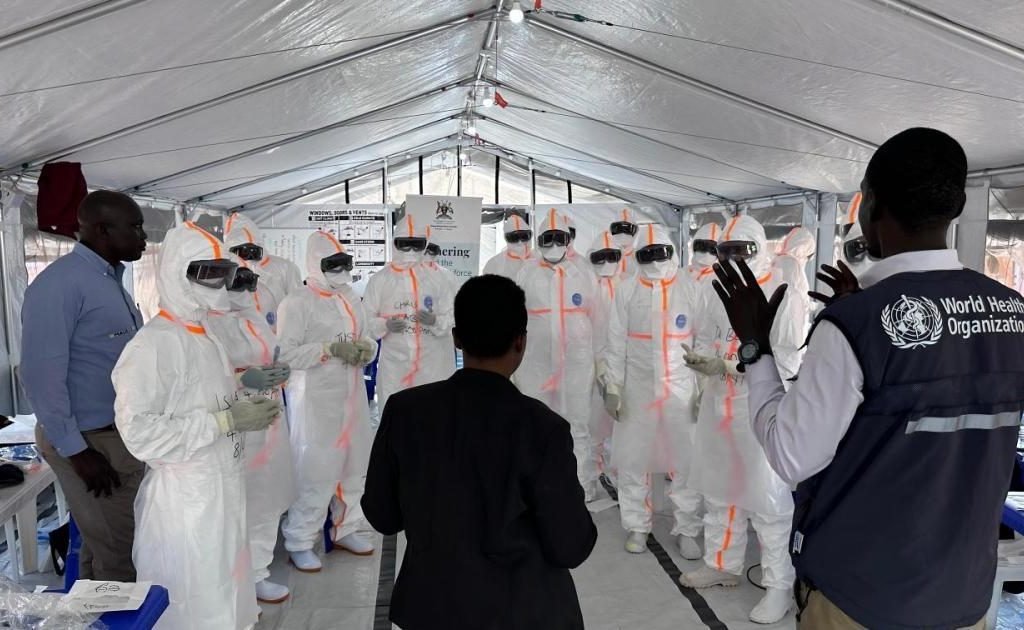
Uganda’s response demonstrated the importance of preparedness. Health teams identified and monitored more than 800 contacts, while surveillance, laboratory capacity and public health coordination supported efforts to contain transmission. The country subsequently declared its outbreak over after 42 consecutive days without a new confirmed case, in line with the required monitoring period.
Uganda also contributed experienced health specialists to support response efforts in the DRC.
These achievements deserve recognition. They demonstrate the value of investing in public health systems capable of detecting, tracking and containing dangerous infections.
The argument is not that Uganda is immune to Ebola or that future cases are impossible. Uganda has experienced outbreaks before, including the first identification of the Bundibugyo strain in 2007. Its experience makes continued vigilance essential.
But a country that has contained an outbreak should be assessed on its current health situation, not treated as though transmission is continuing indefinitely.
A traveller’s itinerary can help investigators establish where exposure occurred. It cannot, on its own, establish that the traveller contracted the virus in every country visited along the way.
When headlines travel faster than facts
International reporting has an important role during disease outbreaks. The public needs timely information about emerging threats, and governments need to communicate risks honestly.
The problem arises when complicated travel histories are compressed into headlines that leave readers with the wrong impression.
A passenger who transited through Uganda becomes associated with the country in which the passenger travelled, even when there is no evidence that infection occurred there. Once that association enters public discussion, the original context can quickly be lost.
The result is a perception of risk that may outlast the actual public health threat.
Consider how international travellers use major aviation hubs. Passengers regularly connect through Dubai, Addis Ababa and Nairobi on journeys spanning several countries. Transit through one of these hubs does not automatically make it the origin of an infection subsequently diagnosed elsewhere.
Uganda deserves the same standard of accuracy.
When reporting on a confirmed case, media organisations should distinguish between the patient’s country of origin, places visited, transit points, the suspected location of exposure and the country where the diagnosis was made. Where the location of infection remains unknown, that uncertainty should be stated clearly.
This is not a request for favourable coverage or special treatment. It is a request for the same factual precision that public health reporting demands everywhere.
For Uganda, accurate reporting can mean the difference between informing the world about a regional health investigation and unintentionally portraying an outbreak-free country as an active danger zone.
The economic price of association
The consequences of such perceptions extend far beyond newspaper headlines and social media discussions.
Tourism is particularly vulnerable because visitors often make travel decisions months in advance. A prospective visitor who encounters alarming Ebola coverage may cancel a safari, postpone a gorilla-tracking trip or choose another destination without investigating whether Uganda currently has active cases.

Tour operators lose bookings. Hotels face weaker demand. Guides, drivers, transport providers and communities that depend on tourism lose income. Businesses organising international conferences and events may also face uncertainty.
The sector entered 2026 on strong footing. International arrivals increased by 19.7 per cent to approximately 1.64 million in 2025, while tourism earnings reached about US$1.62 billion, according to figures cited in recent industry reporting.
Those gains matter because tourism supports livelihoods across the country and brings foreign exchange into the economy. Protecting the sector requires more than promoting Uganda’s attractions. It also requires ensuring that international perceptions reflect the facts.
The effects can extend into other areas of business. Investors assessing opportunities in Uganda consider the stability of the operating environment, while conference organisers, international companies and business travellers weigh the risks associated with moving people across borders.
When a country repeatedly appears in outbreak coverage without sufficient context, some of these decisions may be influenced by fear rather than a clear assessment of the evidence.
The resulting economic damage can be difficult to measure precisely. Lost bookings, postponed meetings and investment decisions that never materialise do not always appear in official statistics. Yet the absence of a single consolidated figure does not mean the underlying risk to businesses is insignificant.
The cost is especially frustrating when Uganda has invested in the very systems needed to manage infectious disease threats: surveillance, laboratory capacity, treatment facilities, contact tracing, cross-border coordination and public communication.
These investments help protect Ugandans and the wider region. They also help the country maintain economic activity while managing public health risks.
Preparedness should be recognised as evidence of capacity, not become another reason for commercial punishment.
Travel restrictions must follow the evidence
Governments have a legitimate responsibility to protect their populations from infectious diseases. Screening, surveillance and proportionate public health measures are necessary, particularly when an outbreak is occurring in a neighbouring country.
However, travel restrictions also carry consequences. Entry bans and broad travel advisories can discourage tourism, disrupt business travel and weaken confidence in a destination.
Uganda has faced restrictions and advisories linked to Ebola concerns, including measures affecting travellers from the region. The United States, Canada and the United Arab Emirates have been among the countries associated with entry restrictions during the current outbreak period. The United States has also maintained a highly restrictive travel advisory for Uganda despite calls for policies to reflect changing epidemiological conditions.
Such measures deserve careful scrutiny when a country’s outbreak has been declared over and its health authorities continue to monitor the situation.
The World Health Organization has repeatedly advised against unnecessary international travel and trade restrictions during Ebola outbreaks. The principle is important: public health measures should be proportionate to the demonstrated risk and should be reviewed as circumstances change.
A country should not continue to face the commercial consequences of an emergency as though nothing has changed after the emergency has been contained.
Nor should every country connected to an outbreak through geography or travel automatically face the same restrictions, regardless of its current epidemiological status.
Governments should explain the evidence supporting their decisions, distinguish between affected and unaffected areas where appropriate, and update their advice when circumstances change.
For Uganda, the objective is not to discourage legitimate health precautions. It is to ensure that those precautions protect people without unnecessarily damaging the economies of countries that have contained their outbreaks.
Vigilance and business can go together
Uganda’s position should not be interpreted as a call for complacency. Ebola is a serious disease, and cross-border movement makes continued surveillance essential.
The Ministry of Health has called for calm and vigilance, strengthened screening and public health controls at points of entry, and continued hygiene practices, including regular handwashing and sanitising.
These measures are compatible with keeping the country open to visitors, investors and business travellers. Indeed, they are part of what makes that openness responsible.
As of the Ministry’s statement on 20 October 2026, Uganda had no confirmed active Ebola cases. That is the relevant status to communicate, alongside the fact that health authorities remain vigilant and prepared to respond should circumstances change.
Tourist destinations, business districts and commercial activity should not be portrayed as though the entire country is experiencing an active outbreak when that is not the case.
Anyone seeking verified information can contact the Ministry of Health hotline on 0800-100-066, send an SMS alert to 6767 or use U-Report on 8500.
Clear communication is essential because uncertainty creates room for misinformation. The faster accurate information reaches travellers, businesses and international audiences, the less opportunity there is for outdated assumptions to shape decisions.
Uganda’s reputation is an economic asset
Uganda should not have to choose between protecting public health and protecting its economic prospects. Both depend on strong institutions, reliable information and decisions grounded in evidence.
International media should report travel histories accurately and avoid implying that transit establishes the origin of an infection. Governments should ensure that travel advisories reflect current conditions and are consistent with sound public health guidance. Businesses and tourism operators should continue communicating verified information to customers who may be uncertain about travelling.
Uganda, for its part, must sustain investment in disease surveillance, strengthen regional coordination and communicate its health status clearly. It must also recognise that protecting its international reputation requires consistent, credible information rather than simply insisting that the country is safe.
The message to the world is straightforward. Uganda takes Ebola seriously. It has experience responding to outbreaks, has demonstrated the ability to contain transmission and continues to monitor public health risks. Its proximity to the DRC is a reason for vigilance and regional cooperation, not a justification for treating it as a permanent risk zone.
A traveller’s passage through Entebbe should not overshadow the facts of an investigation. An outbreak across the border should not erase the record of a country that has contained its own outbreak. And international travel policies should not ignore changing evidence simply because a country’s name has become associated with a disease.
Uganda is open for business. The world should judge it by its current health status, the strength of its institutions and the facts on the ground, not by geographical proximity, incomplete headlines or outdated associations.
