

When the government announced plans to integrate Uganda’s National Identification Number (NIN) into the tax administration system, the change raised an important question among citizens: Will having a national ID number automatically make someone a taxpayer?
The concern is understandable. The NIN has become increasingly important in everyday life, from registering SIM cards and opening bank accounts to accessing government services and completing official transactions. Its growing reach has made it one of the most important identifiers a Ugandan can possess.
Now, with the number also being used for tax identification, some citizens fear that the government could use the system to impose tax obligations on everyone who holds a national ID.
The Ministry of Finance, Planning and Economic Development has moved to address those concerns, insisting that possessing a NIN does not automatically make an individual liable for tax.
Speaking in Parliament on 15 October 2026, State Minister for Planning Amos Lugoloobi, representing the Finance Minister, explained the distinction between identifying a person and determining whether that person owes tax.
“The NIN identifies the person. The tax law determines whether that person has a tax obligation and how much tax, if any, is payable,” Lugoloobi said.
The statement captures the government’s central message: Uganda is changing how individuals are identified within the tax system, not automatically creating new tax liabilities for everyone with a national identification number.
However, while the legal distinction is straightforward, the public concerns surrounding the reform reveal a wider debate about taxation, digital identity and the relationship between citizens and the state.
What is changing under the new arrangement?
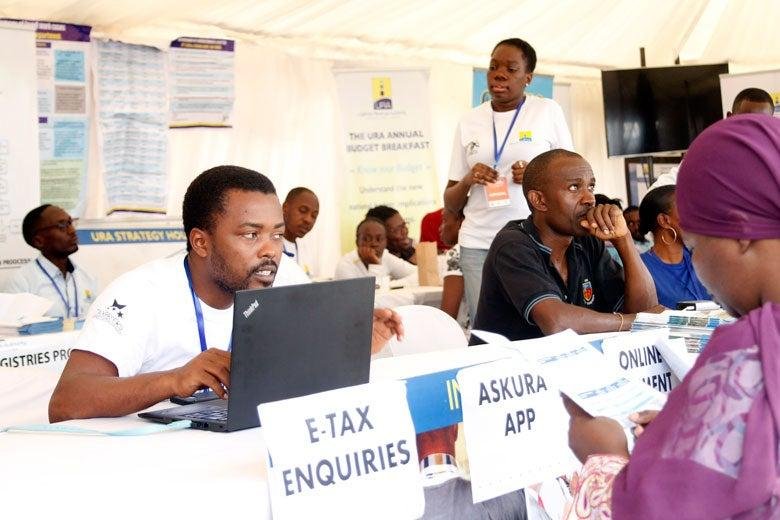
The transition is rooted in a 2025 amendment to Section 4 of the Tax Procedures Code Act, which provides for the use of the National Identification Number as the tax identification number for individual taxpayers.
Previously, individuals generally used a Tax Identification Number (TIN) issued by the Uganda Revenue Authority (URA) when dealing with tax-related matters. Under the new arrangement, the NIN will increasingly serve the same purpose for individuals, bringing personal identification and tax administration closer together.
The reform is intended to simplify taxpayer registration, improve the accuracy of government records and reduce inconsistencies caused by separate identification systems.
For businesses and other entities, the identification arrangement is different. They will continue to use the relevant registration numbers issued through the Uganda Registration Services Bureau.
The transition does not mean that every NIN holder will immediately be treated as someone who owes tax. Rather, it gives the revenue authority a more consistent way to identify individuals who are already registered or who may need to be registered under the applicable tax laws.
For a citizen who already has a TIN, the change is primarily administrative. Instead of relying on separate numbers to establish identity and manage tax records, the government is working towards a system in which the NIN becomes the principal identifier for individual taxpayers.
Why is the government making the change?
At the heart of the reform is a longstanding challenge facing Uganda’s revenue administration: maintaining accurate taxpayer records and collecting taxes from people and businesses that are legally required to pay them.
Separate registration systems can create duplicate records, inconsistencies and difficulties when matching a taxpayer’s details across government databases. A person may appear more than once in the system, while records belonging to different individuals may be difficult to reconcile.
According to figures presented by officials, the URA identified 191,813 duplicate records and 51,993 record mutations in its taxpayer register during the 2025/26 financial year.
By the end of September 2026, approximately 2,130,814 of the roughly 5.4 million individual taxpayer records had been matched to NINs, representing about 39 per cent of the register.
These figures illustrate both the scale of the exercise and the administrative work still required to complete it.
The transition is being implemented in stages, beginning with matching existing taxpayer records to NINs, followed by biometric verification and taxpayer profile updates, before moving towards NIN-based access to tax accounts.
Cabinet endorsed the operational direction on 1 September 2026, as the government pursued a more integrated approach to taxpayer identification.
By consolidating records around a common identifier, the URA expects to reduce duplication, improve the reliability of taxpayer information and make it easier to identify individuals who have tax obligations.
The government has also cited an illustrative estimate of approximately Shs420 billion that could potentially be mobilised through improved compliance. This should not be interpreted as a tax imposed on every person with a NIN. The figure relates to the potential revenue associated with improving compliance among people who are already subject to tax obligations.
The distinction is important because the purpose of a more effective tax register is not to make every citizen liable for tax, but to help the authorities identify those who are legally required to pay.
Having a NIN is not the same as owing tax
The government’s reassurance rests on a basic principle of tax law: identification and liability are two different things.
A national identification number establishes a person’s identity. A tax identification number allows the revenue authority to maintain records, process returns, match payments and administer the relevant tax laws.
Neither number, by itself, determines whether an individual owes money to the government.
Tax liability depends on the provisions of the applicable tax legislation, including the nature of a person’s income or economic activity, relevant thresholds, exemptions and other statutory conditions.
For example, an unemployed graduate does not become liable for income tax simply because they possess a national ID. A student without taxable income does not automatically acquire a tax bill when their NIN is linked to the tax system. Similarly, a pensioner or a smallholder farmer cannot be assumed to owe tax merely because they have been registered by the state.
The actual position depends on the circumstances of each individual and the particular tax laws that apply.
It is also important to distinguish income tax from other taxes. Different taxes have different legal requirements, and some obligations may arise from particular transactions, business activities or property-related circumstances rather than from employment income alone.
Consequently, the introduction of NIN-based identification does not eliminate the need to establish whether a specific person or transaction falls within the law.
For existing taxpayers, however, the new arrangement is expected to make tax administration more straightforward. Individuals who already have tax obligations will increasingly use their NIN when filing returns, making payments and accessing their tax accounts. During the transition, verified taxpayers are expected to be able to use either their NIN or existing TIN, according to the arrangements communicated by the authorities.
Why public anxiety persists
Despite the government’s explanation, concerns about the reform are unlikely to disappear simply because officials clarify the law.

For many Ugandans, the debate is not only about whether a NIN automatically creates tax liability. It is also about what happens when personal identification, financial information and tax administration become increasingly connected.
A common identifier can make it easier for the state to reconcile records and identify people who may be failing to meet existing obligations. It can also improve the administration of public services and reduce the need for citizens to maintain multiple registration numbers.
At the same time, a more integrated system increases the importance of safeguards against errors, inappropriate access to personal information and the incorrect attribution of financial activity to individuals.
These concerns are particularly significant in Uganda, where a large part of economic activity takes place outside formal employment and conventional business registration systems.
A market vendor, a small trader or a farmer may earn irregular income without operating a business structured like a formal company. The existence of a NIN does not explain the nature, source or tax treatment of that income. Those questions still require proper assessment under the relevant laws.
The government must therefore ensure that better identification does not become a substitute for establishing actual tax liability.
An accurate database is useful, but accuracy also means distinguishing between people who owe tax, people who do not, and people whose records require correction.
If the system generates erroneous assessments or makes it difficult for citizens to challenge incorrect information, the reform could deepen the very mistrust the ministry is seeking to address.
The bigger challenge is building public trust
Uganda’s move towards integrated digital identification reflects a broader trend among governments seeking to improve domestic revenue collection and modernise public administration.
When identity and taxpayer records are properly linked, authorities can reduce duplication, improve record-keeping and potentially make compliance easier for individuals and businesses.
However, technological integration is only part of the solution. The success of the reform will depend on how the system is implemented and whether citizens are treated fairly.
The URA will need to communicate clearly about registration requirements, explain how existing TINs will be transitioned, and provide accessible procedures for correcting inaccurate records. Citizens should also be able to understand why they have received a tax assessment and how to challenge it if they believe it is wrong.
Equally important is the consistent application of statutory thresholds, exemptions and other protections provided under tax law.
For ordinary Ugandans, reassurance will ultimately come from experience rather than official statements. If people who are not liable for tax are left undisturbed, while those with genuine obligations are assessed fairly and transparently, confidence in the system may improve.
If, on the other hand, citizens begin receiving unexplained demands or encounter difficulties correcting mistakes, the shared identification system could become a source of frustration.
A number is not a tax bill
The NIN-to-TIN transition is an administrative reform with potentially significant implications for Uganda’s tax system. It seeks to establish a more reliable way of identifying individual taxpayers, improve the integrity of government records and support compliance with existing tax laws.
But the government’s central assurance remains essential: having a National Identification Number does not, by itself, create a tax obligation.
The law, not the mere possession of an identification number, determines whether a person owes tax and how much is payable.
The challenge now is to ensure that the systems built around the NIN respect that principle in practice. Better data should help the government administer taxes more accurately, not remove the distinction between being identifiable and being liable.
For Uganda, the real measure of success will not simply be how many taxpayer records are matched to national identification numbers or how much additional revenue the authorities hope to collect.
It will also be whether the system can identify genuine tax obligations without treating every citizen as a debtor, protect people from incorrect assessments and make compliance easier for those who are required to pay.
Ultimately, a national ID number may help the government know who a person is. It does not, on its own, determine what that person owes.
