
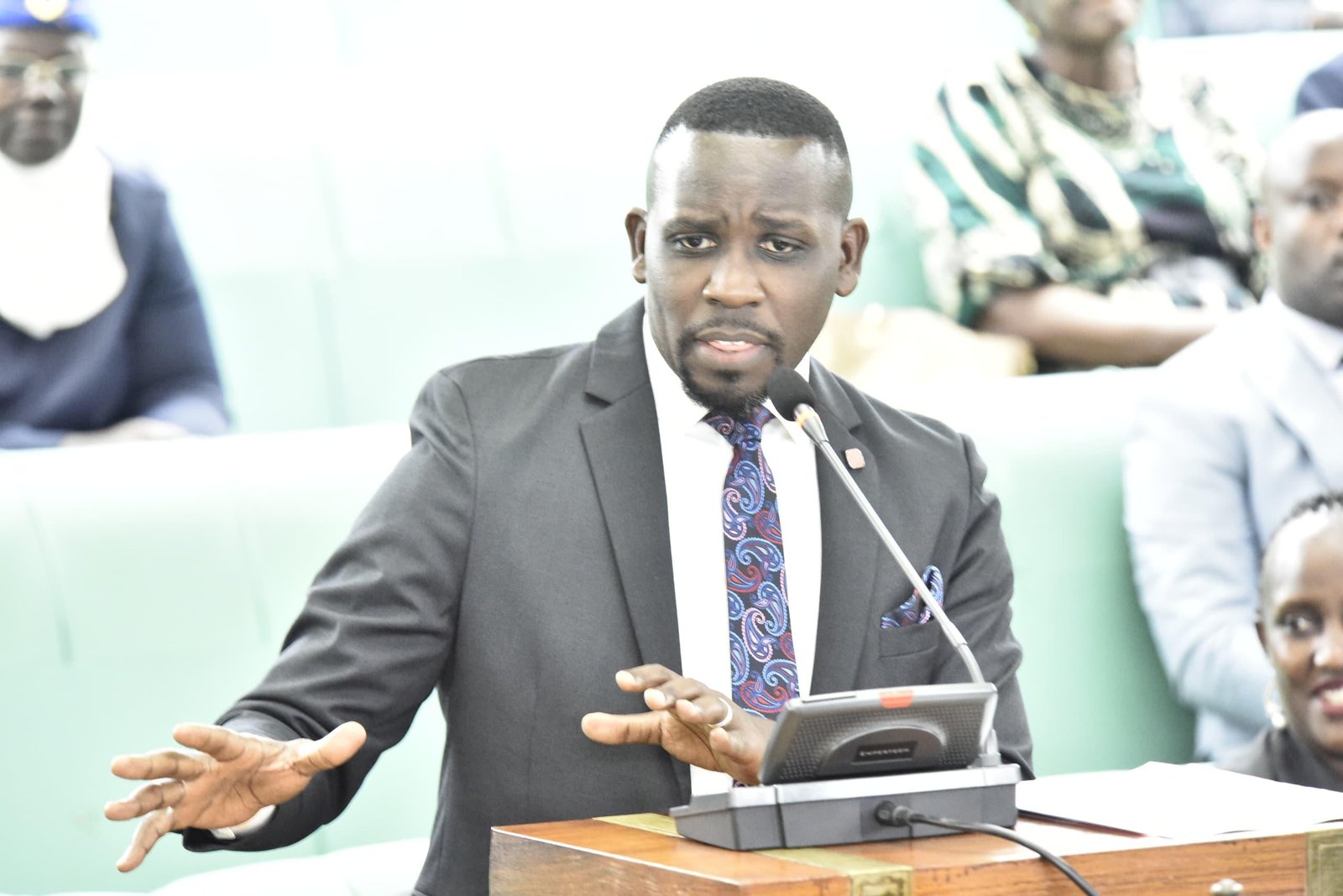
Uganda’s Leader of the Opposition, Joel Ssenyonyi, has called on Parliament and the Ministry of Finance to suspend further taxpayer funding to four private companies until they account for approximately Shs1.835 trillion in public funds committed to their operations.
The companies are Dei BioPharma, Atiak Sugar Factory, Roko Construction and Inspire Africa Coffee, which have received or been promised government support through equity investments, loans and other financing arrangements.
Speaking during parliamentary debates on government interventions in private enterprises, Ssenyonyi questioned the absence of comprehensive public disclosures showing how the money had been utilised, the progress made by the companies and the expected repayment arrangements.
“Taxpayers should not put more money into these private companies before they explain how earlier funding was used,” Ssenyonyi said.
According to figures cited by the Leader of the Opposition, the four companies account for the following public financial commitments:
- Dei BioPharma: Approximately Shs724 billion, equivalent to $195 million, committed towards a pharmaceutical and vaccine manufacturing complex in Matugga.
- Atiak Sugar Factory: Approximately Shs668 billion ($180 million) in Uganda Development Corporation (UDC) equity investments and credit facilities to support sugar production in Amuru District.
- Roko Construction: Approximately Shs263 billion ($71 million), mainly structured through preference shares and debt restructuring to support the construction company.
- Inspire Africa Coffee: Approximately Shs180 billion ($49 million) towards developing instant-coffee processing capacity in Ntungamo District.
Ssenyonyi’s concerns centre on whether these investments are delivering the promised economic returns and whether government has sufficient oversight over companies receiving substantial amounts of public money.
Wider Government Exposure to Private Companies
The four companies form part of a broader government strategy of supporting selected private enterprises through the Treasury, UDC and other government institutions.
One of the largest commitments is the International Specialised Hospital of Uganda in Lubowa, developed by Finasi Ltd. In 2019, Parliament authorised government to guarantee up to $379.7 million in promissory notes for the construction of the 264-bed facility.
The project has faced repeated deadline extensions and audit queries from the Auditor General concerning certified works. Government has continued meeting financial obligations associated with the project, including a Shs298 billion allocation approved in March 2025.
Government has also supported agro-processing and manufacturing ventures through land allocations, tax incentives, equity investments and other financing arrangements.
Among them is Uganda Vinci Coffee Company, which received government support through land in Namanve, tax incentives and contractual protections under a 2022 agreement intended to expand domestic coffee processing.
Through UDC, government has also invested in agro-processing ventures, including Soroti Fruit Factory and tea-processing businesses in the Kigezi and Toro regions.
In August 2026, the Ministry of Finance asked Parliament’s Finance Committee to consider waiving Shs27.78 billion in tax arrears owed by Fresh Cuts Uganda and New Plan Uganda. The two companies had accumulated Shs8.92 billion and Shs18.86 billion in arrears, respectively, with government citing insolvency risks and the need to protect jobs.
Government Defends Industrial Support
Government has previously defended financial interventions in private businesses as necessary to accelerate industrialisation, promote domestic manufacturing and address financing gaps in the private sector.
Officials have argued that commercial lending rates, which can exceed 18% to 20%, make it difficult for businesses undertaking capital-intensive projects in pharmaceuticals, manufacturing and agro-processing to secure affordable long-term financing.
Through UDC equity investments, preference shares and sovereign guarantees, government says it can support strategic industries, encourage import substitution, create employment and expand local production.
However, the interventions have raised questions about how government selects beneficiaries, evaluates commercial viability and monitors the use of public funds.
The Accountability Question
Ssenyonyi’s demand brings renewed attention to the terms under which government invests in private companies and the mechanisms available to recover public money when businesses fail to meet their obligations.
For businesses that do not receive similar government support, the arrangements also raise questions about competitive fairness, particularly where selected companies benefit from preferential financing, tax concessions and government-backed commercial guarantees.
The immediate question for Parliament is whether the four companies can demonstrate measurable progress against the public funds committed to them.
Ssenyonyi wants government to establish how the money has been spent before approving additional financial support, placing greater scrutiny on the commercial performance, financial reporting and accountability of businesses benefiting from taxpayer-funded interventions.
