
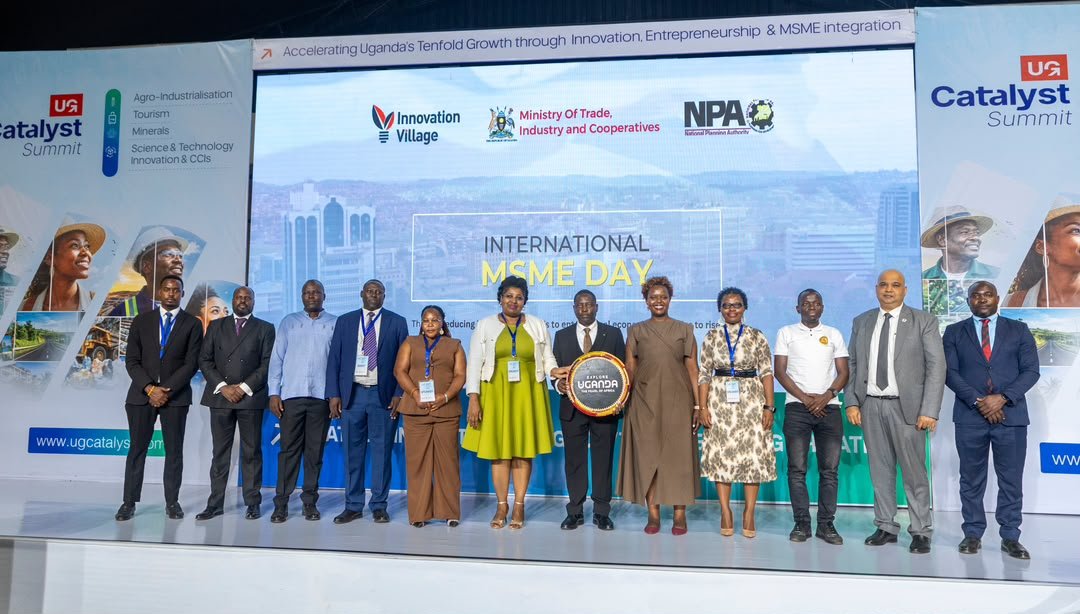
Uganda’s tourism sector is poised for a significant boost following discussions at the UG Catalyst Summit 2026, where industry leaders, policymakers, and private sector players gathered at MoTIV Bugolobi to chart a bold new path for the country’s economic transformation.
Setting the tone for the summit, National Planning Authority Chairperson Prof. Pamela Mbabazi delivered a call to action that resonated across every sector of the economy.
“Every generation receives a defining assignment. Our generation has been assigned the responsibility of economic transformation. History will judge us not by the speeches we gave, but by the opportunities we created.”
For Uganda’s tourism industry, those opportunities are now firmly on the table.
The Tourism and Creative Industries track emerged as one of the summit’s most dynamic sessions, placing one of Uganda’s most important economic sectors at the center of the country’s growth agenda. Participants examined the infrastructure gaps that continue to constrain the industry’s ability to convert the country’s exceptional natural and cultural assets into sustained economic value.

Rather than focusing solely on increasing visitor arrivals, discussions explored how Uganda can build long-term demand that encourages repeat travel, extends visitor stays, and increases local spending across tourism destinations and communities.
The conversation comes at a pivotal time for Uganda’s tourism industry. The country’s international marketing efforts are already expanding, with branded “Explore Uganda – The Pearl of Africa” buses currently operating in Paris, taking images of Uganda’s wildlife, landscapes, and tourism attractions to European audiences. Delegates noted that while international promotion is essential, such campaigns will only deliver lasting economic returns if they are supported by investments in infrastructure, destination development, and visitor experiences.
One of the summit’s most significant announcements for tourism entrepreneurs came from Minister Sanjay Tana, who confirmed a three-year income tax holiday for qualifying startups. Given tourism’s strong entrepreneurial base, including hospitality businesses, tour operators, creative enterprises, cultural attractions, and experience-based ventures, the incentive is expected to encourage new investment, business expansion, and innovation across the sector.
Participants also welcomed the launch of the Opportunity Dashboard and the planned presentation of the Startup Development Policy to Cabinet, viewing both initiatives as evidence that government is beginning to translate policy commitments into practical support for entrepreneurs.
The summit also addressed persistent challenges facing Uganda’s private sector. Business leaders acknowledged that improving bankability is as much about strengthening business readiness as it is about expanding access to finance. They further noted that fragmentation among enterprises continues to limit Uganda’s ability to fully capitalize on opportunities presented by the African Continental Free Trade Area (AfCFTA).
For tourism-focused micro, small, and medium-sized enterprises, including guesthouses, community tourism initiatives, cultural sites, tour guides, transport providers, and craft producers, the recognition that policy discussions have often failed to reach smaller businesses was widely viewed as an important step forward. Participants agreed that narrowing this gap between policy and implementation could become one of the summit’s most meaningful outcomes.
Uganda’s ambition to grow its economy tenfold under the Fourth National Development Plan (NDP IV) cannot be realized without a vibrant and competitive tourism sector. The country’s biodiversity, cultural heritage, adventure tourism, and hospitality industry remain among its strongest comparative advantages.
What the sector now requires, delegates concluded, is sustained investment in infrastructure, improved access to finance, stronger enterprise support systems, and consistent policy implementation capable of transforming Uganda’s tourism potential into measurable economic growth.
The message emerging from the UG Catalyst Summit 2026 is unmistakable. Uganda is moving beyond conversations about its tourism potential and is increasingly focused on building the institutions, policies, and systems needed to unlock it. If that momentum is maintained, tourism could become one of the biggest beneficiaries of the country’s broader economic transformation agenda.
