
WhatsApp Status advertisements are creating another route for businesses to reach customers, but their commercial value will depend on whether they generate profitable sales rather than simply more views and conversations.
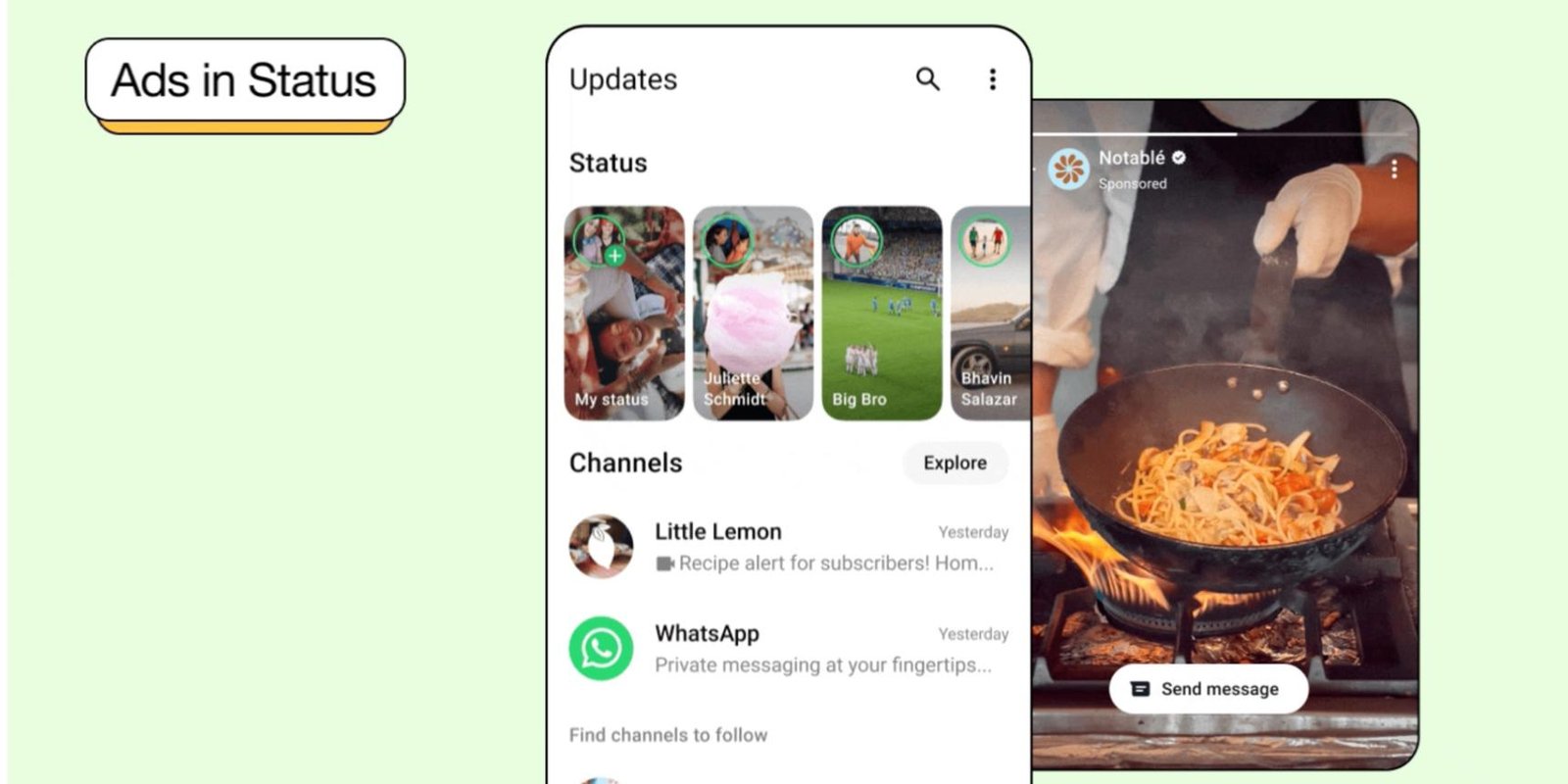
Introduced by Meta in June 2025, the advertisements appear between ordinary Status updates in WhatsApp’s Updates tab, allowing businesses to promote products and services to users already spending time on the platform. Potential customers can move directly from an advertisement into a conversation with the advertiser, creating a shorter path from product discovery to an enquiry or purchase.
The opportunity is particularly relevant to businesses that rely on direct customer engagement. However, Meta’s own disclosures suggest that the advertising format’s enormous audience does not necessarily translate into immediate revenue, while businesses must still establish whether the placement can deliver customers at a competitive cost.
Meta said in June 2025 that more than 1.5 billion people globally used WhatsApp’s Updates tab every day to view Status updates and Channels. The figure remains the latest official daily usage figure the company has published. Alongside Status advertisements, Meta introduced promoted Channels and paid Channel subscriptions as part of its broader effort to monetise WhatsApp.
The strategy allows the company to generate advertising revenue from content discovery without placing sponsored advertisements inside private chats. Meta says personal messages, calls and groups are not used to determine which advertisements users see, while personal conversations remain end-to-end encrypted.
Advertising is instead informed by more limited signals, including general location, device language, followed Channels, interactions with advertisements and preferences associated with a linked Meta Accounts Center profile. This distinction matters because WhatsApp’s commercial value rests partly on its role as a private messaging service. Monetising the Updates tab gives Meta another revenue opportunity without directly introducing advertising into one-to-one or group conversations.
For businesses, the appeal lies in connecting advertising with customer engagement. A clothing retailer can use a Status advertisement to generate enquiries about prices, sizes and availability. A tour operator can respond to questions about itineraries and booking dates, while a restaurant can attract enquiries about menus, delivery and reservations.
In markets where customers already use WhatsApp to contact businesses, moving from an advertisement into a conversation without leaving the app can reduce friction. The format may be particularly useful when customers need additional information or reassurance before committing to a purchase.
Yet generating conversations is not the same as generating revenue. A campaign can attract dozens or hundreds of enquiries and still fail to cover advertising and operating costs. Slow responses, unavailable stock, unclear pricing, poor follow-up and unreliable fulfilment can all undermine the commercial value of the traffic.
Businesses therefore need to evaluate campaigns using sales-related measures rather than views, impressions or clicks alone. The cost of acquiring a qualified enquiry, the proportion of enquiries that convert into paying customers, the average order value and the cost of acquiring each customer relative to the revenue and contribution margin generated provide a clearer measure of performance.
For smaller businesses operating with limited marketing budgets, these figures are especially important. A busy WhatsApp inbox can create the impression of a successful campaign even when few enquiries become orders. The decisive question is whether the resulting sales generate enough value to justify the advertising expenditure and the costs of serving those customers.
Advertising costs will also influence adoption. Meta uses an advertising auction system, meaning costs vary according to factors such as audience selection, location, competition, campaign objectives and performance. The company does not publish a fixed rate card for WhatsApp Status placements.
There is insufficient publicly established evidence to conclude that Status advertisements are consistently cheaper than advertising on Instagram or Google, particularly in Uganda. Low-cost impressions do not necessarily produce strong returns if they fail to generate serious enquiries or completed purchases.
Campaign structure also matters. WhatsApp Status placements may be bundled with Instagram Stories in certain campaign setups, limiting an advertiser’s ability to isolate spending and results attributable to WhatsApp alone. Businesses need to check the available placement settings and reporting options in Meta Ads Manager before making direct cost comparisons.
Meta’s own commentary indicates that monetising Status advertisements remains a longer-term opportunity. During its first-quarter 2026 earnings call, Chief Financial Officer Susan Li said the advertisements were already being viewed by hundreds of millions of people daily and that the global rollout was expected to be completed during 2026.
The company also indicated that Status advertisements were not expected to make a meaningful contribution to overall impressions or revenue growth for the next few years. Li noted that monetisation was likely to remain significantly below Instagram Stories on a sustained basis.
Meta identified two structural challenges: Status usage is concentrated more heavily in markets with lower advertising spending per person, and targeting data is more limited for users who have not linked their WhatsApp accounts to Meta’s Accounts Center.
These limitations help explain why a large audience does not automatically translate into high advertising revenue. Meta must be able to match advertisements with commercially valuable audiences, while advertisers need evidence that the people reached are likely to become customers.
Investor projections have nevertheless pointed to substantial long-term potential. In September 2025, Barclays estimated that WhatsApp could generate up to US$6 billion in additional advertising revenue for Meta in 2026, while Threads could contribute another US$19 billion in 2027. The combined figure of approximately US$25 billion represented projections for the two platforms over different periods, not revenue already generated by WhatsApp.
The estimates reflect expectations that Meta can extract greater commercial value from platforms that have historically generated less advertising revenue than Facebook and Instagram. Whether those expectations are realised will depend on advertiser demand, the pace of expansion and the effectiveness of the advertising products.
For Ugandan businesses, availability and audience fit are additional considerations. Although Meta has described a wider rollout, access to Status advertisements can vary by market, advertising account and campaign setup. Businesses should confirm in Meta Ads Manager whether the placement is available to them and whether its targeting options can reach their intended customers.
The format’s narrower targeting capabilities compared with some established Facebook and Instagram advertising options may affect the reach and quality of enquiries in specific local markets. Businesses should therefore avoid committing substantial budgets before establishing whether the placement performs well for their products, customer segments and locations.
A practical approach is to run controlled campaigns, track the full journey from advertisement to enquiry and purchase, and compare the results with alternatives such as Click-to-WhatsApp campaigns on Facebook and Instagram, organic WhatsApp Business activity and other digital advertising placements.
Response speed, clear offers, accurate stock information and reliable fulfilment will remain essential regardless of how effectively an advertisement attracts attention. The advertising format can create an opportunity, but the business must still convert that opportunity into a transaction.
For Meta, Status advertisements provide a way to monetise an established audience without placing sponsored content inside private conversations. For businesses, they offer another potential channel to reach customers and initiate sales conversations.
The commercial test is whether those conversations produce sufficient paying customers at a sustainable cost. If businesses can consistently turn Status views into qualified enquiries and profitable orders, the format could become a valuable part of their marketing mix. If it generates attention without enough sales, WhatsApp’s enormous audience will not, on its own, make the investment worthwhile.
