
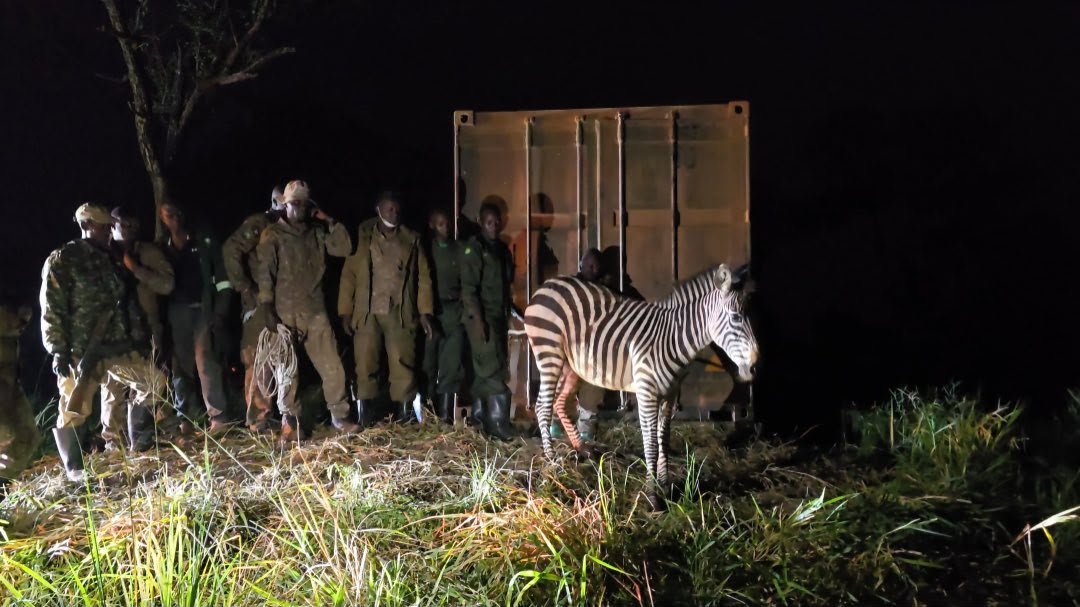
The Uganda Wildlife Authority (Uganda Wildlife Authority) has completed the translocation of 25 zebras into Ajai Wildlife Reserve, marking a major milestone in the ongoing restoration of one of Uganda’s oldest protected ecosystems.
The zebras were moved in a coordinated, multi-phase operation from Lake Mburo National Park (Lake Mburo National Park), with the final group arriving on June 30, 2026. The operation establishes a founding population intended to strengthen biodiversity and restore ecological balance within the West Nile reserve.
The introduction follows earlier conservation activity in 2026 when four southern white rhinos were relocated from Ziwa Rhino Sanctuary (Ziwa Rhino Sanctuary) to Ajai Wildlife Reserve (Ajai Wildlife Reserve). Together, the two species reintroductions are aimed at rebuilding key grazing and vegetation dynamics that were lost over decades of wildlife decline.
Ajai, which spans roughly 148 to 166 square kilometres along the Nile corridor, was once a thriving rhino sanctuary before severe wildlife losses caused by poaching and civil unrest in the late 20th century led to the disappearance of rhinos by the late 1970s. Since then, it has remained a lower-profile reserve compared to Uganda’s major national parks.
Conservation officials say the combination of rhinos and zebras is designed to restore ecological functions. Rhinos shape vegetation and maintain open grasslands, while zebras consume tougher grasses that other herbivores avoid, improving grazing conditions for other species and supporting long-term ecosystem recovery.
Uganda Wildlife Authority says the reintroductions are part of a broader strategy to rehabilitate degraded protected areas and expand wildlife distribution beyond traditional tourism hubs. The growing species diversity is also expected to enhance Ajai’s tourism appeal in the West Nile region.
With the zebra population now established alongside rhinos, authorities will focus on monitoring ecosystem adaptation and assessing conditions for possible future species introductions as part of long-term restoration planning.
