

In the Commercial Division of Uganda’s High Court, a dispute that had nothing to do with money, contracts, or breach of duty still managed to raise a question with real teeth: what happens when a court’s own electronic filing system quietly reschedules a ruling, and nobody notices in time? On 30 July 2026, Justice Patience T.E. Rubagumya answered that question in Steam Investments Limited v Riseshine Investments (U) Ltd, a ruling that turns on eight missed days, one overlooked notification, and a legal doctrine that has long protected litigants from their lawyers’ mistakes.
The case, Steam Investments Limited v Riseshine Investments (U) Ltd (2026 UGCommC 364), is more than a procedural ruling. It offers important guidance on how Uganda’s digital court system should operate and reminds lawyers that while technology may have changed the way courts function, their professional duty to diligently monitor cases has not.
A Case That Almost Never Got Heard
The dispute before the court was not about who was right or wrong in the underlying commercial case.
Instead, it focused on whether Steam Investments Limited should be allowed to file its defence after the court’s deadline had already expired.
Earlier in the proceedings, the High Court had directed that once it delivered its ruling on an application for unconditional leave to appear and defend the suit, Steam Investments would have 15 days to file its written statement of defence.
Missing that deadline carried serious consequences.
Without a valid defence on record, the company risked losing its opportunity to fully contest the claims brought against it by Riseshine Investments (U) Ltd.
Where Things Went Wrong
The court had initially scheduled its ruling for 5 February 2026. However, instead of delivering the ruling on that date, it postponed it to 13 February 2026.
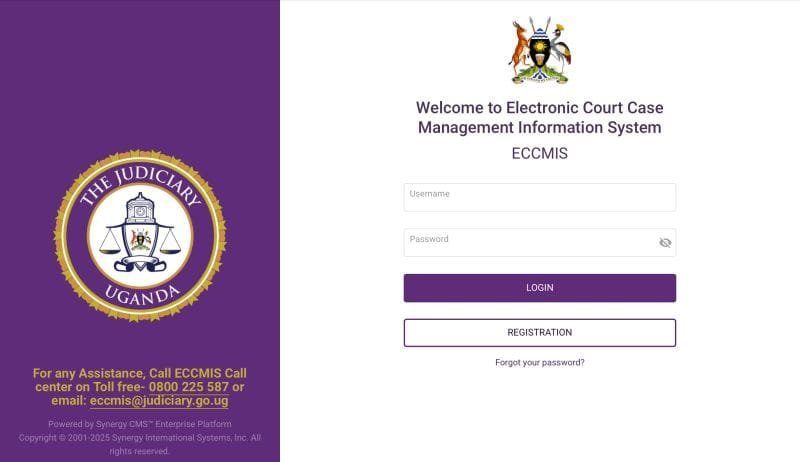
According to court records, the change was communicated through ECCMIS, Uganda’s Electronic Court Case Management Information System.
The system generated a notice informing parties that the ruling had been rescheduled and also sent automated email notifications to counsel. Unfortunately, Steam Investments’ lawyers did not see the notification.
It was only on 26 March 2026, more than six weeks after the ruling had been delivered, that they discovered the court had already issued its decision and that the 15-day deadline for filing the defence had long expired.
Three days later, on 29 March 2026, the company filed its written statement of defence together with an application asking the court to extend time and validate the late filing.
Two Different Versions of the Same Story
The parties presented sharply different explanations for what had happened.
Steam Investments argued that it had relied entirely on its lawyers to monitor the electronic court system because the company itself was not directly linked to ECCMIS.
According to the company, it had no independent way of knowing that the ruling date had changed or that the filing deadline had started running.
Riseshine Investments painted a different picture. It argued that ECCMIS had functioned exactly as intended.
The respondent produced evidence showing that on 5 February 2026, the court system uploaded a notice informing parties that the ruling had been rescheduled to 13 February and sent email notifications to counsel.
In its view, the problem was not with the system but with the applicant’s lawyers, who simply failed to check it. Had they done so, the respondent argued, they would have known about the new date and filed the defence on time.
What the Court Found
Justice Patience T.E. Rubagumya carefully examined the electronic court records.
She agreed with the respondent on one crucial point. The court found that ECCMIS had successfully generated the ruling notice and sent the necessary notifications.
The judge therefore concluded that the applicant’s lawyers had failed to exercise the level of diligence expected of legal practitioners.
“The Applicant’s Counsel failed to diligently follow up the matter on behalf of their client and thus were negligent.”

Ordinarily, such a finding could have brought the matter to an end. If lawyers fail to comply with court timelines, the consequences can be severe. But this case took a different turn.
Why Steam Investments Still Won
Although the judge found that the lawyers had been negligent, she declined to punish the client for those mistakes.
Instead, Justice Rubagumya relied on long-established Supreme Court precedent holding that litigants should not lose their rights simply because their lawyers made procedural errors.
The court referred to the Supreme Court decision in AG v AKPM Lutaaya, where the principle was firmly established that mistakes made by legal counsel should not automatically be visited upon an innocent client.
The judge also considered earlier decisions on extending court timelines, including Hadondi Daniel v Yolamu Egondi, which require a party seeking more time to demonstrate sufficient cause for the delay.
In this case, the court found that the delay resulted from counsel’s failure to monitor ECCMIS rather than any deliberate attempt by the client to ignore court orders.
Because Steam Investments had no direct access to the electronic system and depended entirely on its lawyers for updates, denying it an opportunity to defend the case would have been unjust.
The Court’s Orders
Having found sufficient reason to extend time, Justice Rubagumya granted the application.
The court ordered that:
- Steam Investments be granted leave to file its written statement of defence out of time.
- The written statement of defence filed on 29 March 2026 be treated as properly filed.
- The costs of the application would be determined during the hearing of the main suit.
The ruling means that the commercial dispute between Steam Investments and Riseshine Investments will now proceed on its merits rather than being decided because of a missed procedural deadline.
Why the Decision Matters
At first glance, the ruling may appear to concern nothing more than a missed filing deadline. In reality, it raises broader questions about the administration of justice in Uganda’s increasingly digital court system.
Electronic platforms such as ECCMIS have transformed the way courts communicate with lawyers, issue notices and manage cases.
They have improved efficiency and reduced reliance on paper files. However, they have also created new risks.
Instead of missing a hearing because a physical cause list was overlooked, lawyers can now miss critical deadlines because an electronic notification goes unread or an online case file is not checked.
The judgment makes it clear that digital systems do not eliminate human error. They simply change where that error occurs.
A Reminder to Lawyers
Perhaps the most significant message from the decision is directed at legal practitioners. Although the court protected Steam Investments from losing its right to defend the suit, it did not excuse the conduct of its lawyers.
Justice Rubagumya’s finding that counsel had been negligent remains part of the official record.
The decision serves as a clear reminder that lawyers must actively monitor electronic court systems and cannot rely solely on email alerts or assume that court dates will remain unchanged.
In today’s digital justice system, checking ECCMIS is no longer optional. It is an essential part of competent legal practice.
Looking Ahead
The decision in Steam Investments Limited v Riseshine Investments (U) Ltd strikes a careful balance between procedural discipline and substantive justice.
It reinforces the principle that court rules and filing deadlines remain important, but they should not be applied so rigidly that innocent litigants lose their right to be heard because of mistakes made by their legal representatives.
As Uganda continues modernising its justice system through digital technology, this ruling is likely to serve as an important precedent, not only for lawyers navigating ECCMIS but also for courts seeking to ensure that technology enhances, rather than undermines, access to justice.
In the end, the case is a reminder that while justice may now be delivered through digital platforms, the fundamental principles of fairness remain unchanged.
