

The communications industry is at an inflection point, and if the latest PR Fundi Masterclass is anything to go by, the professionals who will thrive in the next decade are not those who resist artificial intelligence, but those who learn to harness its full potential.
Guest speaker Felix Kitaka set the tone from the outset, encouraging communications practitioners to move beyond fear and uncertainty about the technology that is rapidly reshaping their profession. Technology, he said, is already transforming the communications landscape in remarkable ways, and professionals should embrace it rather than be intimidated by it.
AI Knows Everything, Yet Knows Nothing
Kitaka began by presenting what appeared to be a contradiction that challenged the audience’s assumptions about artificial intelligence. AI, he explained, has been trained on an enormous amount of information spanning virtually every imaginable subject. Yet despite this vast knowledge, it possesses no independent reasoning or genuine understanding.
That distinction, he argued, is fundamental to using AI effectively. Communications professionals should neither treat AI as a magical solution nor view it as an existential threat. Instead, they need a practical understanding of what these tools are capable of achieving, as well as the areas where they consistently fall short.
The New Competitive Advantage
One of the session’s most significant insights was Kitaka’s argument that the nature of professional value is changing.
“The skill of simply doing the work is no longer the advantage. Knowing what to do, how to direct the tools, and having the eye to spot the mistakes that is the real advantage.”
— Felix Kitaka
His message was clear: execution has become increasingly automated, but sound judgment remains uniquely human.
To illustrate the scale of this transformation, Kitaka compared today’s AI-powered economy with the software industry of the past. Building a software company once required several employees and substantial financial resources. Today, a single individual equipped with AI tools can accomplish work that previously demanded an entire team.

“The world is not going back from that,” he observed.
For public relations professionals, the implication is straightforward. As AI enables individuals to achieve more with fewer resources, the most valuable practitioners will be those who can provide strategic direction, ask the right questions, and identify errors or shortcomings in AI-generated work.
Master the Tool, Don’t Fear It
According to Kitaka, success in modern communications depends on developing a practical mastery of AI tools. Professionals must understand not only what AI does well but also where its limitations lie.
That requires experimentation rather than assumption. Instead of accepting AI’s outputs uncritically or dismissing the technology altogether, practitioners should actively test its capabilities, challenge its responses, and learn through hands-on experience.
Limitations Are Opportunities
Perhaps the session’s most thought-provoking message came when Kitaka urged attendees to reconsider how they view AI’s weaknesses.
Many people see the limitations of AI as barriers, he said. In reality, those limitations often point directly to important problems that remain unsolved.
He illustrated the concept with a simple analogy: arriving in a neighborhood with no restaurants should not be seen as a reason to leave. Instead, it reveals an opportunity to build one.
“Most people see AI’s limitations as barriers. In reality, those limitations reveal the problems that still need solving and where the biggest opportunities exist.”
— Felix Kitaka
The same principle applies to artificial intelligence. Standard AI models are not naturally equipped with deep knowledge of local cultures, historical contexts, or region-specific challenges. Those gaps, rather than representing failures, present opportunities for innovators to build solutions tailored to local needs.
The greatest value, Kitaka emphasized, will belong to those who customize AI to solve real problems within their own communities instead of relying on generic, one-size-fits-all outputs.
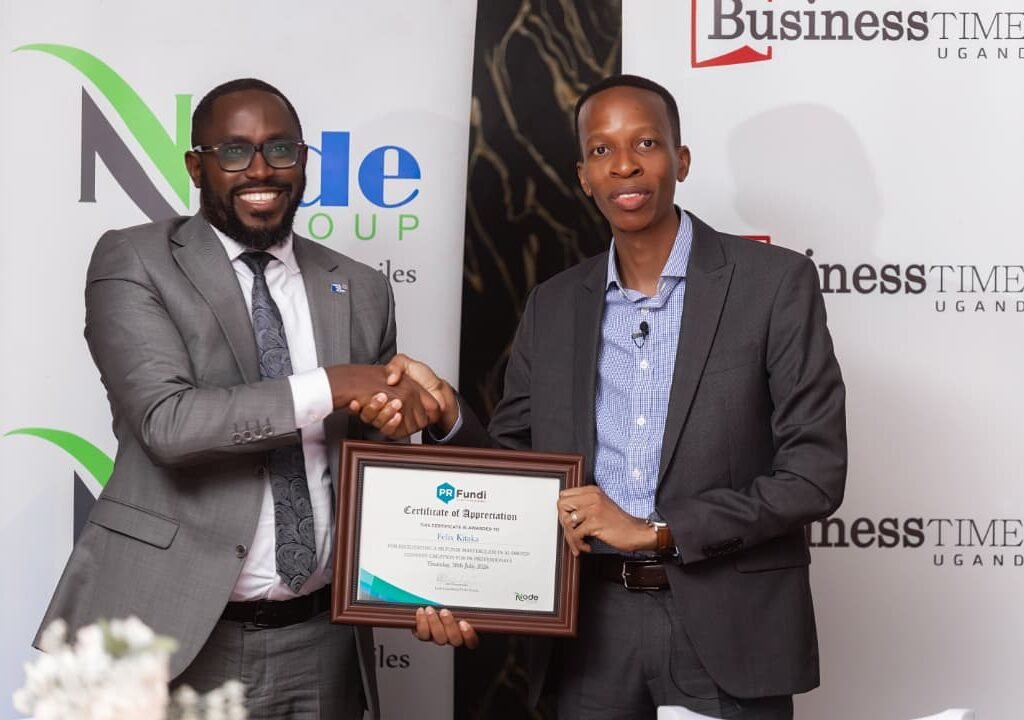
A New Perspective for Communications Professionals
Kitaka concluded by challenging participants to rethink how they approach technological change. Rather than viewing AI’s shortcomings as obstacles, professionals should see them as opportunities for innovation and growth.
For Uganda’s PR and communications industry, that message serves as both a warning and an invitation. Artificial intelligence is rapidly transforming the profession, but it is unlikely to replace practitioners who understand its strengths, recognize its limitations, and apply it thoughtfully to solve local challenges.
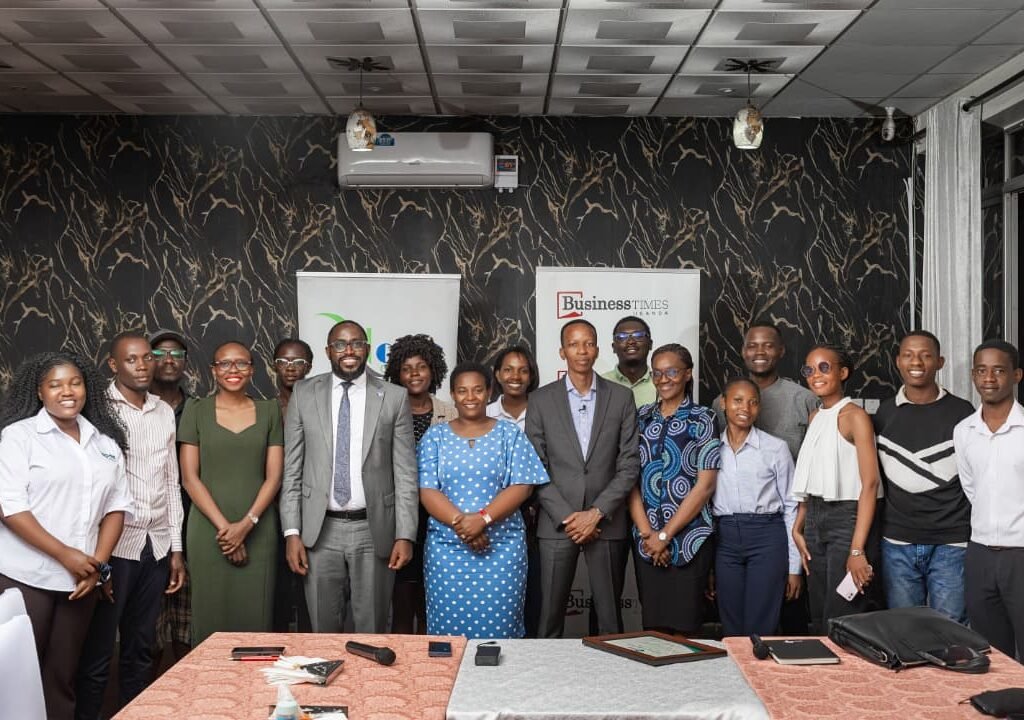
The future of public relations will not be defined by those who compete with artificial intelligence, but by those who know how to work alongside it. As the communications landscape continues to evolve, the professionals who combine AI’s speed and efficiency with human judgment, creativity, and contextual understanding will be the ones who shape the next chapter of the industry.
