
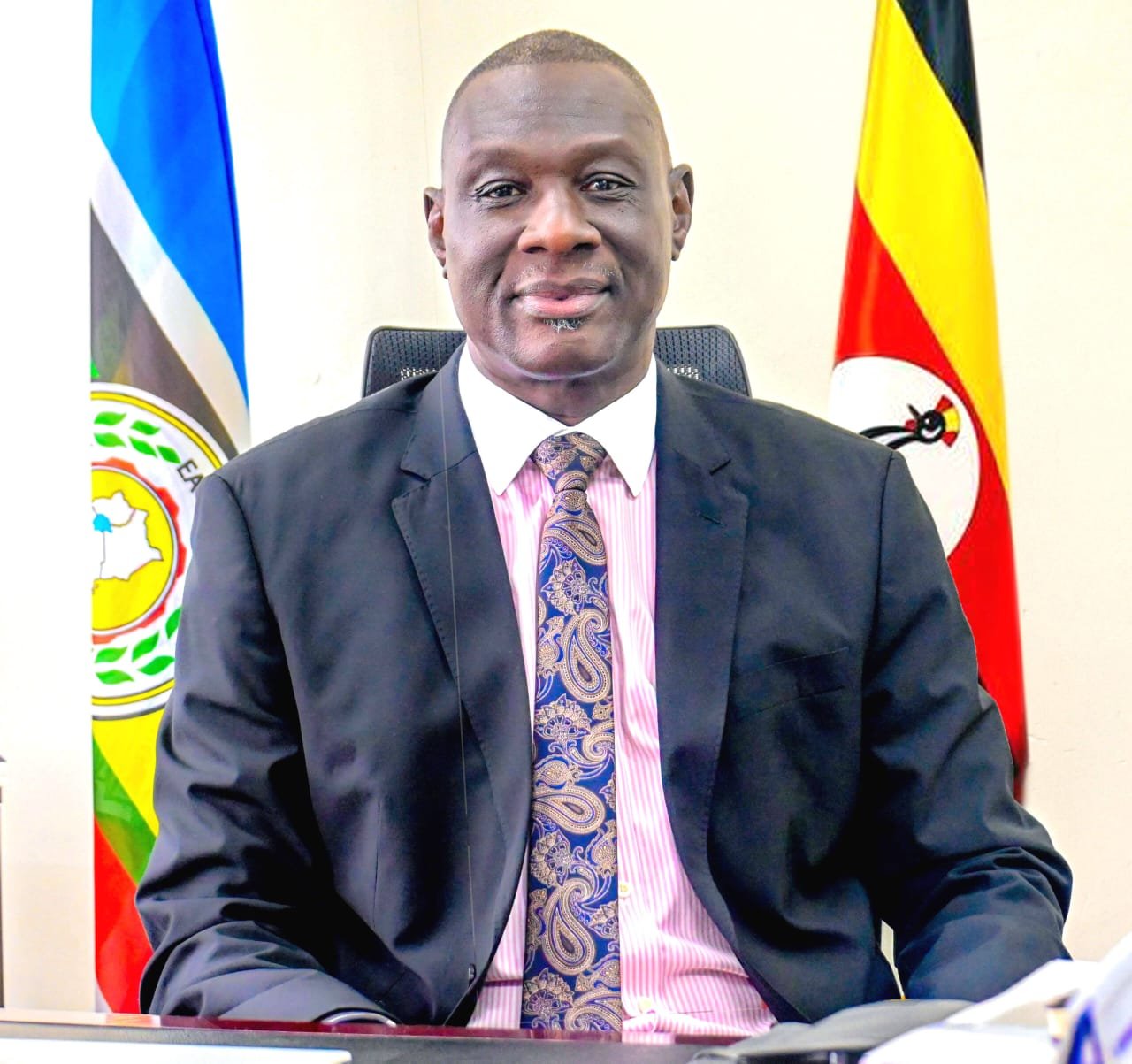
Professor Pius Coxwell Achanga, PhD (Cranfield), Vice Chancellor of Mountains of the Moon University (MMU), has been elected to represent Uganda’s public universities on the Executive Committee of the Inter-University Council for East Africa (IUCEA), marking another milestone in his leadership journey within higher education.
The appointment places Prof. Achanga on the regional body responsible for advancing higher education cooperation, policy development, and quality assurance across the East African Community.
Speaking after his election, Prof. Achanga expressed gratitude for the confidence placed in him by his peers.
“I am deeply honoured to have been elected to represent Uganda’s public universities on the Executive Committee of the Inter-University Council for East Africa (IUCEA). I sincerely thank my colleagues for the trust they have bestowed upon me. I look forward to advancing regional collaboration, strengthening higher education, and promoting excellence across East Africa.”
A Leader Behind MMU’s Historic Transformation
Prof. Achanga’s election comes after a period of significant institutional change at Mountains of the Moon University, much of which he helped shape.
Before assuming office as Vice Chancellor, he chaired the government task force that guided MMU’s transition from a private chartered institution to a fully public university. That transition was formalised in January 2022 through the signing of a Memorandum of Agreement between the Government of Uganda and the university’s Board of Directors.
Later that year, in October 2022, he was appointed substantive Vice Chancellor, taking charge of the institution whose transformation he had helped oversee.
The transition to public university status represented more than a change in governance. It expanded MMU’s mandate within Uganda’s higher education system, opening access to public funding, strengthening institutional oversight, and creating new opportunities for growth.
Strengthening MMU’s Academic Identity
Since taking office, Prof. Achanga has worked alongside the university’s Top University Management team to strengthen MMU’s academic direction around a clearly defined niche comprising Agriculture, Tourism, and Environment, supported by Science, Innovation, and Technology.
The university says this strategic focus aligns closely with Uganda’s national development priorities, including the government’s 10-Point Programme for socio-economic transformation.
Drawing on the economic strengths of the Rwenzori region, MMU has continued to build programmes and research that respond to the needs of agriculture, environmental conservation, ecotourism, and technological innovation. The approach is intended to ensure that teaching and research contribute directly to community development while supporting broader national objectives.
Advancing Competency-Based Education
A major pillar of Prof. Achanga’s leadership has been the promotion of Competency-Based Education (CBE), an educational approach that places greater emphasis on practical skills, workplace readiness, and measurable competencies.
Under this model, the university seeks to produce graduates equipped not only with academic knowledge but also with the practical abilities needed to solve real-world challenges and contribute meaningfully to Uganda’s socio-economic development.
Combined with MMU’s specialised academic focus, the competency-based approach reflects the university’s ambition to establish itself as a next-generation institution that remains closely connected to industry, innovation, and community needs.
Taking Uganda’s Voice to the Region
Prof. Achanga’s election to the IUCEA Executive Committee extends his leadership beyond the university to the regional stage.
The Inter-University Council for East Africa plays a central role in coordinating higher education across the East African Community by promoting quality assurance, facilitating academic mobility, and strengthening collaboration among universities in member states.
In his new role, Prof. Achanga will represent Uganda’s public universities in discussions that shape the future of higher education across the region.
Colleagues within Uganda’s higher education sector describe him as a transformative leader whose experience guiding MMU through one of the country’s most significant university transitions has positioned him well to contribute to regional higher education policy and institutional development.
