
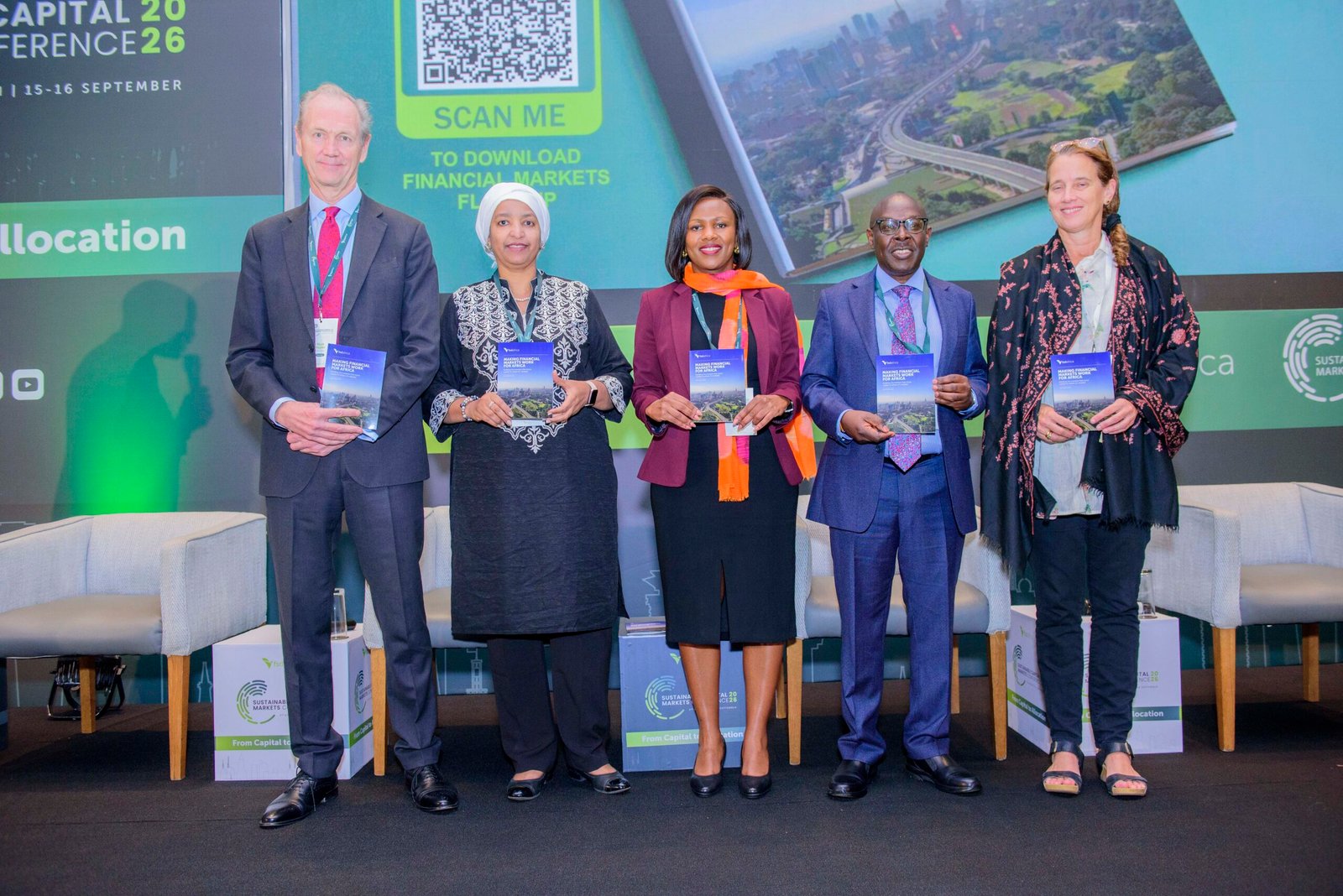
More than 300 policymakers, regulators, institutional investors, development finance leaders and capital-market practitioners from more than 20 African countries are meeting in Nairobi this week to explore how the continent can mobilise an estimated US$4 trillion in domestic institutional capital to finance development, infrastructure and climate resilience.
The third Sustainable Capital Markets Conference, organised by FSD Africa and partners, comes as African governments face mounting fiscal pressures, weaker foreign investment and declining access to overseas funding, increasing the importance of domestic capital markets as a source of long-term financing.
Africa’s institutional investors including pension funds, insurers, banks and sovereign wealth funds manage an estimated US$4 trillion, yet only about 2.7% of institutional assets are invested in infrastructure and other productive sectors, according to figures presented ahead of the conference.
The gap is significant. While African domestic equity markets have expanded 27-fold since 2000 to about US$561 billion, the continent’s share of global capital-market activity has declined, suggesting that market growth has not kept pace with international expansion.
Corporate debt markets also remain relatively shallow. Fewer than half of African countries have had a domestic firm issue a corporate bond since 2000, limiting the financing options available to businesses seeking long-term capital.
The conference is bringing together senior figures from capital markets, sustainable finance, sovereign debt management and investment mobilisation to examine ways of directing more domestic savings into productive economic activity.
Confirmed speakers include Mark Napier, Chief Executive Officer of FSD Africa; Chris Olobo, Chief Executive Officer of Dhamana Guarantee; Jonathan Stichbury, Chief Executive Officer of SanlamAllianz Investments; Albert Rweyemamu, Principal Political and Credit Risk Underwriter at ATIDI; Japhet Justine, Commissioner for Public Debt Management at the Ministry of Finance; and Daniel Mainda, Chief Executive Officer of the Nairobi International Financial Centre Authority.
Other speakers include Gerald Soko, Head of Economic Research at Zanaco; Babatunde Obaniyi, Group CEO of Griffin Capital Financial Group; Kofi D. Fynn, Managing Director of Petra Trust Company; Dr Evans Osao, Chief Financial Markets Officer at FSD Africa; Yodit Kassa, CEO of Ethiopia Stock Exchange; and Nicholas Kebaso, CEO of Lusaka Stock Exchange.
Discussions will focus on sustainable finance, domestic capital mobilisation, blended finance, sovereign debt management, catalytic transactions, institutional investment and innovative financing structures.
Participants are expected to examine measures to strengthen market infrastructure and regulatory frameworks, expand instruments such as green, gender and thematic bonds, and structure catalytic transactions capable of attracting private investment.
Sovereign debt management and market transparency will also form part of the agenda, alongside efforts to increase institutional investment in infrastructure, energy, climate resilience, MSMEs and other productive sectors.
The financing challenge is becoming more urgent as Africa’s population and labour force expand. The continent generates approximately 25 million new job seekers each year, while governments face growing demands for investment in infrastructure, energy, private-sector development and climate resilience.
At the same time, high debt-servicing costs are constraining public finances in many countries, strengthening the case for capital markets capable of connecting domestic savings with long-term investment opportunities.
The Nairobi meeting is expected to produce several concrete outputs, including an Africa Capital Markets Roadmap setting out shared priorities and commitments for developing deeper, more efficient and inclusive markets.
Delegates are also expected to develop a capital-mobilisation roadmap covering domestic resource mobilisation, public-private partnerships, regulatory reforms and innovative investment vehicles.
A further objective is to identify new mechanisms for directing more of Africa’s US$4 trillion institutional capital pool towards infrastructure, climate resilience, energy-transition projects, MSMEs and other areas of the real economy.
The conference therefore places domestic capital at the centre of efforts to address Africa’s widening development-financing gap, with participants seeking to move from broad commitments towards specific market reforms and investment structures.
