

There’s a common claim, repeated by critics of the ultra-wealthy: charitable foundations aren’t really about generosity, they’re a legal loophole to avoid taxes. Defenders of philanthropy push back, pointing to hospitals built, scholarships funded, and diseases researched with foundation money. So which is it?
The answer, according to tax records, government studies, IRS enforcement data and court cases, is more complicated than either side suggests.
Wealthy donors can receive significant tax advantages by giving appreciated assets to charitable organizations. In some cases, they can claim deductions while avoiding capital gains taxes they might otherwise have owed if they had sold those assets. For people whose fortunes are largely tied up in stocks, businesses and real estate, the financial benefits can be substantial.
But receiving a tax benefit does not automatically make a donation a tax dodge.
The real question is what happens after the money enters the charitable system, how much oversight exists and whether donors can use philanthropic structures to retain control over wealth while receiving favorable tax treatment.
The Tax Advantage Is Real
The mechanics are relatively straightforward.
When a wealthy individual donates appreciated stock, real estate or other qualifying assets to a charity or foundation, the donor may be entitled to a deduction based on the asset’s fair market value, subject to tax-law limits. If the asset has appreciated significantly, donating it rather than selling it can also avoid the capital gains tax that would otherwise arise from a sale.
That creates a powerful incentive.
A billionaire holding shares that have increased dramatically in value can transfer those shares to charity rather than sell them, potentially receiving a charitable deduction while avoiding tax on the unrealized appreciation.
The system was designed this way to encourage charitable giving. But for extremely wealthy households, the tax incentive can be worth millions of dollars. That is where critics argue that philanthropy and tax planning begin to overlap.
What Happens After the Donation?
Private foundations are generally subject to a minimum annual distribution requirement based on their assets. The commonly cited figure is 5%, although the calculation is more complicated than simply requiring 5% of every foundation’s assets to be handed to outside charities.
Certain qualifying expenses can count toward the distribution requirement, including some administrative and operating costs.

That means a foundation can satisfy part of its annual obligation without simply writing checks to unrelated charities.
Donor-advised funds operate differently. They generally have no statutory annual payout requirement, meaning donated assets can remain inside the fund for extended periods while potentially continuing to grow.
That creates an important distinction between money committed to charity and money actually reaching a working charity.
The Oversight Problem
This is where the debate becomes less theoretical.
IRS enforcement data cited by ProPublica has shown that only a small fraction of private-foundation returns are examined each year. With tens of thousands of foundations operating across the United States, limited enforcement creates obvious questions about how effectively violations can be detected.
A low audit rate does not prove that foundations routinely break the law.
But it does mean the system relies heavily on voluntary compliance, financial disclosures and the likelihood that serious abuses will be identified through other channels, including journalists, whistleblowers and state regulators.
And there are examples of exactly that happening.
When Charity Becomes Abuse
The Donald J. Trump Foundation provides one of the clearest cases.
New York authorities accused the foundation of self-dealing, improper political activity and using charitable money for purposes connected to Donald Trump’s personal and business interests.
The case ultimately resulted in a court finding that Trump breached his fiduciary duties. In 2019, he was ordered to pay $2 million to charities, and the foundation was dissolved.
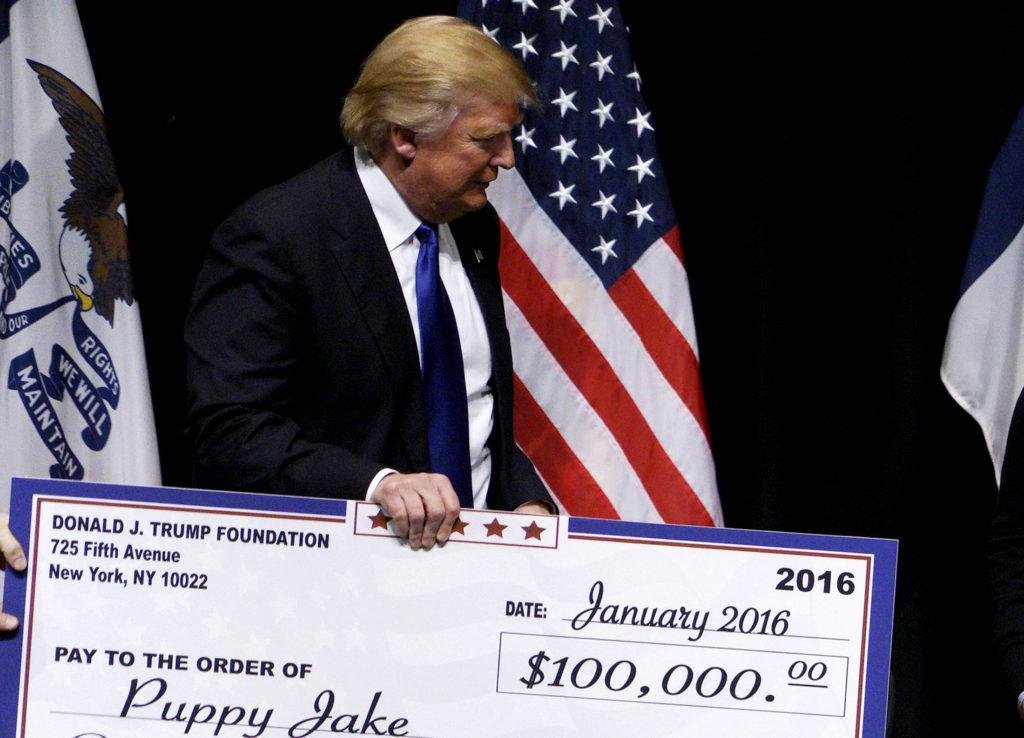
The case is important because it demonstrates that charitable structures can be misused. But it does not prove that wealthy foundations generally exist to avoid taxes. One adjudicated case of abuse cannot establish that an entire philanthropic sector is fraudulent.
The Gray Area
The more difficult question is motivation.
The Sackler family’s philanthropy, for example, demonstrates how charitable giving can become intertwined with reputation. The family supported major cultural institutions, including prominent museums and galleries, but those institutions faced pressure to reconsider accepting the family’s money as scrutiny of Purdue Pharma and the opioid crisis intensified.
The lesson is not that the donations were necessarily illegal. It is that philanthropy can serve several purposes simultaneously.
A wealthy donor can genuinely want to fund medical research while receiving a tax deduction. A foundation can support a museum while strengthening a family’s reputation. A donor can want to give money away while also wanting control over where, when and how that money is distributed.
Those motivations can coexist.
So, Is It a Tax Loophole?
The evidence supports part of the critics’ argument, but not the entire claim.
The tax advantages are real. Wealthy individuals can use charitable structures to reduce their tax exposure, particularly when donating highly appreciated assets. Some charitable vehicles allow money to remain under significant donor influence, and donor-advised funds do not face a statutory annual payout requirement.
Oversight also has limitations, and documented cases show that charitable structures can be abused. But the evidence does not establish that wealthy people generally create foundations primarily to avoid taxes.
Billions of dollars still flow from these structures into medical research, education, hospitals, cultural institutions and other charitable causes. The more accurate conclusion is less sensational but more revealing:
For the ultra wealthy, philanthropy can be both an act of giving and a sophisticated tax strategy. The two are not mutually exclusive.
The real policy question is whether the public benefit generated by the system is sufficient to justify the tax advantages and private control it gives wealthy donors.
