

Uganda’s households are taking up more bank credit than the country’s manufacturers, raising questions about whether incomes are keeping pace with the cost of living and what the trend says about the economy’s ability to finance production and create jobs.
Data from the Bank of Uganda’s Statistical Abstract 2026 shows that personal and household loans reached UGX 6.96 trillion in the financial year ended June 2026, compared with UGX 3.46 trillion extended to the manufacturing sector.
That means banks had almost twice as much credit outstanding to households as they did to manufacturers, a gap of approximately UGX 3.5 trillion.
The figures reveal a striking difference in how bank credit is distributed. But they also raise a question that goes beyond the banking sector: are more Ugandans turning to borrowing because their regular incomes are no longer sufficient to meet their financial needs?
The data does not establish that salaries are falling behind household expenses or that borrowers are using loans to cover basic needs. However, the growth in household lending, particularly credit classified under non-durable goods and services, makes the question worth examining.
More borrowing for everyday needs
Personal and household lending increased by 17.8 per cent, from UGX 5.91 trillion in the financial year 2024/25 to UGX 6.96 trillion in 2025/26.
Within this category, loans for non-durable goods and services rose by 37.4 per cent, from UGX 2.67 trillion to UGX 3.67 trillion.
By comparison, lending for durable goods, which includes longer-lasting purchases, increased only marginally, from UGX 3.24 trillion to UGX 3.29 trillion.
The difference is significant. Credit for non-durable goods and services now accounts for more than half of personal and household lending, suggesting that this segment is driving much of the growth in household borrowing.
It does not, however, mean that every borrower is taking out loans to meet daily expenses. The classification alone does not identify the precise purpose of each loan or establish whether borrowers are experiencing financial distress.
Still, the pace of growth raises questions about household cash flow. When borrowing for non-durable goods and services expands much faster than lending for durable purchases, it is worth asking whether households are increasingly relying on credit to manage their financial obligations.
Is salary growth keeping up?
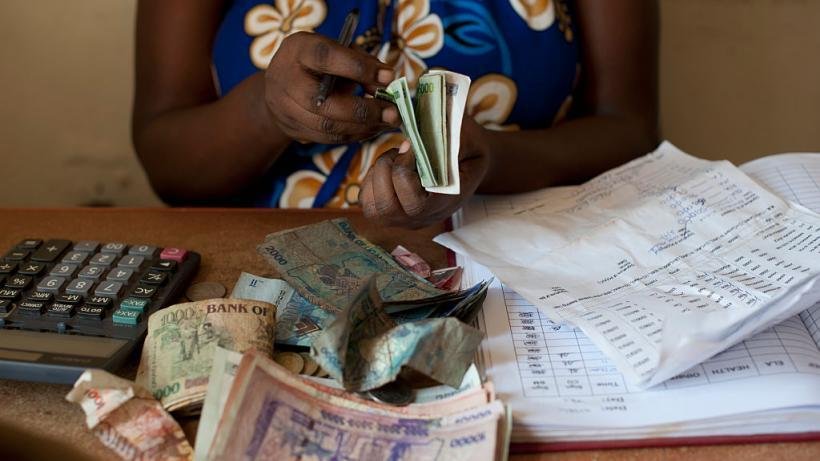
The relationship between household borrowing and income is central to understanding the trend.
For households whose earnings do not rise at the same pace as their expenses, credit can provide a way to manage immediate financial demands. But borrowing also creates future repayment obligations, potentially putting further pressure on disposable income.
Uganda’s lending figures alone cannot establish whether wages and salaries have kept pace with inflation or household expenses. That would require comparing income growth, the cost of living, household debt levels and loan repayment performance.
Nevertheless, the expansion in personal and household credit suggests that banks are playing an increasingly important role in financing household activity.
The cost of that borrowing also matters. The weighted average interest rate on shilling-denominated personal and household loans stood at 19.1 per cent in the period, compared with 17.3 per cent for shilling loans to manufacturers.
At those rates, borrowing can be expensive, particularly for households whose income is already committed to recurring expenses.
The figures do not reveal how much borrowers ultimately pay across different loan products, but they show that household credit is not necessarily cheap money.
Meanwhile, manufacturers are borrowing less
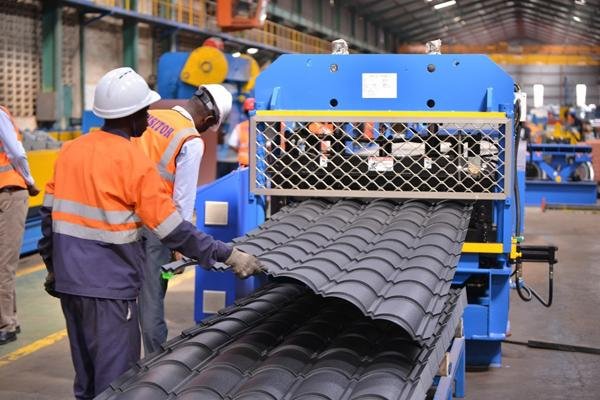
While household lending reached UGX 6.96 trillion, manufacturing credit stood at UGX 3.46 trillion.
Manufacturing lending increased from UGX 3.10 trillion in 2024/25, representing annual growth of approximately 11.6 per cent. Over five years, it expanded by about 33.7 per cent, compared with 88.3 per cent growth in personal and household lending.
This difference raises another question: is Uganda’s banking system providing enough financing to businesses that need capital to expand production, invest in equipment, increase capacity and employ more people?
Manufacturing requires substantial and often long-term investment. Businesses may need financing for machinery, raw materials, buildings, technology and working capital before they can generate returns.
The cost and availability of credit can therefore influence whether manufacturers expand operations, invest in new production lines or delay planned investments.
The interest rate figures offer another dimension. Shilling-denominated manufacturing loans carried a weighted average rate of 17.3 per cent, below the 19.1 per cent recorded for personal and household loans. Manufacturing borrowers accessing foreign currency loans faced a lower weighted average rate of 7.4 per cent.
However, the lower foreign currency rate does not automatically make such borrowing more affordable for every manufacturer. Businesses earning revenue in shillings may face exchange-rate risks when servicing loans denominated in foreign currencies.
Banks are lending, but where is the money going?
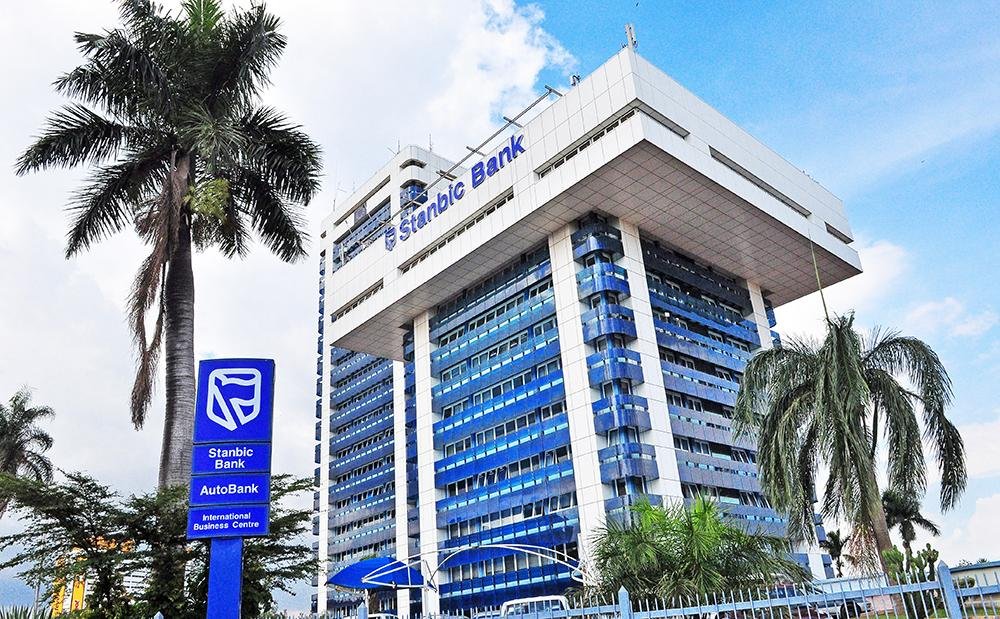
The difference between household and manufacturing credit is unfolding as overall private-sector lending continues to expand.
Total credit to the private sector increased by 14.5 per cent, from UGX 22.83 trillion in 2024/25 to UGX 26.14 trillion in 2025/26.
Agriculture, another important productive sector, received UGX 2.64 trillion, up from UGX 2.50 trillion a year earlier. Its five-year growth was approximately 23.5 per cent.
Within manufacturing, lending patterns were also uneven. Credit to building and construction materials increased by 38.3 per cent to UGX 518.5 billion, while lending to chemicals, plastics and rubber rose from UGX 342.6 billion to UGX 482.9 billion.
Credit to food, beverages and tobacco, however, edged down from UGX 1.05 trillion to UGX 1.04 trillion.
These figures show that some manufacturing subsectors are attracting growing credit, even as overall manufacturing lending remains substantially below household borrowing.
Banks also have other investment opportunities. By June 2026, commercial banks and other depository corporations held UGX 20.62 trillion in government Treasury bills and bonds. The yield on the 364-day Treasury bill stood at 15.1 per cent.
Government securities provide banks with an alternative investment, although the figures alone do not establish that lending to government is directly displacing loans to manufacturers.
The bigger question for Uganda’s economy
The lending gap is not proof that banks are making the wrong decisions. Household loans and business loans serve different purposes, carry different risks and respond to different borrowing needs.
Banks must assess the ability of borrowers to repay, the quality of available collateral, the cost of lending and the risks associated with each sector.
But the figures raise a broader economic question about the direction of credit in Uganda.
If households are increasingly relying on borrowing to meet their needs, policymakers and financial institutions may need to pay closer attention to income growth, household debt and the affordability of credit.
At the same time, if manufacturers face difficulties accessing affordable long-term financing, the implications could extend beyond individual businesses to investment, domestic production and employment.
Uganda’s banking sector is expanding private-sector credit. The question is whether that credit is reaching the parts of the economy that can strengthen household incomes over time.
Because ultimately, a household’s ability to borrow is not the same as its ability to earn more. And an economy’s ability to lend is not necessarily the same as its ability to produce more.
