
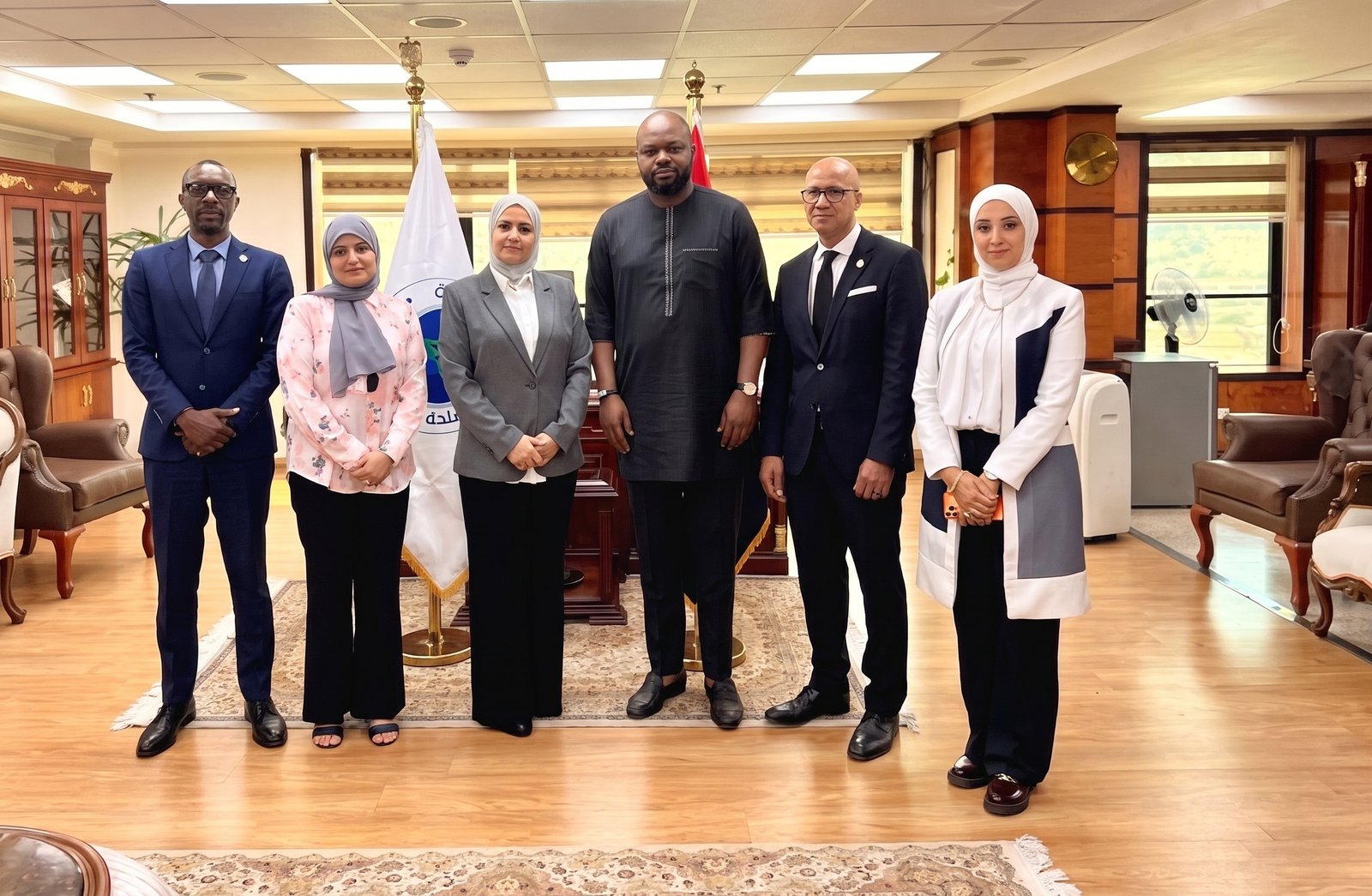
African tax authorities are preparing to meet in Cairo, Egypt, from November 1 to 5, 2026, as governments across the continent seek to raise more domestic revenue to finance development, reduce dependence on borrowing and strengthen their influence over international tax rules.
The 2026 Annual Meetings and Ninth General Assembly of the African Tax Administration Forum (ATAF) will bring together commissioners general, heads of tax administrations, senior government officials, policymakers, development partners and researchers under the theme, “The Revenue Imperative: Africa’s Path to Financing Its Own Development.”
The meeting comes as Uganda pursues higher domestic revenue collections to finance public expenditure and reduce pressure on government borrowing. For Ugandan businesses, the discussions matter because changes in tax administration, digital reporting, cross-border taxation and international tax cooperation influence compliance costs, investment decisions and the cost of operating across African markets.
Uganda’s Ministry of Finance, Planning and Economic Development and the Uganda Revenue Authority have set a target of raising the country’s tax-to-GDP ratio from about 14.2 per cent to 20 per cent by the 2029/30 financial year.
“The strategic direction of URA is consistent with government ambition of raising the tax to GDP ratio which now stands at only 14.2%,” Finance Minister Henry Musasizi said in July.
He called for measures to ensure taxpayers contribute their fair share, while emphasizing that the burden of compliance should not fall disproportionately on businesses and individuals already paying their taxes.
The target reflects a wider challenge facing African governments. Tax collections provide resources for infrastructure, healthcare, education, security and other public services, yet many countries struggle to collect sufficient revenue from their economies. Expanding collections requires stronger tax administration, broader compliance and effective systems for identifying taxable economic activity.
For Uganda, increasing the tax-to-GDP ratio to 20 per cent would require a sustained improvement in revenue mobilization relative to the size of the economy. The objective also raises questions about how authorities expand the tax base without imposing excessive costs on compliant businesses or discouraging investment and formalization.
ATAF’s Cairo meetings are expected to address these challenges through discussions on domestic resource mobilization, revenue enhancement, tax transparency, international cooperation and the modernization of revenue administrations.
Rasha Abdel-Aal, head of the Egyptian Tax Authority, said the meeting would provide African countries with an opportunity to exchange experience and identify practical approaches to improving tax collection and taxpayer services.
“Egypt’s hosting of these meetings reflects our commitment to strengthening cooperation with African countries and learning from successful experiences across the continent. We see this as an important opportunity to exchange expertise and identify practical solutions that will help our tax administrations become more efficient and responsive to the needs of taxpayers,” Abdel-Aal said.
The agenda includes discussions on illicit financial flows, beneficial ownership, exchange of information, tax enforcement and the taxation of digital and global economic activity. These issues are increasingly relevant as businesses operate across borders and governments seek to determine where profits are generated and which jurisdictions have the right to tax them.
Cross-border taxation presents a particular challenge for African countries seeking to protect their revenue bases while attracting investment. Differences in national tax laws and the terms of double-taxation agreements influence how companies structure investments, report profits and meet their obligations in multiple jurisdictions.
Uganda’s Finance Ministry has already identified the review of double-taxation agreements and improved data sharing between government agencies as part of its revenue enhancement agenda. Such measures are intended to improve revenue assurance and address gaps in the administration of taxes involving cross-border transactions.
For companies, clearer rules and better coordination between tax authorities would help reduce uncertainty over reporting obligations. Poorly coordinated systems, by contrast, risk increasing compliance costs, creating disputes and delaying business transactions.
The Cairo meetings will also consider Africa’s participation in negotiations for the United Nations Framework Convention on International Tax Cooperation. The proposed framework is intended to strengthen international cooperation on tax matters, including questions about the allocation of taxing rights between countries.
African governments have an interest in these negotiations because the distribution of taxing rights affects how much revenue countries receive from economic activity involving multinational enterprises and cross-border transactions. Greater coordination among African tax administrations would strengthen their capacity to present shared concerns during international negotiations.
Illicit financial flows and tax transparency are another major area of discussion. Authorities rely on accurate ownership information, access to financial data and cooperation between jurisdictions to identify undeclared income, detect tax evasion and enforce existing laws.
The challenge extends beyond identifying non-compliance. Tax administrations also need trained personnel, reliable digital infrastructure and procedures that allow businesses to understand and meet their obligations. Investment in technology without sufficient institutional capacity would limit the benefits of modernization.
Abdel-Aal said modernizing tax administration requires sustained investment in institutions, personnel and digital capabilities. She said these improvements would support administrative efficiency, better taxpayer services and more sustainable revenue mobilization.
For Uganda, the issue is particularly relevant as URA expands electronic tax reporting and information-sharing systems. The government has identified digitalization, improved enforcement and stronger coordination between public institutions as part of its strategy to raise collections.
The challenge is to ensure these systems improve compliance while remaining accessible to businesses with different levels of technical capacity. Small enterprises operating outside formal systems face different obstacles from large companies with dedicated tax departments. Measures to expand the tax base therefore need to account for differences in record keeping, access to digital services and the costs of formalization.
The meetings will also examine taxation of extractive industries and natural resources, an area of importance to African countries seeking to capture more public revenue from mineral production, oil and gas and other commercially valuable resources.
Effective taxation of these sectors requires accurate valuation, appropriate fiscal agreements and the ability to monitor transactions. Weak oversight or poorly designed incentives might limit the revenue governments receive even when production and investment increase.
ATAF’s program also gives attention to fragile and conflict-affected states and Small Island Developing States. These economies face different administrative and financial constraints, making a uniform approach to revenue mobilization unsuitable across all countries. The discussions are expected to consider dedicated action plans for these groups.
The five-day program begins on November 1 with technical committee and working group meetings, followed by governance and statutory meetings on November 2. The technical conference opens on November 3, with plenary discussions and parallel sessions continuing through November 4. The final day will focus on institutional reform, accountability and the communication of outcomes and commitments.
The meetings are expected to produce a conference communiqué, an African Accountability Framework for tracking commitments made at the Fourth International Conference on Financing for Development, technical recommendations, an updated strategy brief on the UN tax convention and action plans for fragile states and small island economies.
These outcomes will provide a basis for assessing how far the discussions translate into practical changes in national tax administration and international cooperation. Their significance will depend on whether participating governments implement the recommendations and measure progress against agreed commitments.
For Uganda, the central test is whether stronger revenue collection supports public investment and service delivery while preserving a fair and predictable tax environment for businesses. Raising the tax-to-GDP ratio requires more than setting a higher target. Authorities must improve compliance, close revenue gaps and maintain public confidence in the tax system.
The Cairo meeting therefore places domestic revenue mobilization within a wider question of economic policy. African governments need reliable revenue to finance development, while businesses need transparent rules and efficient tax administrations to invest, employ workers and expand across markets.
The outcome will be judged by how effectively participating countries turn the discussions into reforms that strengthen revenue collection, improve taxpayer services and give African governments greater capacity to finance their development priorities.
