
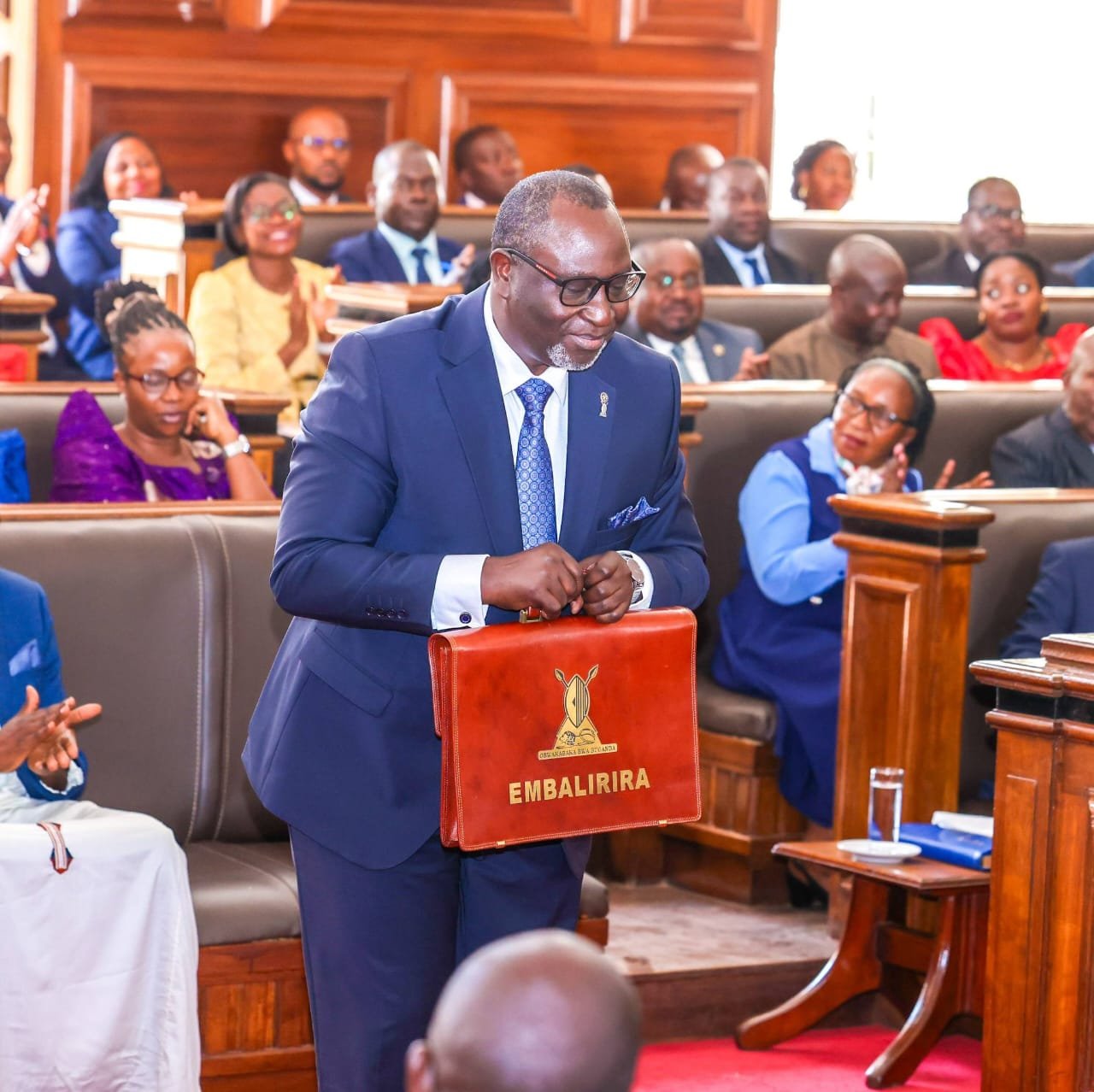
The Buganda Kingdom’s legislative assembly, the Buganda Kingdom Lukiiko has approved a record UGX 409.3 billion budget for the 2026/2027 financial year, marking a 34 percent increase from the previous year’s UGX 305.5 billion allocation.
The decision, passed at Bulange-Mengo, signals one of the most ambitious financial expansions in the kingdom’s modern history, with a strong focus on youth employment, digital transformation, agriculture, and decentralized healthcare services. However, officials acknowledged that delivery of the budget will depend heavily on external partnerships and the recovery of more than UGX 160 billion in outstanding land and rent arrears from the central government.
Presented by Second Deputy Prime Minister and Minister for Finance Robert Waggwa Nsibirwa, the budget reflects what kingdom leaders describe as a strategic shift toward building internal economic resilience while still navigating persistent fiscal constraints linked to limited revenue-raising authority.
At the centre of the new financial plan is a major investment in youth-focused programmes, including the expansion of the Buganda Digital Hub under the Buganda Professional and Skills Bureau. The initiative aims to train thousands of young people annually in advanced digital skills, including emerging technologies such as artificial intelligence and blockchain, while also supporting startup creation across the kingdom.

Officials say the programme is designed to address rising youth unemployment by linking skills development directly to enterprise creation, particularly in urban and peri-urban areas where digital adoption is accelerating but job creation remains uneven.
Another key pillar of the budget is agriculture, anchored by the flagship “Emwanyi Terimba” initiative, which focuses on revitalising coffee production across the kingdom. The programme includes large-scale distribution of coffee seedlings and banana suckers, alongside the deployment of agricultural extension workers to train farmers in modern agronomic practices.
The kingdom has also prioritised value chain development for rural households, particularly in districts such as Masaka and Mityana, where smallholder farming remains the backbone of household income. Officials say the agricultural investments are intended to shift communities from subsistence farming toward more commercially viable cash crop production.
The budget also introduces an unconventional environmental and income-generating programme dubbed “Kacupa Nazo Ssente,” which incentivises youth participation in plastic waste collection around Lake Victoria. The initiative is designed to combine environmental conservation with micro-income generation for communities in lake-adjacent areas, reflecting a broader attempt to link sustainability with livelihood creation.
In the health sector, the kingdom has allocated funds for the decentralisation of outpatient healthcare services through the construction of specialised health centres across six traditional counties, including Ssingo, Buddu, Kyaggwe, Busiro, Bulemeezi, and Kyaddondo. The aim is to reduce pressure on congested national referral hospitals in Kampala by bringing basic and specialised outpatient services closer to rural populations.
Kingdom officials argue that this decentralised model is intended to improve access to healthcare while also strengthening local service delivery systems that have historically been dependent on central government facilities.
Despite the scale of the budget, financing remains a central challenge. The kingdom does not have formal taxation powers and relies heavily on partnerships, donations, and revenue streams linked to land assets and commercial activities. Officials openly acknowledged that a significant portion of the planned expenditure depends on the recovery of long-standing debts owed by the central government, particularly in land and rent arrears now estimated to exceed UGX 160 billion.
This reliance has raised questions about execution risk, with observers noting that the gap between approved budgets and actual disbursements has historically been a constraint for kingdom-led development initiatives.
At the same time, the budget reflects growing confidence within the kingdom’s leadership about its role in socio-economic development. The 34 percent expansion signals an intent to move beyond cultural and ceremonial functions into more active participation in economic transformation, particularly in areas aligned with national development priorities such as agriculture, youth employment, and digital innovation.
However, the financial structure also exposes the limitations of decentralised cultural institutions operating within a national fiscal system where revenue authority remains concentrated at central government level. The kingdom’s development agenda therefore sits at the intersection of ambition and dependency, requiring coordination with both public and private sector actors to translate policy into implementation.
For ordinary citizens, the impact of the budget will be measured in tangible outcomes such as job creation, improved agricultural productivity, and better access to healthcare services. Youth employment programmes and startup support initiatives are expected to be closely watched, given the high levels of unemployment among young people in the kingdom’s population.
In rural areas, the success of the coffee and banana value chain interventions will be critical in determining whether agricultural households experience meaningful income growth. Meanwhile, the decentralised health facilities are expected to play a key role in improving access to services in underserved counties.
As implementation begins, attention will turn to whether the kingdom can convert its record budget into measurable development outcomes. The scale of ambition is clear, but so too are the structural constraints that will shape delivery over the coming financial year.
The budget ultimately positions the Buganda Kingdom as an increasingly active development actor within Uganda’s broader governance landscape, raising broader questions about how traditional institutions can complement national government efforts in driving economic and social transformation.
