
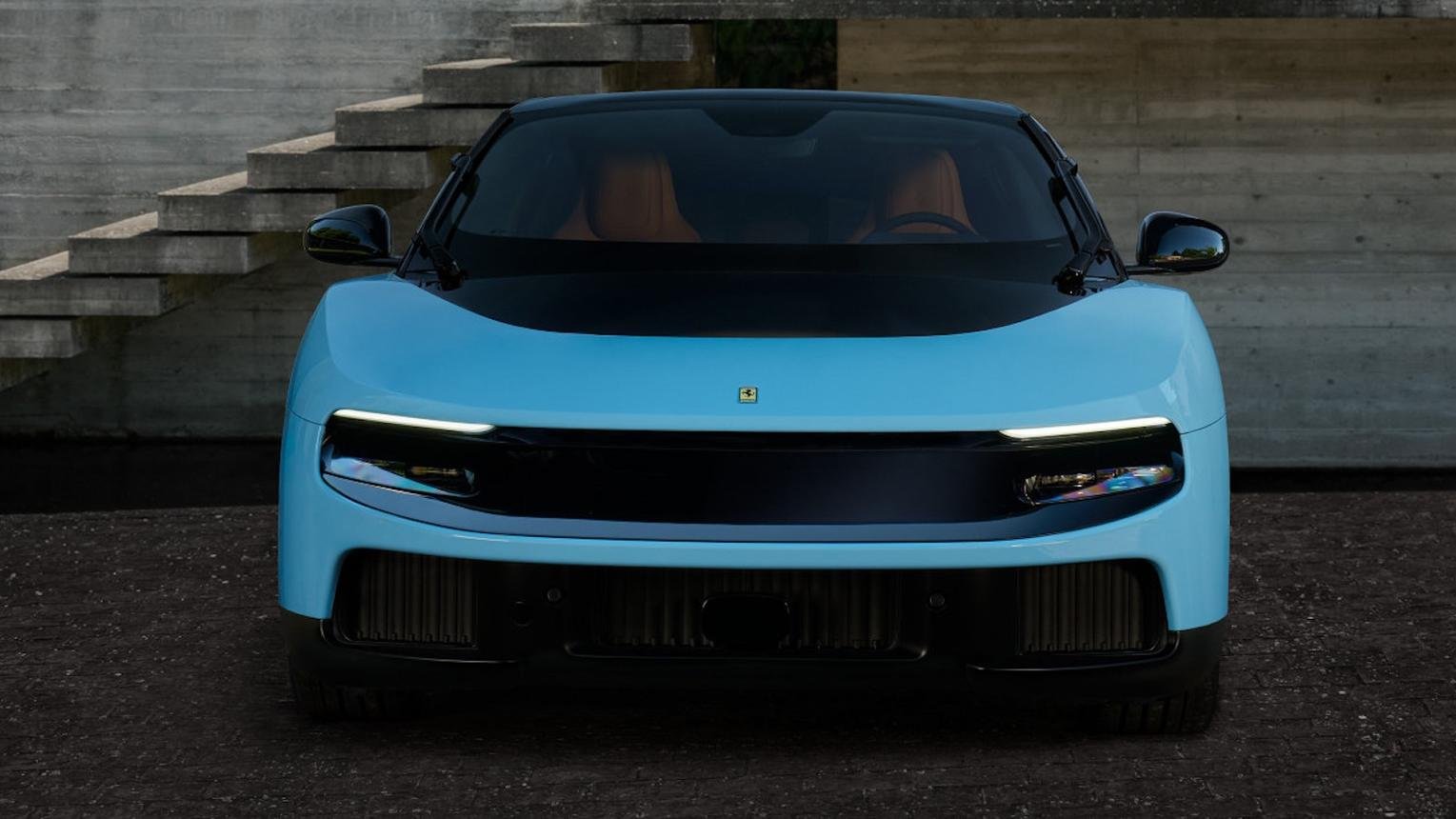
The first fully electric Ferrari was supposed to test how far the marque could move from the formula that built its legend: screaming engines, two-seat sports cars and a design language instantly associated with speed.
Instead, its first major public statement came with a $40 million price tag.
A specially customized example of the Ferrari Luce, the company’s first fully electric vehicle, sold at RM Sotheby’s Monterey auction during Monterey Car Week for $40 million, more than 36 times its $1.1 million pre-sale estimate and a new record for the most expensive new car ever sold at auction.
The buyer was billionaire businessman, inventor and philanthropist Dr. Herbert “Herbie” Wertheim, who paid the same auction house $26 million for a Ferrari Daytona SP3 just a year earlier.
But the extraordinary sale is about more than the price of one Ferrari. It comes at a moment when the Italian marque is attempting one of the most consequential shifts in its modern history: convincing customers that a Ferrari can be electric, larger, more practical and still unmistakably a Ferrari.
A Ferrari unlike any other
Unveiled in May 2026, the Luce, Italian for “Light,” breaks with several of the conventions that have defined Ferrari for decades.
It has four doors, five seats and more than 1,000 horsepower. Rather than adopting the low-slung proportions of Ferrari’s traditional two-seat sports cars, it takes a larger, more rounded form. The vehicle was also co-designed with LoveFrom, the design studio founded by former Apple design chief Jony Ive.
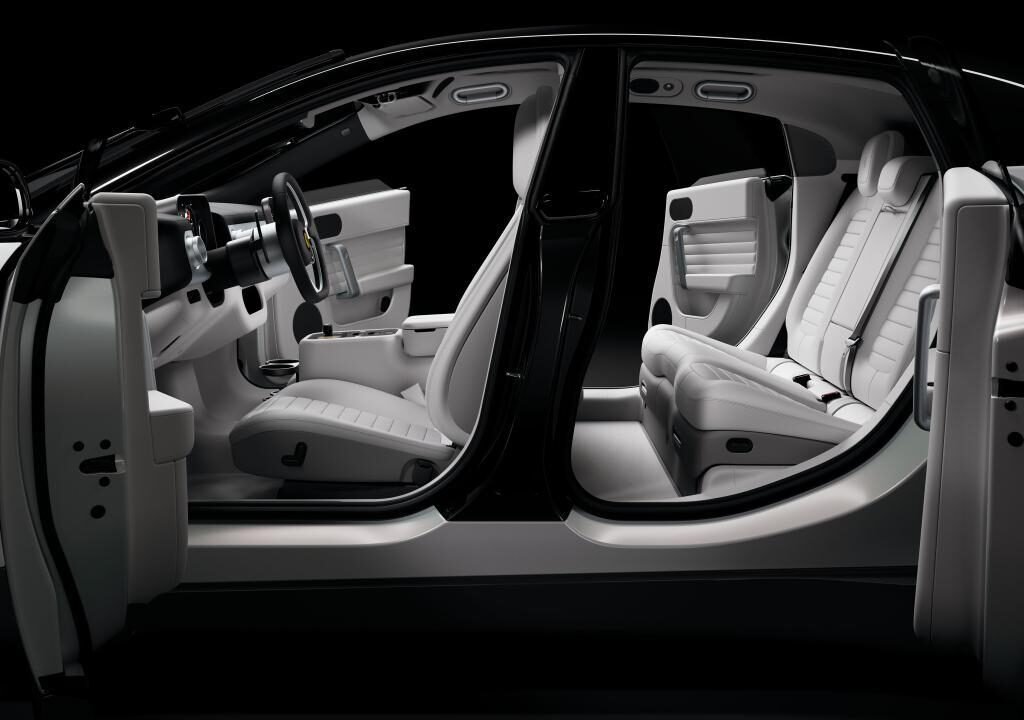
The result was deliberately different. It was also controversial.
Ferrari enthusiasts and automotive commentators questioned whether the larger body, five-seat configuration and battery-electric powertrain represented too great a departure from the brand’s identity. Among the critics were Italian Deputy Prime Minister Matteo Salvini and former Ferrari Chairman Luca Cordero di Montezemolo, who warned that the company risked “the destruction of a legend.”
Ferrari’s shares fell more than 8% on the Milan stock exchange following the unveiling. Chief Design Officer Flavio Manzoni, however, defended the project, arguing that ambitious design inevitably attracts scrutiny.
That tension, between protecting Ferrari’s heritage and expanding what the brand can mean, now sits at the centre of the Luce story.
Ferrari is betting that its exclusivity, engineering and craftsmanship can survive even when the engine note disappears.
Then the auction changed the conversation
The Luce’s first production unit, known as “Chassis 0,” was offered at Monterey without reserve, with RM Sotheby’s waiving its buyer’s premium.
It sold for $40 million.The entire hammer price will go to the Ferrari Foundation, the company’s nonprofit arm, to support educational initiatives.
The figure was more than 36 times the car’s $1.1 million pre-sale estimate. It was also roughly 62 times the Luce’s normal retail price of about €550,000, or approximately $640,000. In doing so, the Luce surpassed the previous auction record for a new car, the $26 million paid for a bespoke Ferrari Daytona SP3 in 2025.
And the buyer was familiar with the territory.
Wertheim, a Florida-based businessman and philanthropist, made his fortune as an optometrist and inventor and holds more than 100 patents, including early technology for ultraviolet protection on eyeglass lenses.
His Ferrari collection has already made headlines. One year before buying the Luce, he purchased the Daytona SP3 at the same Monterey auction for $26 million, a sale that had set the previous record.
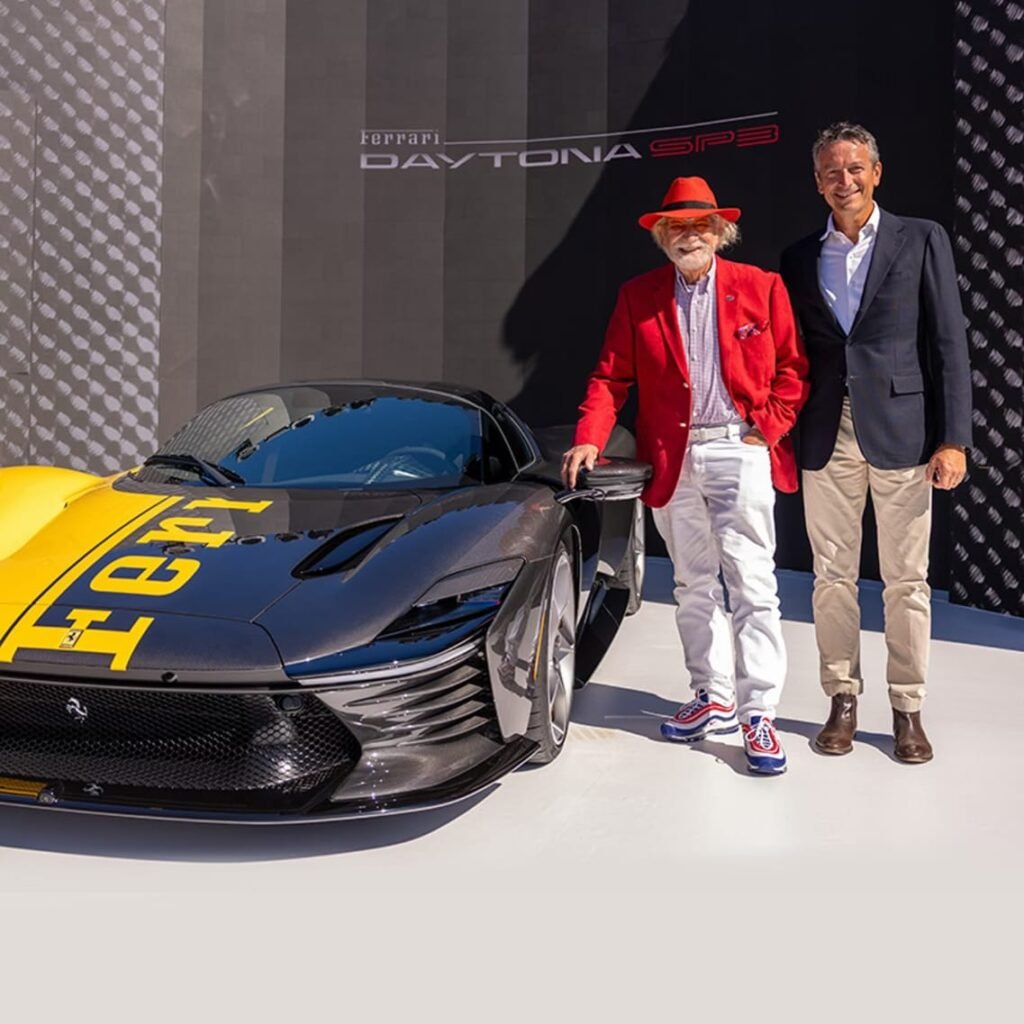
Wertheim is also known for arriving at automotive events in a bright red fedora and running shoes, an unmistakable personal signature among the collectors and executives who gather at Monterey.
His philanthropy extends well beyond cars. He has donated more than $100 million to Florida’s public universities and has signed the Giving Pledge, committing to give away at least half of his fortune, largely toward education.
The $40 million question
The Luce’s auction result does not mean Ferrari’s critics have been proven wrong.
A charity auction for the first production example of an entirely new Ferrari is an extraordinary event, and its price reflects rarity, provenance, philanthropy and collector competition as much as it reflects the underlying value of the production car.
But the sale does demonstrate something Ferrari understands better than almost any other automaker: scarcity can turn controversy into desirability.
The Luce normally costs a fraction of what Wertheim paid. Yet “Chassis 0” offered something a standard production model cannot, the distinction of being the first.
That distinction, combined with Ferrari’s brand power and the charitable purpose of the auction, helped produce a number that would have seemed almost impossible for a new electric vehicle.
Ferrari is moving while others hesitate
The timing makes the bet even more significant. Ferrari’s move into electric vehicles comes as other high-end European automakers have become more cautious about EV demand. Porsche and Lamborghini have both scaled back or adjusted elements of their electric strategies as consumer adoption has proved more uneven than many manufacturers initially expected.
Ferrari, by contrast, is proceeding.
The company has positioned the Luce not as a replacement for its traditional sports cars but as an expansion of the Ferrari customer base, “a different sort of Ferrari for a different sort of Ferrari client.”
That distinction matters.
Ferrari does not need the Luce to replace its V8s and V12s overnight. It needs to demonstrate that the qualities customers pay a premium for, design, performance, exclusivity and craftsmanship, can be translated into a new powertrain and a different type of vehicle. So far, the wider business has given the company room to make that experiment.
Ferrari raised its full-year guidance after beating Wall Street’s second-quarter expectations, with demand for limited-run models such as the F80 and a more expensive version of the Purosangue four-seater contributing to the strength of the business.
The Luce therefore arrives from a position of relative strength rather than desperation.
A test of Ferrari’s identity
The biggest challenge for the Luce may not be engineering.
It may be convincing Ferrari’s most loyal customers that electricity does not fundamentally change what makes a Ferrari a Ferrari.
For generations, the brand’s identity has been inseparable from the sound and mechanical character of its combustion engines. The Luce removes one of those most recognisable signatures while adding characteristics, four doors, five seats and a larger footprint, that would once have seemed out of place in Maranello.
That makes the car more than an EV launch.
It is a test of whether Ferrari’s brand is ultimately defined by its engine and silhouette, or by something broader: performance, exclusivity, design and the ability to make customers desire something they did not know they wanted.
The $40 million auction suggests that, at least among the world’s wealthiest collectors, the Ferrari name still carries extraordinary power. The harder test comes next.
The auctioned Luce will return to Ferrari’s headquarters in Maranello for final assembly before delivery, currently scheduled for the first quarter of 2027.
That is when Ferrari will find out whether the enthusiasm surrounding one extraordinary “Chassis 0” can translate into something far more difficult: convincing the broader Ferrari faithful that the future of the marque can be electric without becoming less Ferrari.
