
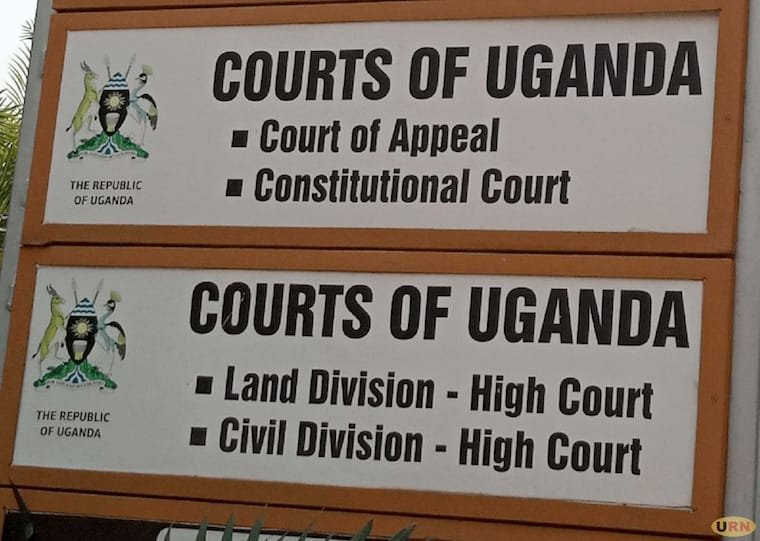
Uganda’s Constitutional Court has delivered a landmark ruling that could significantly strengthen corporate fraud prosecutions, asset recovery efforts, and investor confidence by ending a legal provision that allowed criminal cases to be dismissed automatically before a full trial could take place.
The decision arose from the landmark case of Faruku Muhamed and Others v Attorney General and Others (Constitutional Petition No. 17 of 2024 and Constitutional Reference No. 2 of 2024) [2026] UGCC 7, in which a five-judge panel struck down key provisions of Section 11(2)(a), (b), and (c) of the Human Rights (Enforcement) Act.
In its June 2, 2026 ruling, the Constitutional Court held that courts can no longer automatically acquit suspects simply because a procedural or human rights violation occurred during investigations. Instead, judges must hear cases on their merits and determine guilt or innocence after a full evidentiary trial.
For years, companies pursuing fraud, embezzlement, insider theft, and other forms of financial misconduct faced a major legal risk. A business could spend years gathering evidence, hiring forensic auditors, and working with prosecutors to build a case, only for the entire prosecution to collapse because investigators made a procedural mistake during an arrest or detention.
In many instances, suspects walked free without courts ever examining bank records, audit reports, digital evidence, or financial transactions connected to the alleged crime.
The Constitutional Court has now rejected that approach. The judges ruled that an acquittal should only follow a full examination of evidence and cannot be granted through an automatic legal shortcut.
The ruling effectively closes what many legal and business observers viewed as a loophole that allowed serious economic crime allegations to be dismissed before they were properly tested in court.
Importantly, the court did not remove human rights protections. Instead, it changed how violations are addressed.
Under the previous framework, a procedural violation could terminate an entire case and force courts to acquit suspects immediately. Under the new approach, evidence obtained unlawfully may still be excluded from proceedings, but the broader case can continue if there is sufficient independent and legally obtained evidence to support prosecution.
In practical terms, this means that if a confession was obtained improperly, that confession may be thrown out. However, if prosecutors and corporate investigators possess clean evidence such as bank statements, audit trails, transaction records, emails, contracts, or digital footprints, the trial can proceed.
The focus shifts from procedural technicalities to the actual facts and evidence surrounding the alleged crime.
For businesses, this is particularly significant because criminal convictions often serve as the basis for compensation orders and asset recovery.
When cases were automatically dismissed, victims frequently lost their best opportunity to recover stolen funds or obtain restitution. The court recognized that the right to a fair hearing is not reserved solely for the accused but also extends to complainants and victims whose economic interests have been harmed.
As a result, businesses now have stronger assurance that their grievances will receive a full hearing before a court reaches a final decision.
The ruling also carries important implications for investors. Legal certainty is one of the most critical factors influencing investment decisions.
When serious fraud cases can disappear because of procedural errors unrelated to the underlying allegations, investors often perceive a higher level of legal and commercial risk.
By ensuring that economic crime allegations are decided through full trials rather than procedural shortcuts, the Constitutional Court has strengthened confidence in Uganda’s legal environment and improved predictability for businesses operating within the country.
The decision also sends a clear message to corporate legal departments, compliance officers, and risk managers. Companies must continue investing in strong internal investigations and independent evidence gathering.
The strongest fraud cases will be those supported by forensic audits, financial records, transaction histories, digital evidence, and independent third-party verification.
The court’s ruling means that well-documented evidence is likely to carry greater weight than procedural disputes, making robust compliance and record-keeping systems more valuable than ever.
Beyond individual cases, the judgment represents a broader shift in Uganda’s justice system. Rather than allowing entire prosecutions to be erased because of mistakes made during investigations, courts will now be expected to examine the substance of allegations and determine outcomes based on evidence.
This creates a more balanced system that protects human rights while also ensuring accountability for economic crimes.
For the private sector, the benefits are substantial. Companies gain stronger protection against corporate fraud, improved prospects for recovering stolen assets, and a more predictable legal environment in which to operate.
For investors, the ruling reduces uncertainty and reinforces confidence in the rule of law. And for the wider economy, it sends a powerful signal that commercial disputes and allegations of financial wrongdoing will increasingly be resolved on their merits rather than through technical loopholes.
Ultimately, the Constitutional Court’s decision reinforces a principle that resonates throughout the business world: serious allegations should be decided by facts, evidence, and due process.
As Uganda continues positioning itself as a destination for investment and economic growth, this ruling could become one of the most consequential legal reforms shaping corporate accountability, investor confidence, and commercial justice in the years ahead.
