
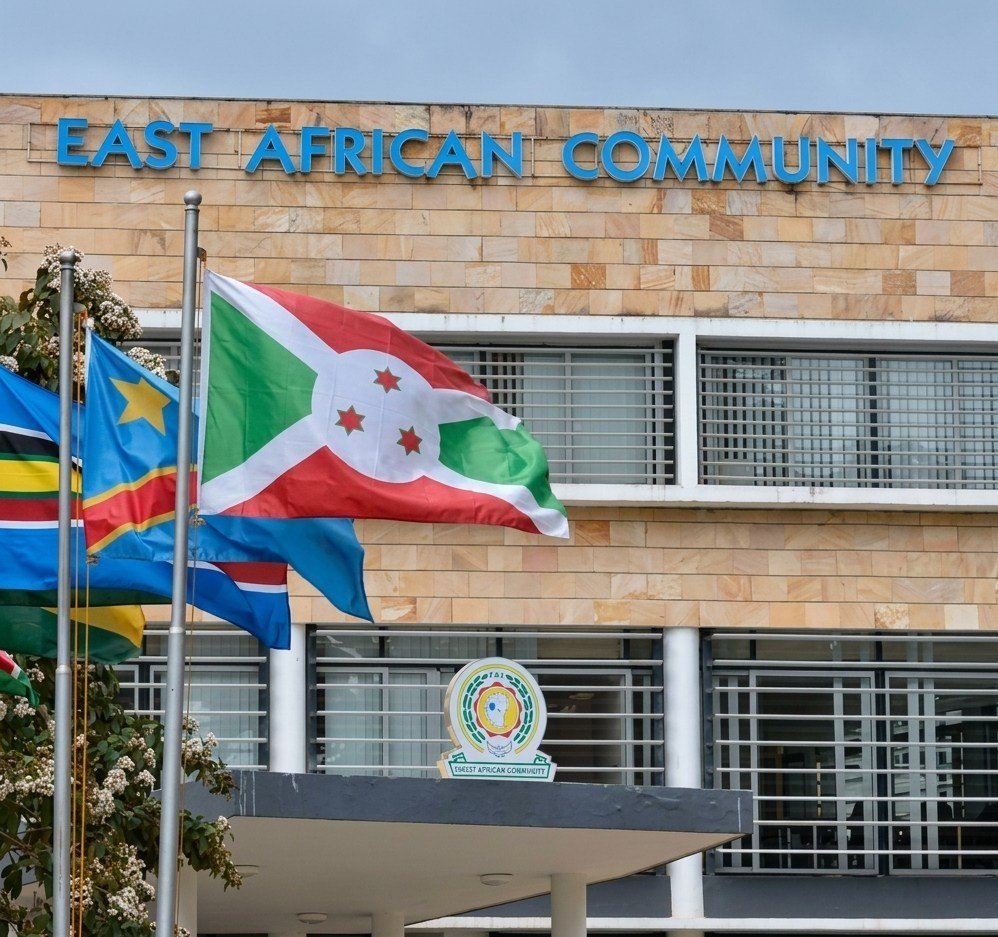
The East African Community (EAC) is steadily positioning itself as one of Africa’s strongest economic growth regions. Regional forecasts and International Monetary Fund (IMF) projections indicate that the bloc could grow by approximately 5.6% in 2026, outperforming many economies across Sub-Saharan Africa.
For Uganda, this is more than a regional statistic. It reflects a major shift in trade, investment, industrialization, and market expansion that could reshape the country’s economic future.
The EAC, comprising Uganda, Kenya, Tanzania, Rwanda, Burundi, South Sudan, and the Democratic Republic of Congo, is benefiting from expanding infrastructure, improving regional trade systems, rising digital adoption, and growing domestic demand.
Across the region, governments are investing heavily in roads, railways, ports, energy systems, internet connectivity, and border infrastructure. These investments are gradually reducing trade bottlenecks and making regional commerce faster and more efficient.
At the same time, East Africa’s population of more than 300 million people is creating one of the continent’s most attractive consumer markets.
Kenya’s digital economy, Tanzania’s transport corridor expansion, and Uganda’s growing gold refining industry are all helping strengthen the bloc’s economic influence.
While several African regions continue to face slower growth, debt pressure, and political instability, East Africa is increasingly emerging as the continent’s next major economic frontier.
However, economists warn that global risks could slow the region’s momentum.
During the IMF Spring Meetings, IMF African Department Director Abebe Aemro Selassie noted that Africa had entered 2026 with its strongest economic momentum in years before new geopolitical tensions and global shocks began creating fresh uncertainty. Rising oil prices, expensive shipping costs, tighter global financial conditions, and instability in parts of the Middle East are now putting additional pressure on African economies, particularly fuel-importing countries such as Uganda.
Higher transport and fuel costs could increase inflation, weaken consumer purchasing power, and create further strain on businesses already dealing with high borrowing costs and currency volatility.
Still, several major trends continue driving East Africa’s growth.
Regional integration through the EAC Customs Union and the African Continental Free Trade Area (AfCFTA) is helping businesses source products and services within Africa instead of relying heavily on distant international supply chains. This shift is gradually reducing exposure to global disruptions while strengthening regional trade networks.
The region is also witnessing a stronger push toward industrialization and value addition.
Uganda’s expanding gold refining sector, which has generated billions of dollars in exports, reflects a broader regional effort to process and manufacture products locally before exporting them internationally.
For Uganda, the implications are significant.
A rapidly growing regional economy presents major opportunities for businesses in agriculture, manufacturing, fintech, logistics, tourism, construction, and digital services. Ugandan companies that successfully expand into neighboring markets could access millions of new consumers across East Africa.
The region’s growth could also attract increased private investment, infrastructure financing, and cross-border partnerships, strengthening regional supply chains and commercial activity. Perhaps most importantly, sustained growth could support job creation in sectors critical to Uganda’s young and expanding population, including transport, agro-processing, manufacturing, and technology.
But regional growth alone will not guarantee Uganda’s success.
Countries such as Tanzania and Rwanda are moving aggressively to improve logistics efficiency, infrastructure quality, and investment conditions. If Uganda fails to reduce the cost of doing business, improve access to affordable financing, and accelerate economic reforms, it risks losing competitiveness within the region.
High electricity costs, elevated interest rates, tax uncertainty, and regulatory delays continue to frustrate many Ugandan businesses.
The regional race is accelerating, and speed is becoming increasingly important. Businesses that are likely to succeed in East Africa’s next growth phase are those already adapting to a more integrated regional economy.
Companies will increasingly need to treat regional integration as a real commercial strategy rather than a distant policy discussion. Expanding distribution networks into neighboring markets, strengthening regional supply chains, improving operational efficiency, and investing in digital systems could become essential for long-term competitiveness.
Managing currency and financing risks will also become more important as trade volumes grow and global economic uncertainty persists. East Africa’s projected growth is not simply another economic forecast. It reflects a deeper transformation taking place across the region.
Infrastructure is improving. Trade is expanding. Regional markets are becoming more connected and commercially influential. The next phase of growth will likely reward countries and businesses that move quickly, invest strategically, and adapt to a more competitive regional economy.
For Uganda, the opportunity is substantial.
The region is rising. The bigger question is whether Uganda is prepared to rise with it.
