
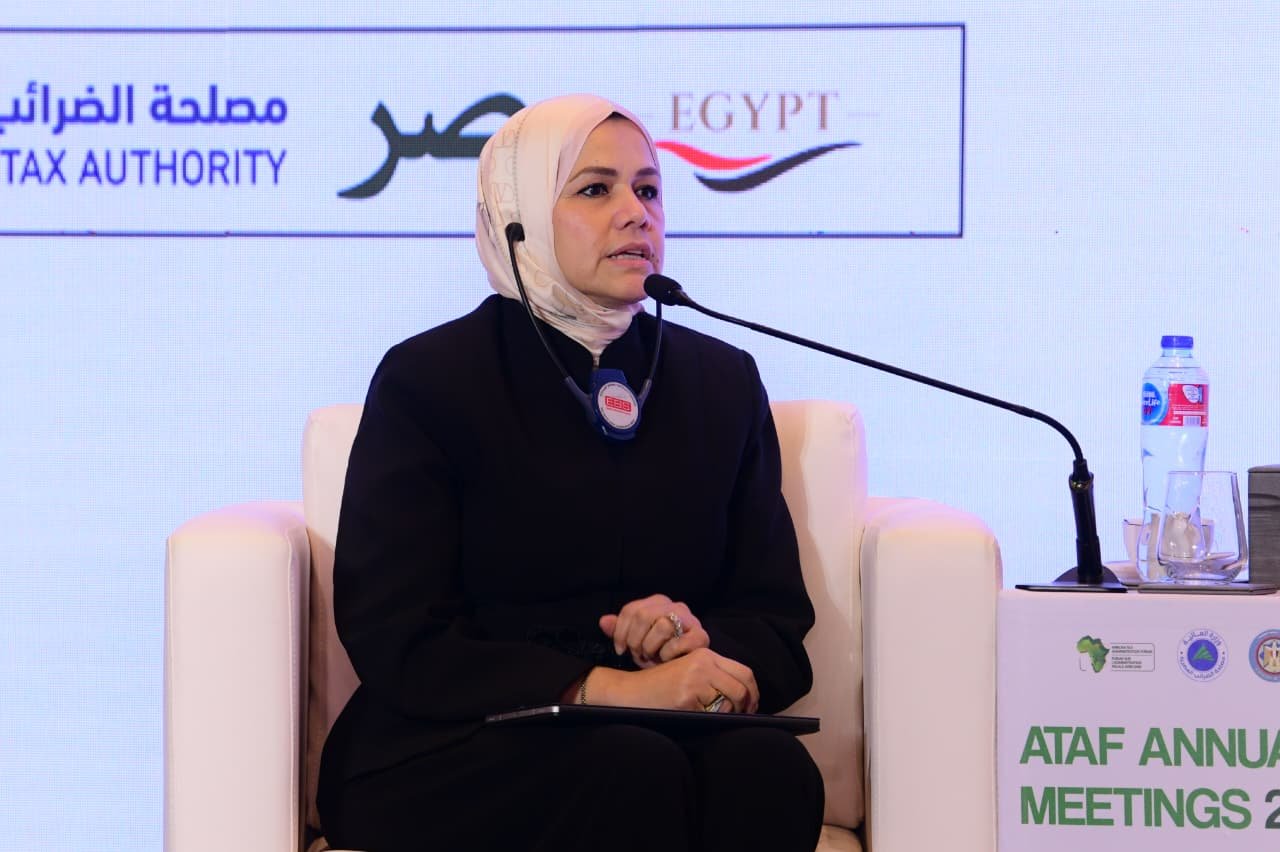
Welcoming delegations from across the continent, Rasha Abdel Aal, Head of the Egyptian Tax Authority, framed her country’s reform effort in a single idea. Tax administrations, she said, should be seen as “a key partner in supporting development,” and not merely as “a body that collects what is owed.”
That is the argument at the centre of her welcome to the ATAF 2026 Annual Meetings, which opened this week with more than 370 participants. It matters now because tax administrations across Africa are being asked to deliver more domestic revenue at the same moment that digital economies are outrunning their systems. Abdel Aal’s view is that the fix is not only technical.
From collector to partner
Her opening position was that the role of tax administrations has outgrown revenue collection. It now extends, she said, to building trust with the business community, simplifying procedures, strengthening voluntary compliance and offering a fair and transparent environment that supports investment and growth.
She said a tax system should be judged not only by what it raises but by the efficiency of collection, the transparency with which taxpayers are treated and the simplicity of its procedures. Mutual trust, she said, must be firmly established alongside them.
What Egypt is doing
The Egyptian Tax Authority is, she said, continuously developing its system by expanding digital transformation, simplifying procedures, improving services and deepening its relationship with taxpayers “on the basis of partnership.” She did not offer figures or timelines in her remarks.
She was explicit that legislation alone will not deliver reform. Successful change requires simplified law and incentive-based procedures, she said, “alongside” a change in the culture of engagement. Taxpayers should see meeting their obligations as a national responsibility, and administrations should earn the standing of partner.
People before platforms
On technology, she was cautious. However important it may be, it cannot achieve its aims without qualified staff who can use it efficiently and adapt to change. Investing in people, she said, remains “one of the most important pillars of progress.”
Why a continental forum
Abdel Aal presented ATAF as the place where experience becomes practice. It offers, she said, a space for professional dialogue and knowledge sharing that can turn accumulated experience into measures that improve efficiency and strengthen domestic resource mobilisation. She asked for more than exchange. Cooperation, she said, should extend to lasting partnerships and joint working mechanisms, adapted to each country’s circumstances. Among the shared challenges she named were the digital economy and broadening the tax base “in a fair and sustainable way.”
She also tied Egypt’s role as host to a wider commitment to joint African action, and said she hoped the discussions would produce practical recommendations that strengthen trust and transparency.
Her remarks sit alongside those of Finance Minister Ahmed Kouchouk, who told the plenary that “gaining the trust of taxpayers is something we need to win.” Over the next three days, delegates will examine how international commitments can be converted into concrete action on domestic resource mobilisation.
