
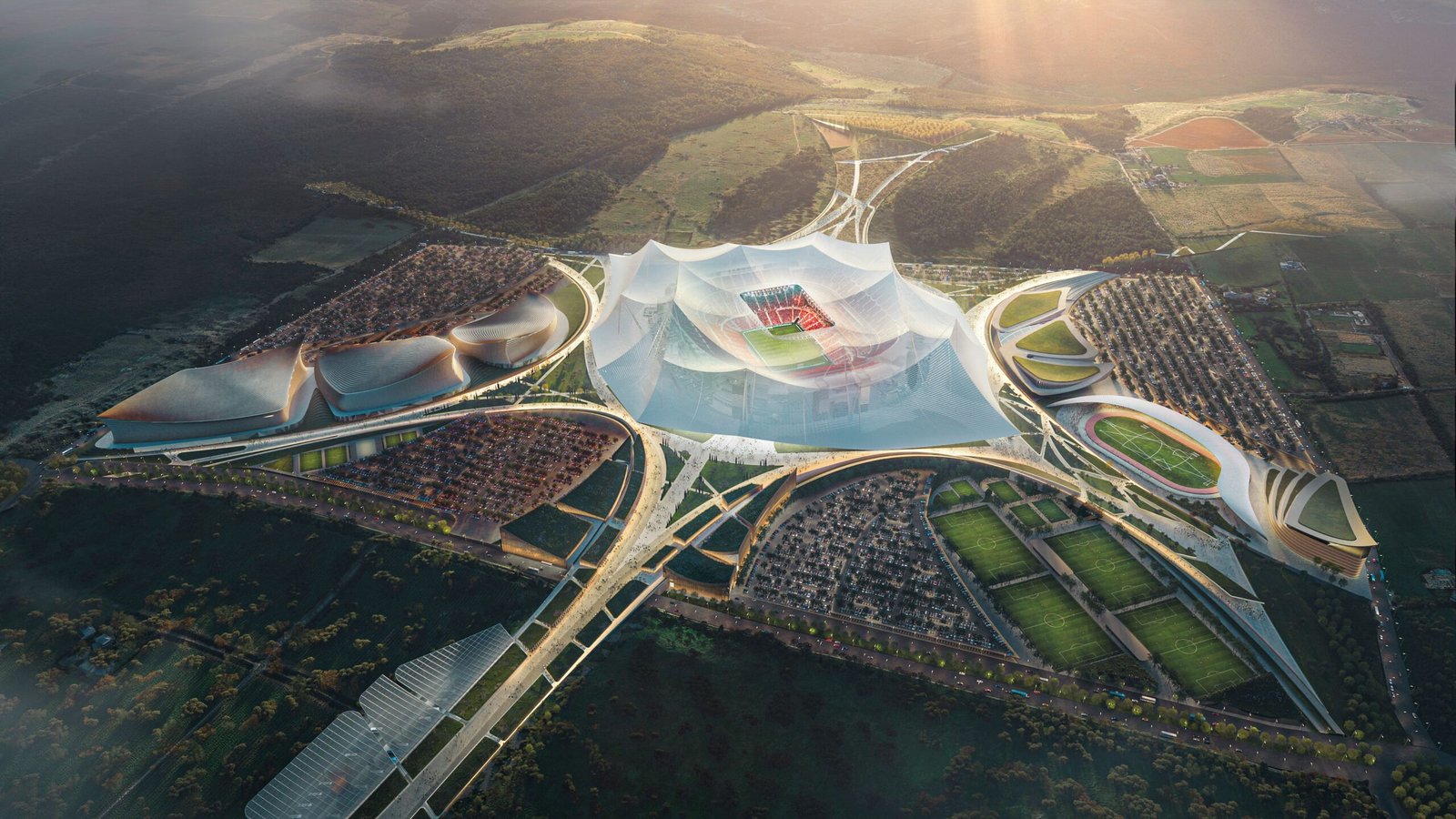
Forty kilometres outside Casablanca, Morocco is building a stadium designed to make a statement long before the first whistle is blown.
The Grand Stade Hassan II, rising in El Mansouria, is expected to seat 115,000 spectators, making it the world’s largest football stadium if completed as planned. The project carries a price tag of 5.1 billion Moroccan dirhams, or about $500 million, and is targeted for completion in late 2028.
But the investment is about more than capacity.
Morocco is building the stadium as the centrepiece of its ambitions around the 2030 FIFA World Cup, which the country will co-host with Spain and Portugal. The bigger prize is the tournament final, along with the economic activity, global exposure and prestige that would come with hosting football’s most important match.
Building beyond the World Cup
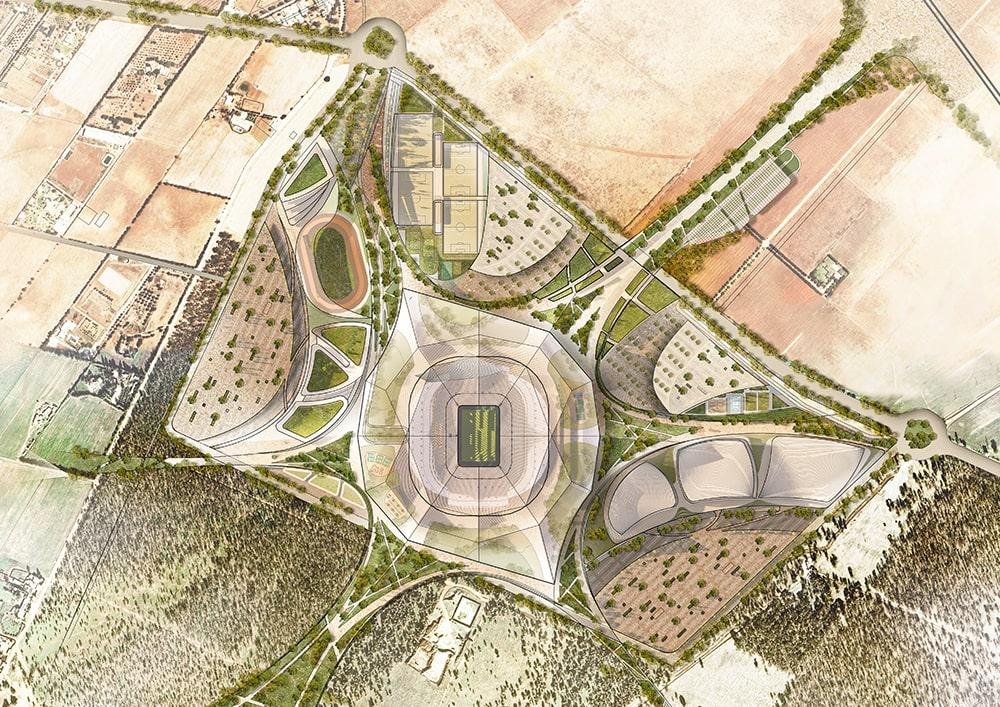
The stadium’s scale is matched by the wider complex planned around it.
The 100-hectare site is expected to include a 25,000-seat athletics stadium, four training pitches, a multisports hall, a gymnastics hall, an Olympic swimming pool and a conference centre. Five levels of hospitality facilities are planned, with space for about 12,000 VIP and premium guests.
That broader development is intended to address one of the biggest problems associated with mega-events: what happens to expensive stadiums once the tournament has moved on.
Morocco is seeking to reduce that risk by building in permanent demand. The national team is expected to use the stadium, while Raja CA and Wydad AC, two of the country’s biggest clubs, are planned as post-World Cup tenants.
The objective is straightforward: keep the stadium active after the global spotlight moves elsewhere.
A stadium designed to compete for the final
The stadium’s most consequential competition, however, is taking place off the pitch.
FIFA’s approved bid documentation identified the Grand Stade Hassan II, Madrid’s Santiago Bernabéu and Barcelona’s Camp Nou as the three venues in the Spain, Portugal and Morocco bid capable of meeting the 80,000-seat threshold for the opening match and final.
In the bid evaluation, all three stadiums received the same 4.3 out of 5 rating for stadium quality. Morocco’s score was affected primarily by accommodation and hotel capacity around the venue rather than the stadium itself.
That has made the final a contest between infrastructure, commercial interests and symbolism.
By mid-2026, reports indicated that FIFA was leaning toward Madrid’s Santiago Bernabéu, with Real Madrid reportedly nearing an agreement. Moroccan officials have rejected suggestions that the decision has already been settled, while FIFA has not formally confirmed the final venue.
Morocco, meanwhile, is positioning its new stadium as an alternative built specifically for the occasion.
Architect Tarik Oualalou has said the venue was designed for the 2030 final. Its sheer capacity would give Morocco a powerful argument: a 115,000-seat stadium hosting the biggest match of a World Cup on African soil.
From festival tent to global landmark
The architecture is part of that pitch.
Designed by Populous in collaboration with Paris-based Oualalou + Choi, the stadium takes inspiration from the moussem, a traditional Moroccan festival centred around large communal tents.
That concept is being translated into a translucent aluminium lattice roof stretching over the stadium bowl, with elevated gardens incorporated around the structure.
Morocco is therefore betting not only on the stadium’s capacity but also on its identity.
The ambition is for the building to become an attraction in its own right, an architectural landmark capable of supporting tourism, hospitality and Morocco’s international brand after the World Cup.
The wider investment strategy
The stadium forms part of a broader Moroccan strategy of using major sporting events to accelerate infrastructure investment.
The country’s hosting of the 2025 Africa Cup of Nations has already provided a platform for investment in transport, hospitality and urban infrastructure. The 2030 World Cup offers a much larger opportunity, with the tournament’s centenary being staged across three continents.
For Morocco, the calculation extends beyond whether it wins the right to host the final.
If the Grand Stade Hassan II is completed on schedule, the country will have one of the world’s largest football venues, a major sports complex and a stadium anchored by national and domestic teams.
That could give the $500 million investment a life beyond a single tournament.
The final would provide the most visible return. But Morocco’s larger bet is that the stadium itself, together with the infrastructure built around it, can become a long-term economic and sporting asset.
For now, construction continues in El Mansouria.
By late 2028, Morocco expects the world’s largest football stadium to be ready. The question is whether, two years later, it will also host the world’s biggest football match.
