
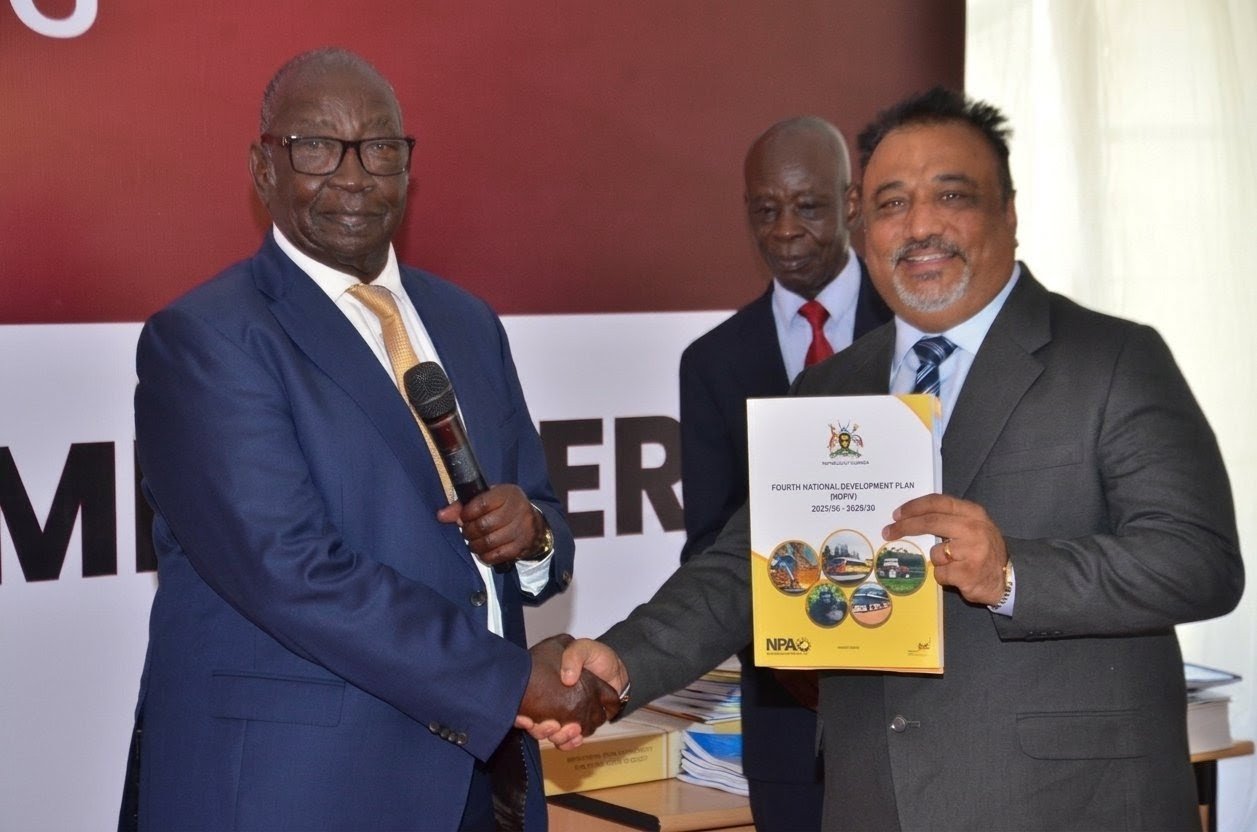
Uganda has ushered in a new chapter at the Ministry of Trade, Industry and Cooperatives following the official assumption of office by Hon. Sanjay Tanna as Minister for the 2026–2031 term. A respected businessman and former Member of Parliament for Tororo Municipality, Tanna takes charge of one of government’s most strategic portfolios at a time when Uganda is seeking to accelerate industrialisation, expand exports, and create more jobs.
Speaking during the handover ceremony at the ministry headquarters, Tanna thanked President Yoweri Kaguta Museveni for the confidence placed in him and pledged to build on the achievements of his predecessors. He paid tribute to outgoing minister Francis Mwebesa, who expressed confidence in Tanna’s ability to steer the ministry forward.
“The Ministry of Trade, Industry and Cooperatives is the engine of Uganda’s economy and our next war frontier.”
The statement captured the ambition behind Tanna’s appointment. With Uganda pursuing its long-term goal of transforming into a highly industrialised, export-driven economy, the ministry sits at the center of that mission.
Tanna outlined a clear agenda focused on promoting locally manufactured products through the Buy Uganda, Build Uganda (BUBU) policy, accelerating industrialisation through value addition and technology transfer, strengthening cooperatives and SACCOs to improve household incomes, and improving efficiency within government through digitalisation and transparency.
His appointment comes at a time when Uganda’s export sector is recording impressive growth. According to ministry figures, earnings from goods and services exports increased from approximately US$6.3 billion in 2021 to about US$13.2 billion in 2025. Other recent reports place export earnings even higher, approaching US$18 billion in the year ending March 2026.
This growth has been driven by strong performance in commodities such as coffee, gold, cocoa, fish, sugar, and steel products, supported by access to regional and international markets through frameworks including the East African Community (EAC), the Common Market for Eastern and Southern Africa (COMESA), and the African Continental Free Trade Area (AfCFTA).
Uganda’s industrial sector has also continued to expand, contributing roughly 27.4 percent of GDP, with manufacturing accounting for approximately 16.5 percent. The sector employs more than one million Ugandans directly and remains central to government efforts to create jobs and increase exports.
To sustain this momentum, the government has allocated Shs1.03 trillion in the 2026/27 national budget toward manufacturing, industrial parks, value-addition initiatives, and Special Economic Zones.
The opportunity before Tanna is substantial. Uganda has long sought to move beyond exporting raw commodities and instead build an economy anchored on value-added products capable of competing in regional and global markets. Success in this area would create more jobs, increase foreign exchange earnings, and reduce vulnerability to fluctuations in global commodity prices.
Tanna’s private-sector background may prove to be one of his greatest assets. Having spent years building and managing businesses, he brings practical experience and firsthand knowledge of the challenges facing entrepreneurs, manufacturers, and investors.
His appointment is also historically significant. He becomes the first Ugandan of Asian origin to hold a full cabinet ministerial position since 1967, adding a unique dimension to a role that increasingly requires strong international business networks and investor confidence.
Yet the path ahead is not without obstacles.
Manufacturers continue to face high financing costs, infrastructure gaps, logistics bottlenecks, and intense competition from imported goods. Many businesses have also called for stricter enforcement of the BUBU policy to ensure government procurement creates opportunities for local enterprises.
The successful implementation of the African Continental Free Trade Area presents another major challenge and opportunity. While the agreement opens access to a market of more than 1.4 billion people, Ugandan businesses must improve competitiveness, productivity, and standards compliance to fully benefit.
Tanna will also oversee a broad institutional ecosystem that includes the Uganda National Bureau of Standards (UNBS), the Uganda Development Corporation (UDC), and the Uganda Industrial Research Institute (UIRI). Coordinating these agencies effectively will be critical if policy commitments are to translate into tangible industrial growth.
Recognising these realities, the new minister has emphasized the importance of partnership between government, the private sector, and development partners. Such collaboration will be essential in unlocking investment, expanding exports, and strengthening Uganda’s industrial base.
The question now is whether Uganda can convert years of policy ambition into measurable economic transformation.
The foundations are increasingly visible: rising exports, expanding industrial parks, growing regional market access, and stronger support for local manufacturing. What remains is execution.
If Tanna succeeds in reducing bureaucratic barriers, strengthening local industries, enforcing pro-business policies, and unlocking new export opportunities, he could help accelerate Uganda’s journey toward becoming a competitive regional manufacturing and trade hub.
For Corporate Uganda, investors, and entrepreneurs, his appointment represents more than a cabinet reshuffle. It is a test of whether private-sector thinking can help deliver one of the country’s most important economic objectives: transforming Uganda from a producer of raw materials into a powerhouse of value-added production, industrial growth, and export competitiveness.
