
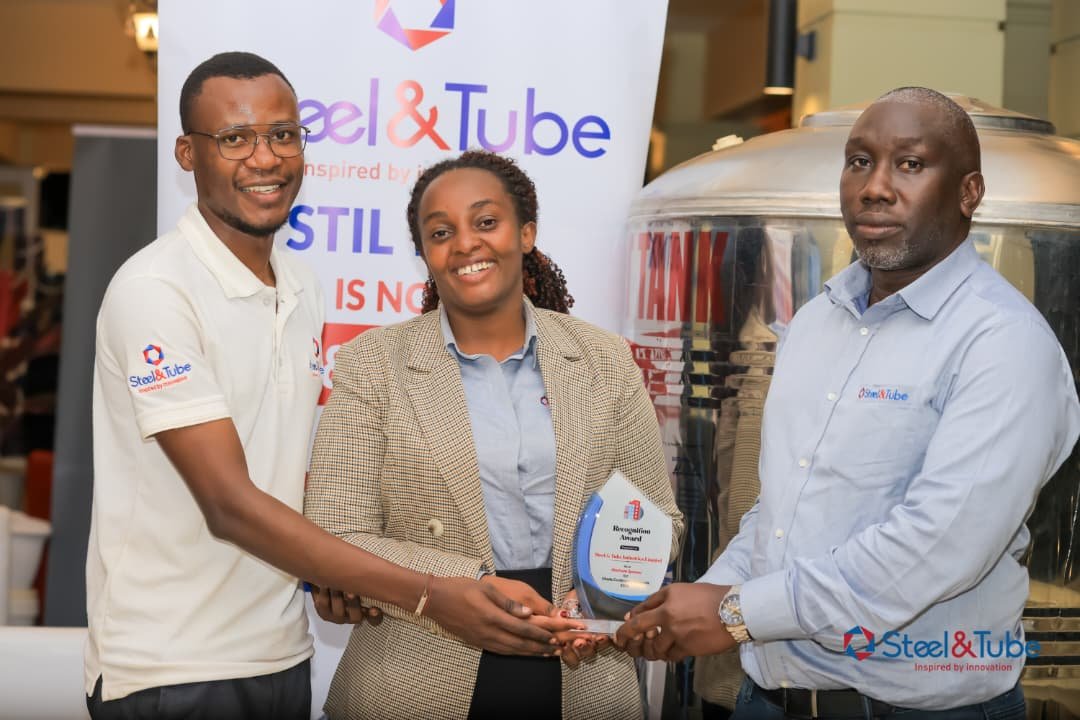
In 1985, Steel & Tube Industries Limited rolled out its first sheets of steel on what would become the industrial heartbeat of Uganda. Forty-one years later, its footprint spans 50 acres across Namanve, Kazinga, and Nakawa, with reach into Kenya, South Sudan, DR Congo, Rwanda, Burundi, Tanzania. Steel & Tube directly employs over 1,600 employees and indirectly employs over 8,000 tottaling to just over 10,000 jobs across the economy, numbers that place the company among the region’s most consequential industrial employers, an East African supply line, not just a Ugandan factory.
But numbers alone don’t explain why Steel & Tube keeps winning the trust of Uganda’s biggest builders. The company’s mission is built around manufacturing and selling better-quality steel products at competitive prices, driven by continual innovation, safety, ethics and a commitment to a sustainable environment that supports both current and future generations.
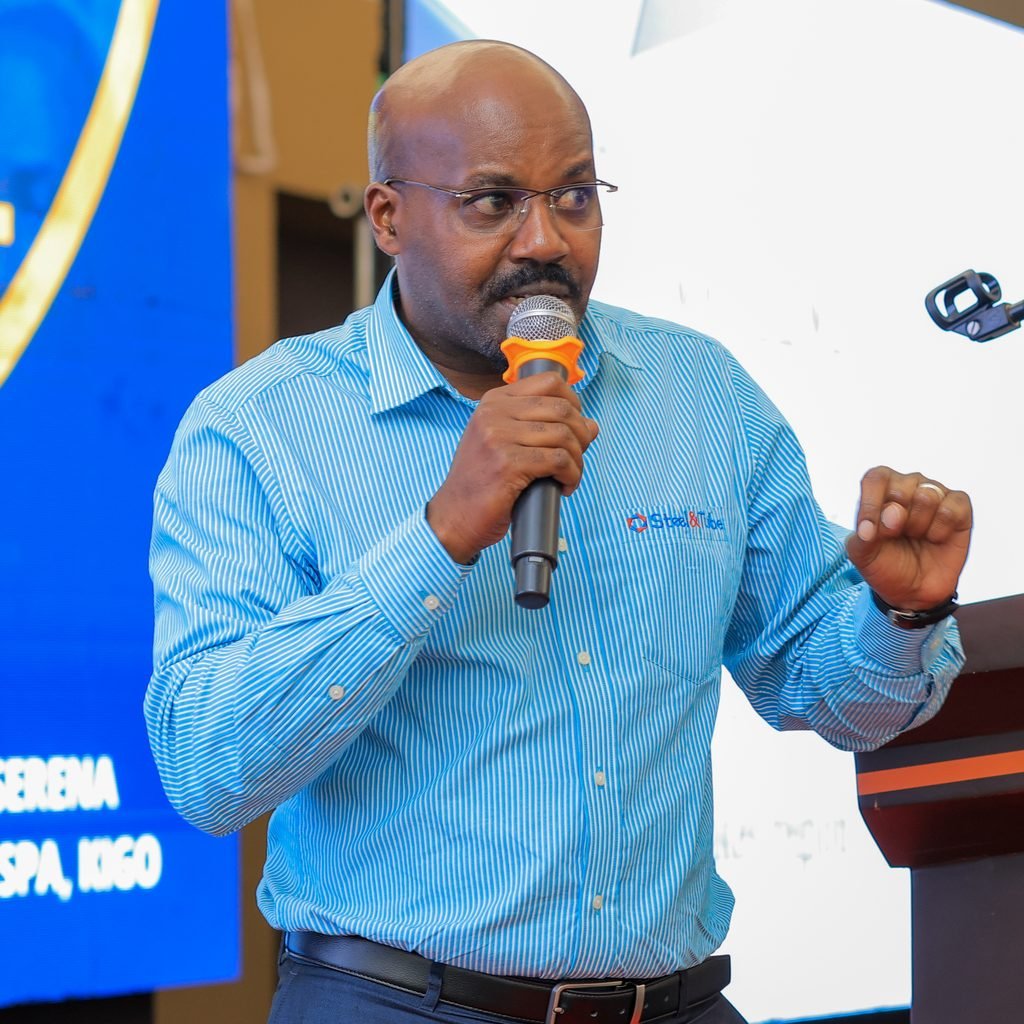
“Steel & Tube listens closely to the market. Through customer visits, expos, exhibitions, forums, workshops, conferences & other engagements, we hear directly from the people who use & sell our products. We take that feedback seriously & use it to develop practical solutions,” Oscar Kamukama, the company’s Head of Marketing, told delegates at the Construction Hardware Dealers Association (CHADA) Convention 2026. “We listen to the market, then respond to what it needs. That approach has helped Steel & Tube Industries make significant headway in developing products & services that meet the changing needs of Uganda’s construction sector.”
That philosophy and commitment to listening to the market & responding is reflected across Steel & Tube Industries’ product range: TMX B500 rebars engineered for fatigue resistance; stainless steel water tanks designed for a 50-year service life, durable wheelbarrows, hoop iron, smart trolleys, new and advanced expanded meta, pre-engineered buildings from the Structural Steel Division & custom-built flatbed, side-drop & box-body trailers manufactured using high-grade S355 steel. Each Steel product offering reflects the company’s focus on meeting market needs through quality materials & practical design.
“Quality matters, but service is what turns a good product into a lasting customer relationship. At Steel & Tube, we work to deliver both simultaneously,” Kamukama said.
For Steel & Tube, quality sits alongside safety, ethics and teamwork as core values that guide how the company operates and engages with its customers, partners and the wider industry. At CHADA, these principles found a natural platform in conversations around product standards, responsible manufacturing and the role of the construction hardware sector in Uganda’s development.
That combination of quality & service is visible across Uganda’s built environment. Steel & Tube’s materials have contributed to the restoration of Katonga Bridge following its 2023 collapse & the expansion of Entebbe International Airport. The company has also supplied steel for NSSF Pension Towers, the New Karuma Bridge, the Kampala Flyover, UEDCL & IGG towers, dams, Kabalega International Airport, the Marriott Hotel, Arena Mall Nsambya & the Uganda Cancer Institute. These projects demonstrate the company’s contribution to Uganda’s infrastructure & its reputation as a trusted supplier for major infrastructural developments.
Steel & Tube’s collaboration with Roofings Group on the Hoima City National Stadium shows that even competitors can work together to deliver major projects. It also reflects the company’s commitment to advancing Uganda’s construction sector alongside its own commercial ambitions.
The company’s ambitions now reach underground, and this is where the CHADA story becomes bigger than one convention.
To address its reliance on costly imported steel inputs, Steel & Tube Industries secured a licence from the Ministry of Energy & Mineral Development for mineral development activities in Kanungu. The company is exploring a domestic iron ore value chain: beneficiation to improve ore quality, followed by ironmaking, steelmaking & casting to produce steel billets, subject to technical & commercial feasibility. Billets are an intermediate input for products such as reinforcing bars. If developed successfully, the project would extend Steel & Tube’s manufacturing operations further upstream & create more value from Uganda’s mineral resources.
It is also a direct expression of the company’s emphasis on innovation, sustainability and local value addition priorities that sit alongside its ambition to become a leading and reliable manufacturer and supplier of steel profiles in the East African region and beyond.
That ambition echoed loudly when General Wilson Mbadi, Minister of State for Trade, addressed the convention.
“Every home, school, hospital, road, and factory begins with the materials provided by this sector,” Mbadi told the room, calling dealers and manufacturers guardians of national development.
He warned that price fixing under the Fair Competition Act carries penalties of up to 10 percent of annual turnover, and pressed dealers to reject substandard materials. He pointed to Uganda’s housing deficit, 2.4 million units short and growing by 200,000 a year, and urged the sector to support locally manufactured products.
For Steel & Tube, the message reinforces a much bigger conversation than the products on display at CHADA: how Uganda can strengthen local manufacturing, improve standards, reduce dependence on imported inputs and build industrial capacity that serves both the domestic and regional markets.
Standing at the intersection of that policy and product line is a company that has spent four decades proving it can be both a factory and a contributor to national development.
CHADA was one stage; Steel & Tube’s upcoming presence at the Uganda International Trade Fair (UGITF) will be another.
The opportunity is to carry the same thread forward using UGITF to showcase not only Steel & Tube’s products, but the bigger story behind them quality manufacturing, continual innovation, safety and ethics, sustainability, local sourcing, mineral beneficiation and deeper regional reach.
In that sense, CHADA is more than an event at which Steel & Tube spoke about its products. It is part of a continuing conversation about where Uganda’s construction and manufacturing sectors are headed, and the role local manufacturers can play in that journey.
For Steel & Tube, the direction is clear to continue making quality steel products, create greater local value, serve customers and stakeholders responsibly, and build towards a stronger regional manufacturing footprint.
From the materials that go into individual buildings to the steel supporting some of the region’s most significant infrastructure, Steel & Tube’s story continues to be written one product, one project and one market at a time.
