
Africa could generate an additional $30 billion annually by increasing its tax revenue collection by just one percentage point of gross domestic product (GDP), according to an estimate presented by the African Tax Administration Forum (ATAF). At a time when mounting debt obligations are consuming public resources, international aid is declining and development financing needs continue to grow, the figure highlights the scale of an opportunity African governments can no longer afford to overlook.
The challenge is not simply to introduce more taxes. It is to build administrations capable of collecting revenue already owed, close loopholes that allow taxable income to escape national budgets and establish systems that encourage businesses and individuals to comply with their obligations.
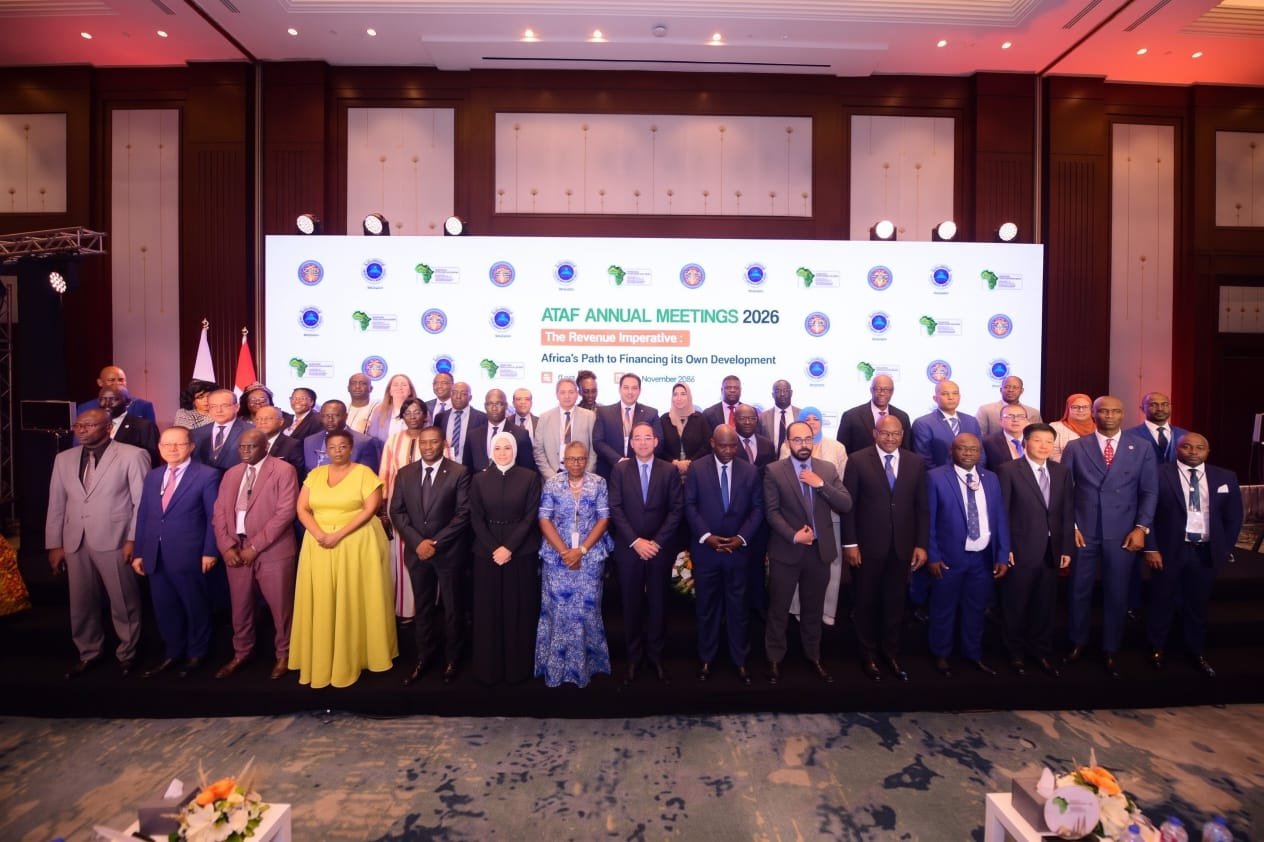
These questions are at the centre of ATAF’s 2026 Annual Meetings, officially opened on November 3 in Cairo, Egypt, under the theme, “The Revenue Mobilisation Imperative: Africa’s Pathway to Financing Its Own Development.”
With governments facing growing demands for infrastructure, education, healthcare and social protection, ATAF Executive Secretary Mary Baine believes the continent must move beyond repeatedly identifying its revenue challenges and concentrate on implementing solutions.
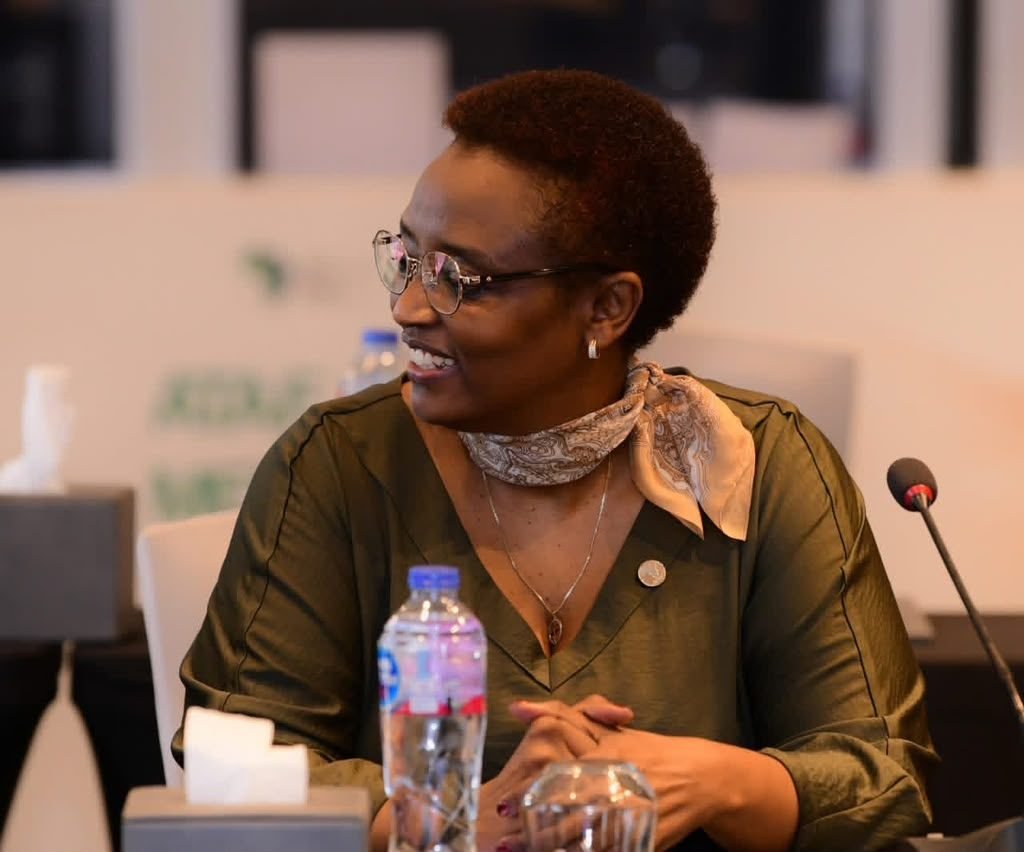
“This is no longer about discussing why. The why is established. This week is about how,” she said at the opening of the meetings.
The urgency is reflected in Africa’s tax collection performance. Across the 39 African countries covered by ATAF’s latest statistics, tax revenues account for approximately 15% of GDP on average. This compares with 33.9% among OECD countries, 21.3% in Latin America and the Caribbean, and 19.6% in Asia-Pacific.
The difference illustrates how much revenue African governments could potentially mobilise by strengthening their tax systems. ATAF’s estimate, presented in Kigali in September, suggests that an additional percentage point in tax revenue could generate approximately $30 billion annually for the continent. This would provide additional resources towards addressing the annual Sustainable Development Goals financing gap, estimated at $194 billion.
However, increasing tax collection requires more than raising rates or introducing additional levies. It depends on whether governments can identify taxable economic activity, enforce existing legislation, reduce revenue leakages and build confidence among taxpayers.
Turning tax assessments into money collected
ATAF’s Revenue Action for Development in Africa (RADA) programme is intended to support this transformation. The organisation has set a target of doubling the results of its collective work with member countries and development partners by 2030.
Its existing figures demonstrate both the potential and the remaining challenge. Since 2016, initiatives supported by ATAF have generated more than $6 billion in tax assessments, of which $2.8 billion has actually been collected by member states.
In 2025 alone, tax assessments reached $907.8 million, while $685.8 million was successfully recovered.
The distinction between assessments and collections is important. Identifying additional tax liabilities does not automatically put money into government accounts. Administrations must also possess the technical capacity, enforcement mechanisms and institutional resources to recover the amounts owed.
For African governments seeking to finance development through domestic resources, the ultimate measure of success is therefore not the value of taxes assessed, but the revenue that reaches national budgets.
Egypt offers an example of administrative reform
Egypt’s experience provided one illustration of how administrative changes can improve revenue performance without necessarily increasing the tax burden.
Finance Minister Ahmed Kouchouk told the meeting that the country’s tax revenues increased by 27% in the previous year without imposing additional tax burdens on taxpayers.
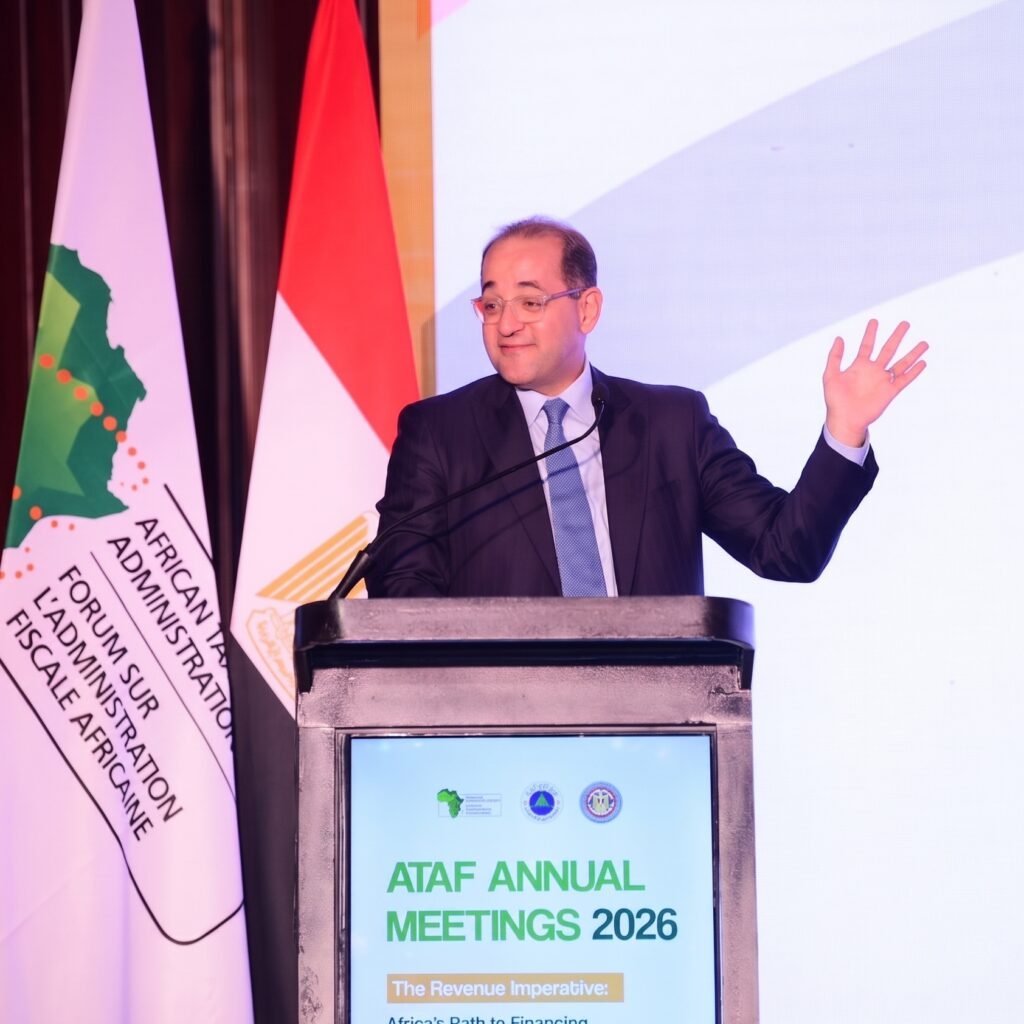
He attributed part of this progress to digitalisation and simpler tax services, highlighting the voluntary registration of 3.5 million properties within 120 days.
The experience points to an important dimension of domestic revenue mobilisation: the relationship between tax administration and taxpayer confidence.
Businesses and individuals are more likely to comply when registration, filing and payment procedures are accessible, obligations are clearly communicated and the tax system is perceived as fair. Complicated procedures, weak service delivery and inconsistent enforcement can instead discourage compliance and push economic activity further outside formal systems.
Egyptian Tax Authority Head Rasha Abdel Aal also emphasised the need to simplify tax procedures, strengthen the skills of tax officials and adapt revenue administrations to changing economic conditions. She highlighted equitable taxation as an important factor in encouraging compliance.
Kouchouk further stressed that tax revenues must translate into visible improvements in citizens’ lives. The resources collected by governments finance infrastructure, schools, healthcare services and social protection programmes. Public confidence in taxation is therefore closely connected to whether citizens can see meaningful benefits from their contributions.
The revenue Africa is struggling to capture
Beyond administrative inefficiencies, African countries face structural challenges that make domestic revenue mobilisation particularly difficult.
In resource-rich economies, especially those with significant mining sectors, the wealth generated from natural resources does not always translate into corresponding public revenue. Profit shifting between companies within the same corporate group, transfer pricing arrangements and complex tax optimisation structures can reduce the taxable profits reported in resource-producing countries.
For tax administrations, addressing these practices requires specialised expertise, access to relevant financial information and the ability to scrutinise transactions involving multinational businesses.
The informal economy presents a different but equally significant challenge. Millions of economic activities remain outside formal registration systems, making it difficult for governments to identify taxable businesses and incorporate them into revenue administration databases.
Meanwhile, the expansion of digital commerce is challenging traditional approaches to taxation. Companies can generate substantial income from consumers in a country without maintaining a physical presence there. This complicates the determination of where economic value is created and which jurisdiction has the right to tax it.
These challenges require different responses depending on national circumstances. A country with a large informal economy may prioritise business registration and simplified taxation, while a resource-dependent economy may need stronger transfer pricing expertise and more effective oversight of extractive industries.
Kouchouk emphasised that reforms must reflect individual countries’ economic structures, administrative capabilities and available resources rather than follow a uniform approach.
Why international tax cooperation matters
The increasing cross-border nature of economic activity also means that national tax administrations cannot address revenue leakages independently.
Multinational businesses operate across several jurisdictions, moving capital, profits and financial transactions between countries. Combating illicit financial flows and artificial profit shifting therefore requires stronger information exchange, institutional cooperation and the technical capacity to participate in international tax discussions.
ATAF intends to strengthen its role by supporting African administrations, developing their institutional and technical capabilities and advocating for greater African participation in international tax negotiations.
The objective is to ensure that African countries can protect their taxing rights and participate meaningfully in shaping international rules, particularly as the digital economy and cross-border transactions continue to reshape global taxation.
Chaired by Egyptian Finance Minister Ahmed Kouchouk, the opening ceremony brought together ATAF Council Chairperson Dr Johnstone Makhubu and more than 450 participants from Africa and other regions.
Discussions are focusing on taxation of the digital economy, combating illicit financial flows, international tax cooperation and strengthening tax administrations.
For Africa, the underlying question is no longer simply how much additional revenue its economies could generate. It is whether governments can build the institutions, technical capabilities and taxpayer confidence required to collect it.
An additional percentage point in tax revenue could mean approximately $30 billion more annually for the continent. But that opportunity will only translate into development financing if tax administrations can recover the money, governments manage it effectively and citizens ultimately see the benefits in the services and infrastructure their taxes are meant to support.
