
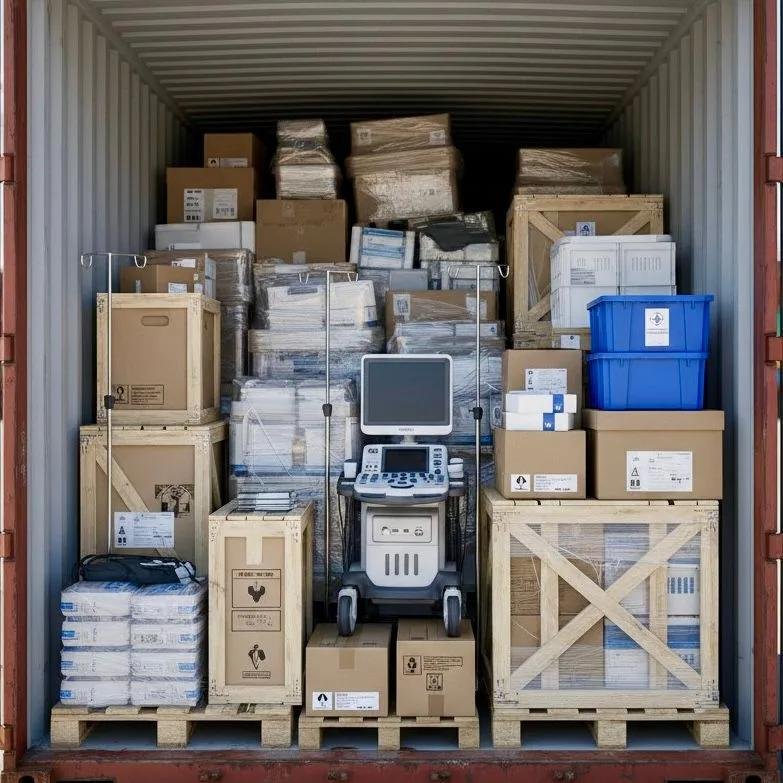
A 40-foot container carrying sophisticated medical equipment worth more than UGX 1.46 billion arrived in Uganda with the potential to transform healthcare access for vulnerable children in Kampala.
Years later, the same shipment became the centre of a legal battle after customs records showed it had been sold to a private buyer for just UGX 4 million a fraction of its declared value.
The equipment, donated from Switzerland to Babaana Children of Uganda Limited, included digital ultrasound machines, an electroencephalogram (EEG) machine, dental surgery equipment, gynaecology equipment and specialised neurological and psychiatric examination tools.

It was meant to support a planned clinic in Naguru, Kampala, providing affordable medical services while helping fund the charity’s wider mission of supporting vulnerable children.
Instead, the equipment spent years trapped in a customs dispute that eventually ended with the High Court ordering the Uganda Revenue Authority (URA) to pay more than UGX 1.66 billion in damages.
The judgment, delivered on 17 July 2026 by Justice Bernard Namanya of the High Court of Uganda, has become a major warning for importers, businesses, NGOs and logistics companies operating in environments where regulatory deadlines and documentation can determine whether valuable goods survive or disappear.
The story began in October 2017 when Babaana Children of Uganda imported the shipment from Switzerland. The consignment contained 215 packages weighing 6,600 kilograms and arrived in Uganda in a 40-foot container shipped through Maersk Line.
Before the goods arrived, the charity had already taken steps to comply with government requirements. It applied for a tax exemption through the Ministry of Health, which URA later approved on 28 November 2017.
The exemption covered the medical equipment, while other items in the shipment, including toys, shoes, milk and office supplies, remained subject to taxation.
On 11 December 2017, the goods were placed under customs control in a bonded warehouse.
That was where the problems began.
Under customs regulations, imported goods stored in a bonded warehouse must generally be cleared within a specified period. In this case, the nine-month deadline was set to expire on 7 September 2018.
With construction of the planned clinic incomplete, the charity wrote to URA on 6 September 2018, just one day before the deadline, requesting an extension until December 2018.
URA did not issue a written response.
The charity later argued that because the authority had not rejected the request, it believed there was no objection to continuing with the process. However, customs deadlines continued running.
When representatives returned to progress with clearing the equipment, they discovered that the shipment had already been disposed of.
The situation became more confusing when later correspondence and meetings suggested the goods were still available and that the charity only needed to nominate someone to collect them.
After years of unsuccessful negotiations, including settlement discussions between the parties, Babaana Children of Uganda filed a lawsuit in 2020 seeking more than UGX 17.2 billion in compensation.
URA defended its actions, arguing that the charity had failed to complete the customs entry process within the required period and that the goods had therefore been lawfully forfeited and disposed of.
However, the court found significant gaps in URA’s handling of the disposal process.
One of the biggest issues was the lack of evidence showing that proper notice had been given before the sale.
URA told the court that a gazette notice announcing the intended disposal had been published, but no copy of the notice from the official Gazette or any newspaper was produced as evidence.
The court also questioned how equipment worth more than UGX 1.46 billion was sold for only UGX 4 million.
URA’s own customs manager confirmed during cross-examination that the goods were sold to a private buyer, Isma Mpindi, for the small amount. However, the authority provided no convincing explanation for the dramatic difference between the value of the equipment and the auction price.
The paperwork surrounding the disposal created further questions.
The official Exit Note reportedly described the goods sold as 2,500 kilograms of “worn clothing and other articles”, despite the actual shipment containing 6,600 kilograms of specialised medical equipment.
The court found that the high-value medical equipment had not been properly accounted for.
URA also failed to provide sufficient evidence of a valuation report before the sale or a proper account of how the auction proceeds were handled.

The court ruled that URA had failed to comply with mandatory procedures governing the disposal of warehoused goods.
Although Babaana Children of Uganda had claimed significantly higher damages, including more than UGX 17 billion in special damages and additional claims for general and exemplary damages, the court relied on what could be proven through evidence.
A private loss assessment report presented by the charity was not given full weight because its authors did not testify in court to defend their calculations.
The final award was based mainly on the accepted value of the equipment.
URA was ordered to pay:
- UGX 1.46 billion in special damages, representing the value of the medical equipment, plus interest;
- UGX 200 million in general damages for disruption, inconvenience and lost opportunity;
- Costs of the lawsuit.

The court declined to award exemplary damages, finding that the evidence did not meet the threshold required to prove oppressive or deliberately high-handed conduct.
The ruling carries lessons far beyond one charity and one container.
For businesses importing goods, the case highlights the importance of securing written approvals, monitoring customs deadlines and maintaining detailed records of every communication with regulators.
A request sent to an authority is not the same as an approval received. A valuation report is only as strong as the expert who can defend it. And a legal argument not included at the beginning of a case may not be available later.
For regulators, the case is equally significant. Government agencies must follow the same procedures they expect businesses to follow. Proper notices, accurate records, transparent valuations and accountability for disposed goods are not optional requirements.
A shipment that travelled thousands of kilometres from Switzerland to Uganda ultimately became a courtroom lesson about the power of paperwork.
The medical equipment was eventually replaced by a legal award, but the case leaves a broader message for every importer: in customs disputes, compliance is not just about having the right documents. It is about ensuring every step of the journey can be proven when it matters most.
