
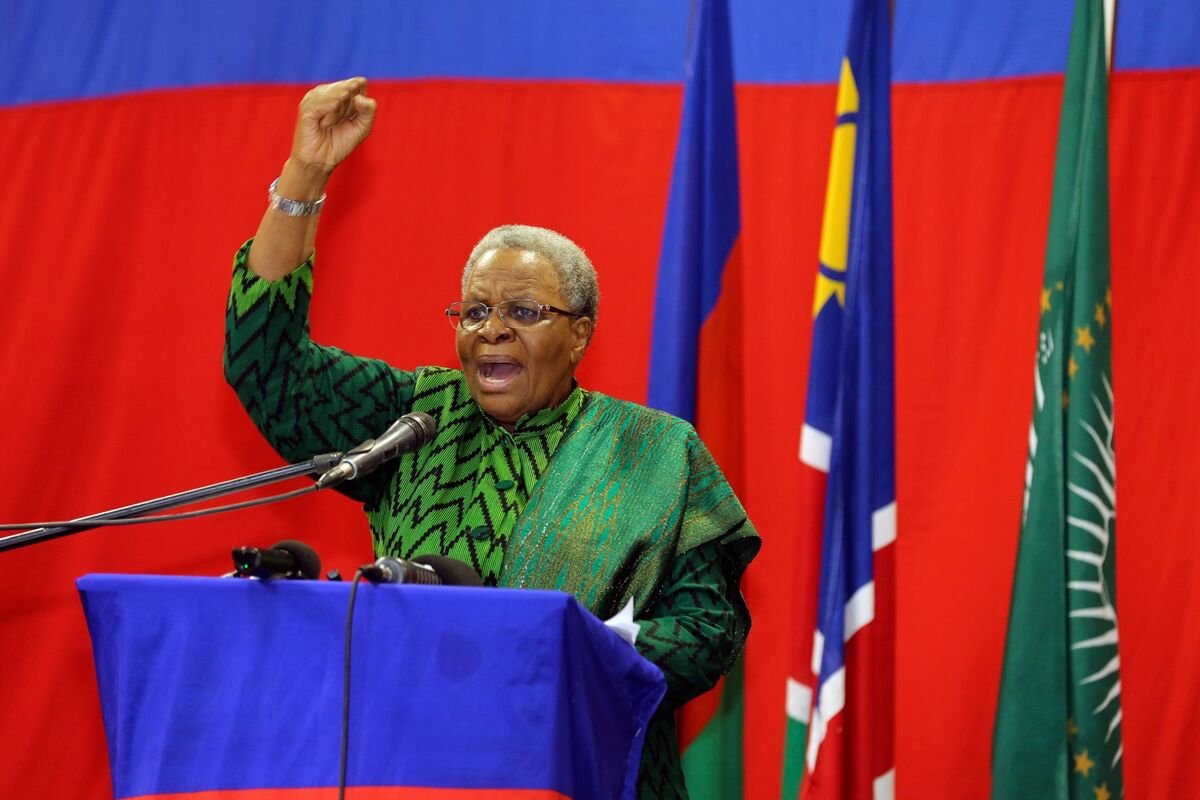
Namibia has sent a seismic shockwave through the continental economic landscape by announcing the total repayment of its outstanding debt to the International Monetary Fund (IMF). With a final payment of $23.8 million, the Southern African nation has effectively cleared its balance sheet, opting for a future of “zero balance” and, more importantly, zero new loans.
This move is being hailed across the continent not just as a financial milestone, but as a profound declaration of economic independence. It signals a deliberate shift away from external financial dependence and toward full control over national economic decisions.
“This is what sovereignty looks like.”
The significance of this moment goes beyond numbers. It reflects a growing rethinking across developing economies about the true cost of debt. What was once seen purely as a tool for growth is increasingly being questioned as a constraint on policy freedom and long-term national priorities.
This perspective is not new. Some of the most influential voices in economic and political thought have long warned about the implications of debt dependency.
“Debt is a cleverly managed reconquest of Africa… those who lend us money are the ones who allow us to live, but they are also the ones who tell us how to live.” — Thomas Sankara
Joseph Stiglitz, Nobel Prize-winning economist and former World Bank Chief Economist, has also been a consistent critic of conditional lending, noting that “the IMF’s structural adjustment programs have often resulted in lower growth and higher poverty.”
Namibia’s decision now places it among a select group of nations that have taken similar steps toward financial independence. Brazil repaid its $15.5 billion IMF debt in 2005, allowing it to expand domestic social programs without strict external constraints. Argentina followed in 2006 with a $9.5 billion settlement, reclaiming greater control over its economic direction.
Thailand exited its IMF obligations in 2003 after the Asian Financial Crisis, repaying $4.6 billion early and declaring itself free from external financial oversight. Russia also cleared approximately $3.3 billion in 2005, marking a return to independent fiscal management.
For Namibia, the implications of this move are both immediate and long term. At its core is the restoration of policy autonomy. Without IMF conditions, the government now has greater freedom to design and implement policies based on domestic priorities rather than externally defined frameworks.
This shift represents a move from what many describe as “politics of identity” to “politics of interests,” where the focus is no longer symbolic independence, but practical control over economic direction and resource allocation.
There is also a clear fiscal advantage. By eliminating debt servicing obligations, Namibia can redirect resources toward infrastructure, healthcare, education, and productive sectors of the economy. Funds that would have gone toward interest payments can now be reinvested internally, strengthening long term development capacity.
At the same time, the move carries strategic implications for investor perception. A “zero balance” position signals financial discipline, stability, and reduced exposure to externally imposed austerity measures. For private investors, it presents Namibia as a self reliant and predictable economic environment.
This milestone resonates deeply within Uganda’s current economic discourse, particularly around the proposed Sovereignty Bill. At the heart of that conversation is the same principle Namibia has now demonstrated in practice, the protection of domestic policy making from external influence.
For Uganda, sovereignty is increasingly being framed not just as political independence, but as the ability to define its own economic path, how it spends, invests, regulates, and prioritizes growth, without external conditionalities shaping those decisions. Namibia’s move provides a real world example of what that level of independence can look like.
“Must we starve our children to pay our debts?” — Julius Nyerere
As Namibia charts this new path, it stands as a powerful example of what financial independence can look like in practice. The message is clear and increasingly relevant across the continent.
Namibia has proven that the door to economic freedom is open. The question now is no longer whether it is possible, but how many others are willing to follow.
