
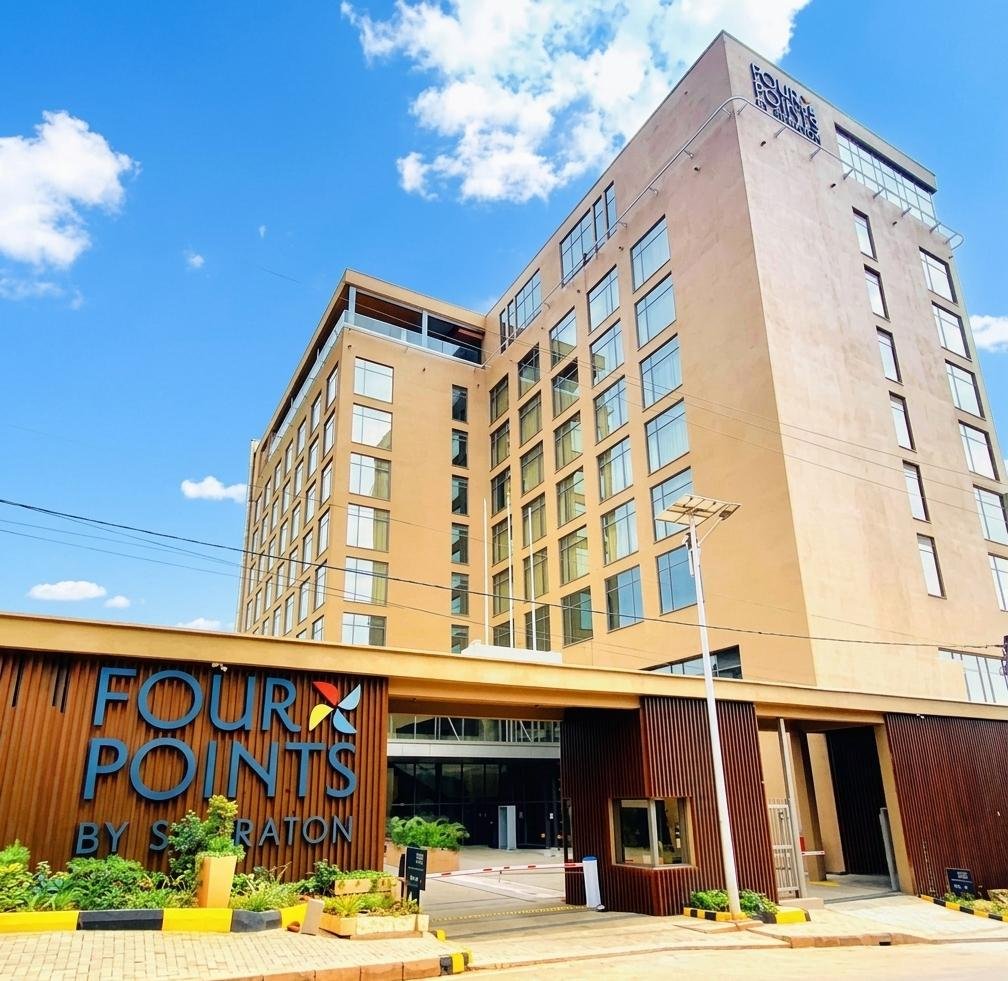
A landmark ruling by the Tax Appeals Tribunal has ordered the Uganda Revenue Authority (URA) to refund more than Shs 4.06 billion to Portman Square Limited, owners of the Four Points by Sheraton hotel in Kololo, in a decision that could reshape investor confidence in Uganda’s tax system.
Delivered on April 29, 2026, the ruling is already being viewed as a major precedent for large-scale investors in tourism, infrastructure, and real estate.
At the centre of the dispute was a straightforward but critical question: if a company is legally exempt from VAT but ends up paying it due to commercial pressure, should the tax authority retain the money?
The Tribunal said no.
How the dispute began
Portman Square Limited invested over USD 100 million into the development of the Four Points by Sheraton hotel in Kampala. Before construction began, the company sought official guidance from URA on tax treatment.
In March 2020, URA confirmed the project qualified for VAT exemption under Uganda’s investment incentive framework. The Ministry of Finance later reinforced this position, confirming exemptions on VAT, excise duty, and import duty.
URA also instructed contractors, including Seyani Brothers Company Uganda Limited, not to charge VAT on the project.
Despite this, suppliers continued charging VAT between 2020 and 2023. To avoid project delays, Portman Square paid Shs 4,064,860,158 in VAT.
Why URA rejected the refund
When the company applied for a refund in August 2024, URA declined the request. It argued that the transactions were exempt, meaning no input VAT could be claimed, and suggested the issue should be resolved through suppliers issuing credit notes.
URA also cited the company’s VAT registration status during part of the project period.
Tribunal ruling: URA was wrong
The Tax Appeals Tribunal panel, chaired by Hon. Crystal Kabajwara alongside Hon. Willy Nangosyah and Hon. Proscovia Rebecca Nambi, rejected URA’s arguments.
It ruled that:
- The supplies were clearly VAT-exempt under prior URA and Ministry of Finance approvals
- VAT paid on exempt supplies was tax paid in error
- Under Section 40 of the Tax Procedures Code Act, URA must refund overpaid tax
- The economic burden was fully carried by the investor, not the suppliers
- VAT registration status was irrelevant in a tax-paid-in-error claim
- URA could not shift responsibility to suppliers
The Tribunal ordered URA to refund the full Shs 4.06 billion and imposed 2% monthly compounded interest from August 12, 2024, until payment is made, plus costs.
Why the ruling matters
The decision sends a strong signal to investors that approved tax incentives must be respected in practice, not just on paper.
It also highlights a recurring gap in Uganda’s tax administration where suppliers, contractors, and regulators do not always align, leading to costly disputes for investors.
For businesses, especially in tourism and infrastructure, the ruling strengthens legal certainty around tax exemptions and reinforces protection for capital invested under government incentive schemes.
The bigger picture
Beyond the refund itself, the case underscores a broader issue in Uganda’s investment climate: the gap between policy approvals and real-world implementation.
For investors, the message is clear. Proper documentation of tax incentives and early engagement with authorities remain critical.
For URA and policymakers, the ruling adds pressure to improve coordination, enforcement consistency, and clarity in tax administration.
Ultimately, the Four Points by Sheraton case is likely to stand as a key precedent in Uganda’s tax law, shaping how future disputes over incentives and overpaid taxes are resolved.
