
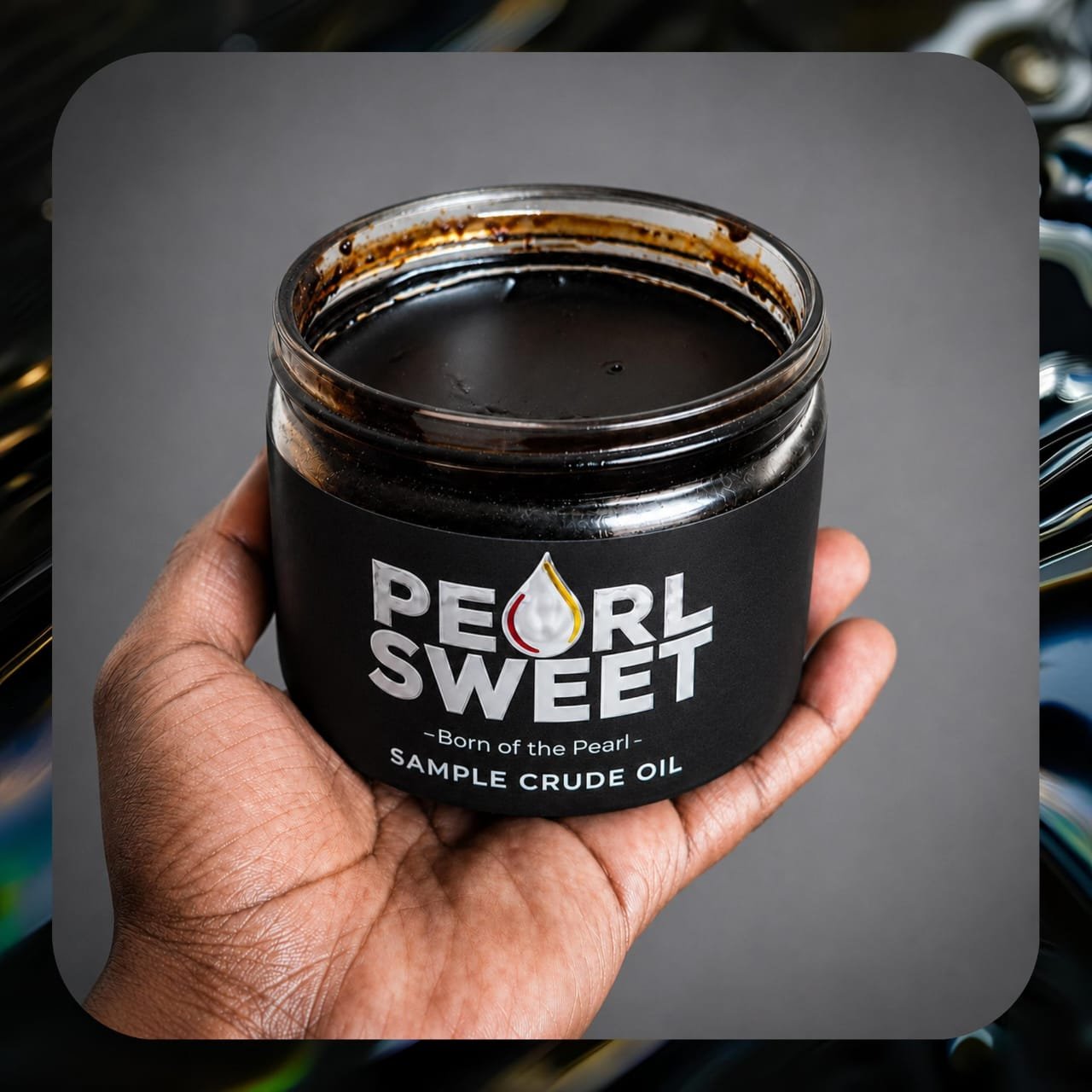
Uganda has given its crude oil a formal market identity as the country moves closer to commercial production, naming its export blend “Pearl Sweet”. President Yoweri Museveni unveiled the name on September 2 at the Kingfisher Development Area in Kikuube District, marking another milestone in Uganda’s two-decade journey towards becoming an oil-producing country.
The name draws from Uganda’s description as the “Pearl of Africa” and the crude’s relatively low sulphur content. In the petroleum industry, crude with low sulphur is classified as “sweet” and generally requires less sulphur removal during refining than sour crude. The designation gives Uganda’s crude a distinct identity as the country prepares to enter the international oil market, where traders and refiners assess crude grades according to characteristics such as sulphur content, density, yield and processing requirements.
Museveni said the name reflects the characteristics of Uganda’s crude while marking an important stage in the country’s petroleum journey.
“We call it sweet because it does not have sulphur. When it has sulphur, it is more expensive to remove the sulphur. This one either has little or no sulphur,” Museveni said.

He said the development of the petroleum sector should go beyond producing and exporting crude, with Uganda seeking to capture more value from its resources through refining, petrochemicals and other industries.
“This marks an important milestone in our journey to develop Uganda’s oil and gas resources for value addition and economic transformation. Through refining, petrochemical industries and the use of associated gas for electricity generation, we shall maximise the value of our resources here at home and reduce dependence on imported petroleum products,” he said.
Museveni also warned that petroleum revenues should be directed towards long-term investments rather than increased consumption, pointing to infrastructure, energy, transport, railways and universities as areas where oil revenues could create lasting economic value. He said the objective should be to ensure Uganda benefits from its petroleum resources beyond the life of the fields.
“The objective should be to ensure that the first barrel of oil is not the last.”
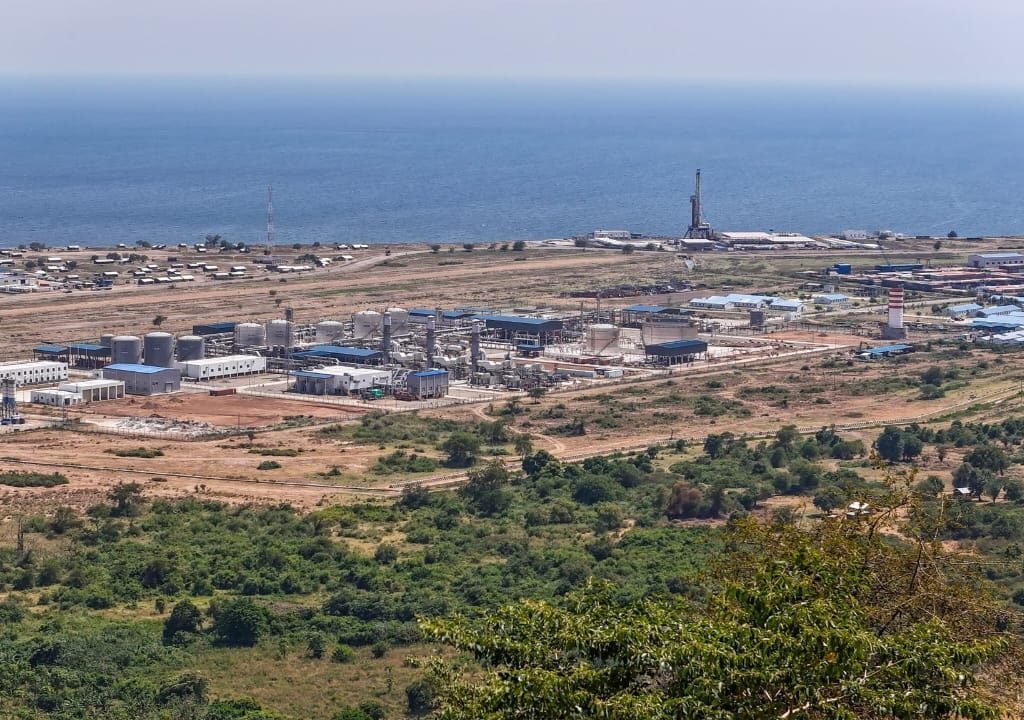
Pearl Sweet will come primarily from Uganda’s two commercial oil developments in the Albertine Graben, the Tilenga and Kingfisher projects. Tilenga, operated by TotalEnergies, is the larger development and is designed to produce about 190,000 barrels of crude oil per day at peak output. Kingfisher, operated by China’s CNOOC, is designed to produce about 40,000 barrels per day. Combined production from the two projects is expected to reach about 230,000 barrels per day at peak output.
Uganda discovered commercial quantities of oil in the Albertine region in 2006, but production has taken nearly two decades to reach this stage. The delay has involved the development of the oilfields, securing investment and constructing the infrastructure required to process, transport and export the crude. The government is now targeting commercial production by the end of 2026.
For Uganda, producing the oil is only part of the equation. As a landlocked country, it requires an export route to international markets. This is where the 1,443-kilometre East African Crude Oil Pipeline, or EACOP, becomes critical. The pipeline is being developed to transport Uganda’s crude from the oilfields in Hoima to the Chongoleani Marine Terminal near Tanga on Tanzania’s Indian Ocean coast.
EACOP has been designed specifically for Uganda’s crude, which has a relatively high wax content. Heating and insulation are therefore required to keep the oil sufficiently fluid as it travels through the pipeline. According to EACOP, construction was about 92 per cent complete by September 2026, with work progressing towards commissioning. The pipeline is expected to provide the physical link between Uganda’s oilfields and the international market.
Tilenga and Kingfisher crude is expected to be commingled at the Kabaale Shared Facilities in Hoima before entering the pipeline. The commercial characteristics of Pearl Sweet will then influence how the grade is assessed by international buyers. While its low sulphur content is an advantage for refiners, its waxy nature creates additional transportation and handling requirements.
UNOC Chief Executive Proscovia Nabbanja said the name gives Uganda’s crude the identity required in international commodity markets.
“Pearl Sweet gives Uganda’s crude what every traded grade needs: a clear identity, a defined quality and a name the market can recognise.”
UNOC is expected to undertake market outreach, including engagement with refineries, market intelligence and negotiations with potential buyers. The company will market the grade alongside its joint-venture partners.
The development of Uganda’s petroleum industry has also created a wider investment ecosystem around the oilfields and pipeline. Construction, logistics, engineering, environmental services, accommodation, transport and other support industries have benefited from demand generated by the projects.
The larger economic question, however, is what happens once production begins. Oil exports are expected to provide Uganda with an additional source of foreign exchange and government revenue, while the sector has the potential to stimulate investment in infrastructure and other productive activities. Government officials have repeatedly stressed the importance of managing petroleum revenues responsibly and using them to support long-term development rather than short-term consumption.
Uganda is also pursuing plans for a 60,000-barrel-per-day refinery at Kabaale in Hoima. The refinery is intended to process crude for the domestic and regional market, while EACOP will provide the export route for crude destined for international buyers. The two projects form complementary parts of Uganda’s petroleum strategy, with some crude intended for export and refinery development aimed at increasing the availability of petroleum products within Uganda and the wider region.
For years, Uganda’s oil story has been dominated by exploration, investment and infrastructure development. The country is now approaching the stage where production, exports and petroleum revenues will determine whether those investments deliver the economic benefits promised.
Pearl Sweet gives Uganda’s crude a recognizable identity. Tilenga and Kingfisher provide the production base, while EACOP provides the export route. The next major milestone is first oil.
When commercial production begins, Uganda will move from being a country with commercially viable petroleum reserves to an oil exporter participating directly in the international crude market. For Uganda’s economy, however, the value of Pearl Sweet will ultimately be measured not only by the barrels produced and exported, but by what the country does with the revenue generated from its first barrels and whether that income can be converted into lasting economic growth and productive capacity.
