
When the United Nations begins choosing its next Secretary-General, most people see a diplomatic contest. Investors, multinational companies, and policymakers should see something else: a leadership decision with significant implications for global markets, international trade, development finance, and regulatory policy.
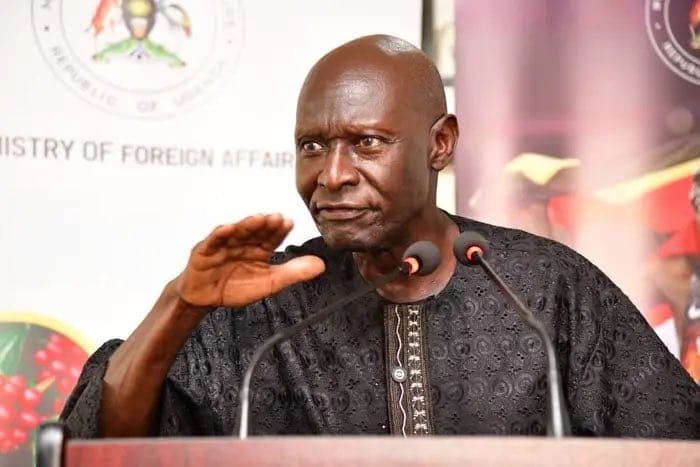
Uganda’s decision to nominate veteran diplomat Ambassador Olara Otunnu for the UN’s top job, coupled with President Yoweri Museveni’s personal lobbying campaign on his behalf, has elevated the country’s profile on the global stage. While the race is ultimately about international diplomacy, its outcome could influence everything from foreign investment sentiment and humanitarian procurement to artificial intelligence governance and infrastructure financing.
For Uganda, the campaign is about more than prestige. It is also an opportunity to strengthen the country’s international economic standing.
Why the UN Secretary-General Matters to Business
The UN Secretary-General is often described as the world’s top diplomat, but the office carries substantial economic influence.
As head of the UN Secretariat, the Secretary-General oversees an institution that manages billions of dollars in annual spending across peacekeeping, humanitarian relief, development programmes, procurement, logistics, infrastructure, and technical assistance. Those decisions affect thousands of suppliers, contractors, consulting firms, technology companies, and development partners across the world.
Beyond administration, the office plays a major agenda-setting role.
The Secretary-General can shape international priorities on issues such as climate finance, sustainable development, artificial intelligence, digital governance, migration, and conflict prevention. These priorities often determine where donor funding flows, which sectors attract multilateral investment, and how global regulatory conversations evolve.
Perhaps most importantly, the Secretary-General serves as one of the world’s principal mediators during international crises. Political stability, conflict resolution, and peacekeeping directly influence investor confidence, commodity markets, insurance costs, and cross-border supply chains.
For businesses operating internationally, the office is far more than ceremonial.
Uganda’s Bid for the World’s Highest Diplomatic Office
Uganda formally nominated Ambassador Olara Otunnu on 24 July 2026.
Otunnu brings one of the strongest multilateral résumés among the candidates. He previously served as Uganda’s Permanent Representative to the United Nations, President of the UN Security Council, Chair of the UN Commission on Human Rights, and later as UN Under-Secretary-General and Special Representative for Children and Armed Conflict, where he led global efforts to protect children affected by war.
His campaign centres on strengthening multilateral cooperation, reforming the United Nations, improving conflict prevention, and enhancing global governance around emerging technologies, including artificial intelligence.
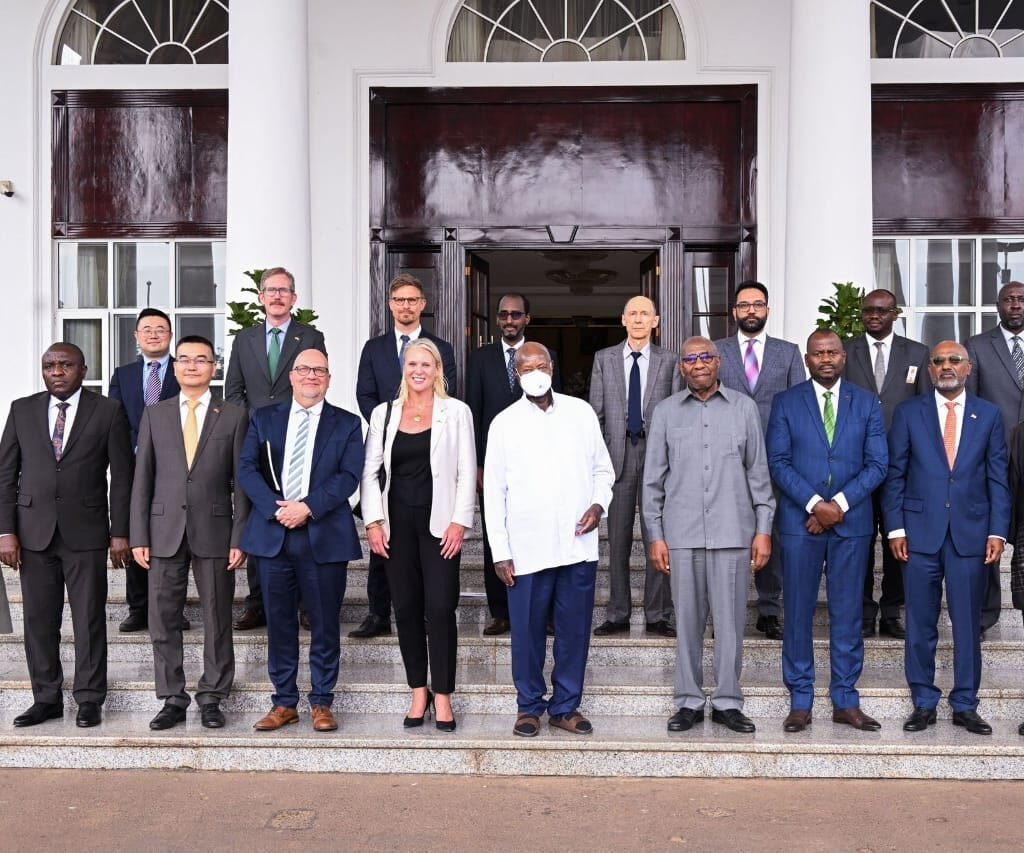
President Museveni has made the campaign a personal diplomatic priority. Earlier this month, he hosted representatives of Security Council member states at State House, Entebbe, to present Uganda’s case and lobby for Otunnu’s candidacy.
The campaign, however, faces significant hurdles.
The first informal Security Council straw poll placed Otunnu last among seven candidates, receiving two “encourage” votes, five “discourage” votes, and eight “no opinion” votes. Since any one of the five permanent Security Council members can veto a candidate, Uganda now faces an intensive diplomatic campaign to build support before further rounds of voting.
Why Investors Should Pay Attention
Although the Secretary-General is expected to remain politically neutral once in office, history shows that countries producing senior multilateral leaders often experience a measurable soft-power dividend.
A stronger investment brand
A Ugandan Secretary-General would instantly elevate Uganda’s international visibility.
Greater diplomatic credibility can improve access to development finance, strengthen bilateral relationships, support regional trade negotiations, and reinforce investor confidence. While such appointments do not directly alter domestic economic policy, they can enhance perceptions of political relevance and international engagement. These factors are important considerations for global investors evaluating frontier markets.
Influence over the future of AI governance
Artificial intelligence has rapidly become one of the defining policy challenges for governments and businesses alike.
Otunnu has identified AI governance as a priority area for UN reform. Should the United Nations accelerate work on international AI standards, businesses operating across multiple jurisdictions, from technology firms to financial institutions and manufacturers, could benefit from a more coordinated global regulatory environment.
For companies investing heavily in AI, the direction of multilateral governance increasingly matters.
Opportunities within the development economy
The United Nations anchors one of the world’s largest development ecosystems.
Every year, billions of dollars flow into humanitarian logistics, refugee support, infrastructure projects, digital transformation, healthcare, education, and climate adaptation.
Changes in leadership often influence institutional priorities, funding allocations, and reform agendas.
For companies supplying goods and services to the UN system, or seeking partnerships with international development agencies, those shifts create both risks and opportunities.
Stability Drives Markets
Conflict remains one of the biggest drivers of economic uncertainty.
The Secretary-General’s mediation role affects ceasefire negotiations, peacekeeping missions, and post-conflict reconstruction efforts that influence investment conditions across emerging markets.
Reduced geopolitical risk generally lowers borrowing costs, improves investor confidence, stabilises commodity markets, and encourages infrastructure investment.
Across Africa, where political stability remains closely linked to economic growth, this role carries particular significance.
What Success Could Mean for Uganda
Should Uganda secure the UN’s top diplomatic office, the country would gain an unprecedented level of international visibility.
While the Secretary-General serves the international community rather than their country of origin, the symbolic value would be considerable.
Uganda would likely enjoy greater recognition in global policy discussions, enhanced diplomatic influence, and stronger positioning in conversations around regional integration, sustainable development, and international financing.
Such visibility could complement the country’s broader economic diplomacy by attracting investor attention to sectors including infrastructure, renewable energy, digital innovation, tourism, and regional trade.
The Road Ahead
The selection process remains highly competitive.
Candidates must survive successive Security Council straw polls before receiving a recommendation to the UN General Assembly, where the final appointment is made. A single veto from any of the five permanent Security Council members can end a candidacy.
Given Ambassador Otunnu’s initial showing, Uganda faces an uphill diplomatic battle.
Regardless of the outcome, Kampala’s campaign has already demonstrated an important reality. Leadership contests within multilateral institutions are no longer simply diplomatic events. They increasingly shape the global business environment.
For investors, multinational corporations, and policymakers, the race to become the next UN Secretary-General is worth following, not because it determines who occupies an office in New York, but because it helps shape the rules, priorities, and partnerships that influence global markets for years to come.
