
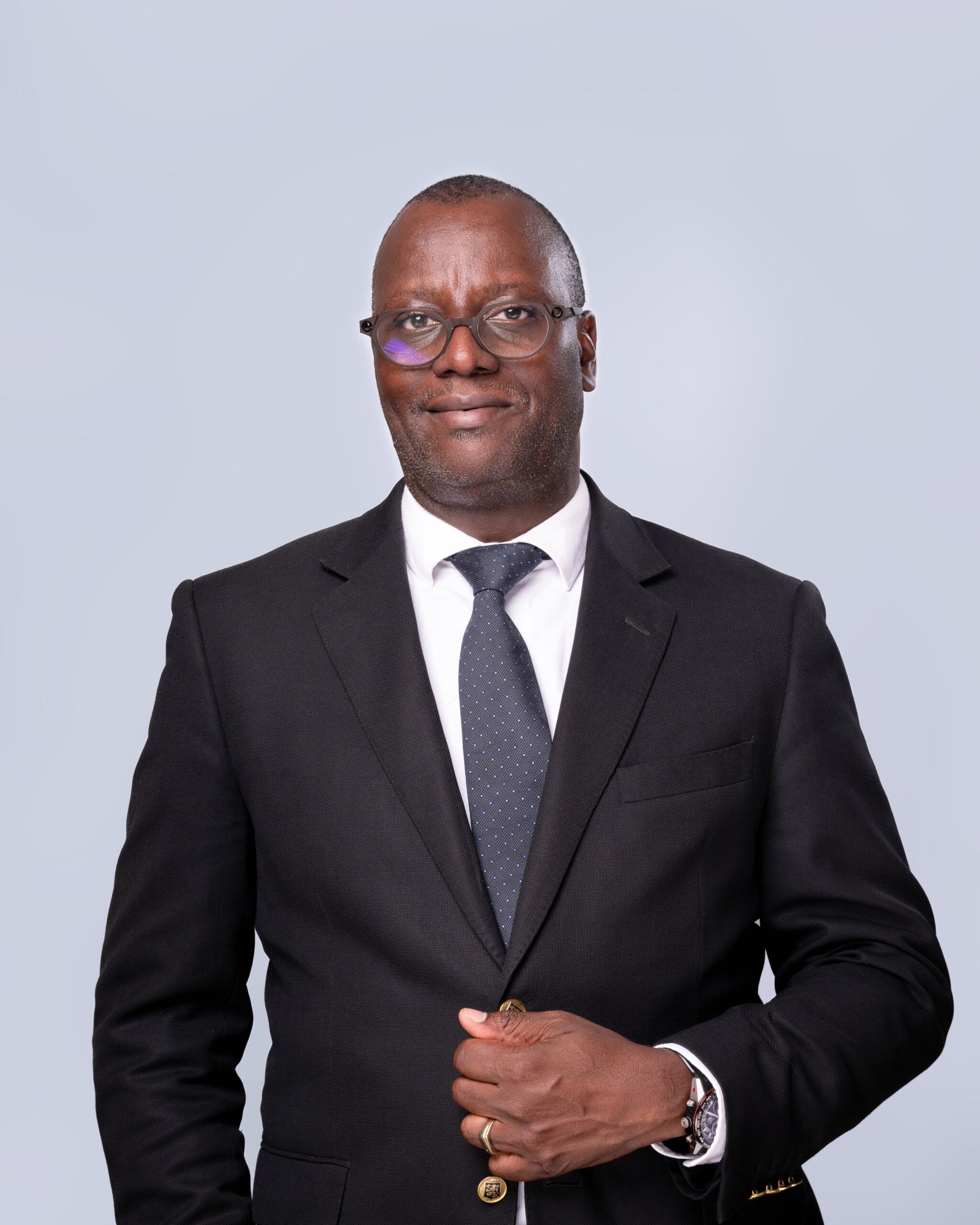
Before we discuss Uganda’s Ebola-free milestone, could you briefly introduce yourself and explain the role of the Infectious Diseases Institute (IDI)?
Dr. Kambugu: Dr. Andrew Ddungu Kambugu is a physician specializing in infectious diseases and has spent more than 22 years at the Infectious Diseases Institute (IDI), where he currently serves as Executive Director.
Before that, I led both our clinical and research programmes, so my perspective combines clinical care, research and health systems leadership.
IDI was established as part of Makerere University to help Uganda respond to the HIV/AIDS epidemic. Over the years, however, IDI has evolved into a broader centre of excellence for infectious diseases and global health security.
In 2016, we recognized that East and Central Africa were experiencing increasingly frequent disease outbreaks, so we invested in building outbreak preparedness capacity.
That investment meant that when COVID-19 emerged, and now with this Ebola outbreak, IDI has been able to support Uganda’s Ministry of Health through research, laboratory support, clinical expertise, infection prevention, and emergency response. Our experts also supported response efforts in the neighbouring Democratic Republic of Congo (DRC), where the wider regional outbreak originated.
Uganda has now officially declared the end of this Ebola outbreak. Can you walk us through what that milestone means?
Dr. Kambugu: On 28th July 2026, Uganda’s Ministry of Health officially declared the country Ebola-free, bringing this outbreak to a close.
The outbreak was declared on 15th May 2026 after cases linked to the Democratic Republic of Congo were confirmed in Uganda. In total, 20 people were infected, 18 recovered, and two sadly lost their lives.
The last patient, a locally transmitted case, was discharged on 16th June 2026. From that date, the Ministry maintained intensive nationwide surveillance through the mandatory monitoring period, and no new cases were detected.
Because this outbreak arose from a fully documented importation event, with the source of infection identified, the transmission route established, and every contact completing the mandatory 21-day follow-up without developing disease, we had strong scientific confidence that transmission had been interrupted.
For readers who may only know Ebola from headlines, what exactly is the Bundibugyo strain, and why was it important in this outbreak?
Dr. Kambugu: Ebola is actually a family of viruses known as filoviruses. Scientists have identified six different Ebola species. The Bundibugyo virus, first identified in Uganda’s Bundibugyo District in 2007, is one of those six.
This was the third recorded Bundibugyo outbreak, but also the largest involving this strain.
What makes Bundibugyo particularly important is that most of the vaccines, treatments and rapid diagnostic tests currently available were developed for the Zaire Ebola strain, which is the deadliest and the most extensively studied.
This outbreak taught us an important lesson. If health workers only test for the Zaire strain, Bundibugyo infections can initially be missed, delaying detection and response. That is why expanding diagnostic capacity to detect multiple Ebola species is becoming increasingly important.
The encouraging news is that while Bundibugyo remains a serious disease, it generally has a lower mortality rate than the Zaire strain.
Some people assume these different Ebola strains are mutations of one another. Is that correct?
Dr. Kambugu: Not exactly. Bundibugyo is not a mutation of the Zaire strain.
They are related viruses that share a common evolutionary ancestor but have developed as distinct virus species over time. Modern genetic analysis allows scientists to distinguish between them very accurately.
Most Ebola outbreaks begin when viruses spill over from wildlife into humans. Evidence strongly suggests that bats are the natural reservoir, with occasional transmission through contact with infected wildlife or contaminated environments.
After nearly 50 years of Ebola outbreaks, why don’t we have a universal vaccine?
Dr. Kambugu: We have actually made remarkable progress.
Today we have licensed vaccines and effective treatments for the Zaire strain. We also have much faster diagnostic systems than we did decades ago.
Forty years ago, suspected Ebola samples often had to be flown overseas for confirmation, sometimes taking weeks. Today Uganda can confirm Ebola within hours through laboratories such as the Uganda Virus Research Institute and the National Public Health Laboratory, with mobile laboratories available during outbreaks. That speed was on full display in how quickly this outbreak was characterised and closed.
The remaining challenge is that vaccines developed for one Ebola species do not necessarily protect against another. There is currently no licensed vaccine or targeted treatment specifically for Bundibugyo ebolavirus. Researchers, including teams here at IDI, are actively studying whether existing vaccines can be adapted or whether new vaccines should be developed for strains such as Bundibugyo.
Uganda appears to have managed this outbreak more effectively than some neighbouring countries. What made the difference?
Dr. Kambugu: The biggest difference has been strong public health systems.
Preparedness is built long before an outbreak begins. Uganda has invested in surveillance systems, trained healthcare workers, laboratory networks and emergency response teams.
One important example is mortality surveillance. If someone dies unexpectedly after symptoms such as fever and bleeding, the system immediately triggers an investigation rather than treating it as an ordinary death.
Once a case was confirmed, Uganda rapidly identified every person who had contact with that patient. Those contacts were monitored for 21 days, the incubation period for Ebola, and anyone who developed symptoms was immediately tested and isolated.
That rapid detection and comprehensive contact tracing, supported by rapid molecular testing, genome sequencing and digital contact tracing, is what interrupted transmission chains and ultimately brought this outbreak to a close.
What lessons from previous outbreaks, including HIV, COVID-19 and earlier Ebola outbreaks, strengthened Uganda’s response this time?
Dr. Kambugu: Every outbreak teaches valuable lessons.
Just as every aviation accident leads to improvements in airline safety worldwide, every disease outbreak should strengthen public health systems.
Uganda regularly evaluates its preparedness using internationally recognized tools such as the Joint External Evaluation under the International Health Regulations. These assessments help us identify strengths and weaknesses in surveillance, laboratories, emergency response and workforce capacity.
We’ve become significantly stronger over time, and this outbreak’s swift containment reflects that. That said, challenges remain, particularly around sustainable domestic financing for outbreak response and strengthening antimicrobial resistance programmes.
How important were international partners in Uganda’s response?
Dr. Kambugu: International partners supported us in two major ways.
First, they provided resources, including protective equipment, laboratory supplies, treatment facilities, vaccines where applicable, and funding for critical activities such as contact tracing.
Second, they provided technical expertise. Ebola response requires specialized knowledge in laboratory science, infection prevention, case management and epidemiology. Collaboration with organizations such as WHO, Africa CDC and other partners strengthened our national response while building long-term local capacity.
Now that Uganda is Ebola-free, should travellers still be cautious about visiting the country?
Dr. Kambugu: Based on the available evidence, the risk to ordinary travellers is now negligible.
Uganda has officially declared the outbreak over. There is no ongoing transmission anywhere in the country, all 20 confirmed patients have completed treatment, and enhanced surveillance has found no evidence of undetected community transmission.
In fact, one could argue that Uganda is safer than places where surveillance may not be as intensive, because our health system continues to actively look for cases every day.
Travellers should simply observe normal public health precautions, such as good hand hygiene and avoiding contact with bodily fluids, as they would anywhere.
Some countries issued travel advisories for Uganda during the outbreak. What should happen to those now?
Dr. Kambugu: Public health decisions should always be evidence-based, risk-based and proportionate.
Now that Uganda has officially declared the outbreak over, with no ongoing chains of transmission and strong surveillance systems in place, we believe any remaining broad travel restrictions no longer reflect the actual level of risk.
Countries must review and lift their advisories in line with this evolving scientific evidence, so that public health protection is balanced with the need to safeguard livelihoods, tourism and trade.
Is Uganda’s tourism industry safe to visit again?
Dr. Kambugu: Yes, and it has remained so throughout.
Uganda’s tourism sites were never associated with ongoing Ebola transmission. Moreover, many health and safety practices introduced during COVID-19, such as improved hygiene, handwashing and infection prevention measures, remain in place across the tourism sector.
These precautions not only reduce Ebola risk but also help prevent many other infectious diseases, and they give visitors continued confidence as Uganda reopens fully to tourism and trade.
Looking ahead, what can Uganda contribute to regional and global outbreak preparedness?
Dr. Kambugu: Uganda has accumulated valuable experience through multiple outbreaks, and this latest response adds to that record.
We can help strengthen health systems across Africa by sharing expertise in surveillance, laboratory systems, infection prevention, outbreak research and epidemic-ready primary healthcare.
One important lesson is preparing research protocols before outbreaks occur. Instead of waiting for an emergency, countries can have ethical approvals and research systems ready so vaccine and treatment studies can begin immediately when outbreaks arise.
What has this outbreak taught Uganda that will improve future responses?
Dr. Kambugu: One important lesson is the need to strengthen preparedness within the private healthcare sector alongside public facilities.
Some of the earliest cases in this outbreak first presented to private health facilities. While those facilities played a critical role in detecting the outbreak, we can strengthen training, surveillance and preparedness even further across the entire health system.
Preparedness should never be limited to government facilities alone.
Finally, now that Uganda is Ebola-free, what do you wish the public understood better about outbreak preparedness?
Dr. Kambugu: The most important work happens between outbreaks, not during them.
Long before the public hears about Ebola, there are scientists, laboratory experts, clinicians and public health teams quietly training, conducting research, strengthening laboratories, running simulations and improving surveillance systems.
Those investments are why Uganda could respond so quickly, and why we can now confidently say the country is Ebola-free.
I would also encourage people to understand that every public health response should be guided by science. Ebola is transmitted through direct contact with infected bodily fluids, unlike respiratory viruses such as COVID-19, which spread through the air. That difference matters because it means response measures should always be proportionate to the actual level of risk.
Uganda’s experience shows that when science, preparedness and strong public health systems work together, outbreaks can be detected early, contained quickly, and brought to a safe and confirmed end.
